

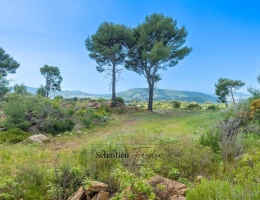
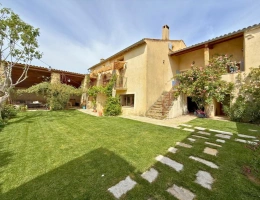
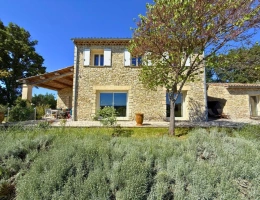
A goat farm for sale in Alpes-Maritimes is looked for inland, well away from the built-up shoreline: it is in the valleys and the pre-Alps that herds still work rough grazing, heath, terraced slopes and open woodland. The properties shown here are entrusted to us by breeders preparing to step back, by agencies specialising in rural property and by notaries of the department; they state herd numbers, the nature of the livestock building, milking equipment, any processing workshop and the grazing ground used. They add to our national selection of goat farms for sale.
Beyond the listings, you will find here what is needed to decide: what land and pasture fetch locally, the valleys where a holding comes up, how to judge buildings that are usually old, and the checks tied to farmhouse cheesemaking. The white paper « Créer une exploitation agricole » (in French) supports the preparation of a new venture.
Land weighs heavily on the budget for a goat farm. Transfers published by the French tax authorities (DVF, excluding vineyards) put the median for farmland in Alpes-Maritimes (06) at €7,245/ha in 2025, with an average of €7,245/ha over 1 sales. Eight transactions in ten settle between €7,245 and €7,245/ha, where the national median is €5,307/ha. * Fewer than 30 recorded sales: indicative value.
No SAFER land value is published for this territory, so the benchmark stays national: €6,460/ha for vacant land and pasture and €5,350/ha where a tenant is in place.
In this department, acreage matters less than access and equipment: a road a vehicle can use, closeness to a market, a secure water supply, the quality of the housing, the parlour and tank, then the cheese room with drying room, cellar and sales point. Add the herd, its hardiness and health status, and the customer base handed over, often the main intangible asset. Place the land side with our land price observatory and check the figures with our financial calculators.
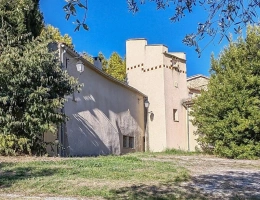
Goat buildings here are rarely standardised: stone sheepfolds, valley barns, enlarged field huts and, now and then, a modern timber-clad goat house. The inspection covers frame and roof, ventilation in hot weather, shade over the collecting yard, insulation of the milk room and the reliability of water and electricity supplies, often marginal on isolated sites. Look too at the slope of the ground, the turning area, covered hay storage and how vehicles reach the place, since many holdings are served by narrow, winding roads.
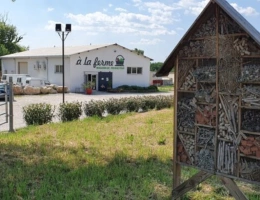
Most units process on site and sell direct: make room, drying room, cellar, cold store and sales point make up the bulk of the value, subject to the health approval and the volumes actually produced. The herd counts separately, with breeds suited to rough grazing alongside Alpine and Saanen, the age of the milking goats, the bucks and replacement stock. If a dwelling is part of the sale, a breakdown becomes essential, because the residential element is particularly sought after in this department.
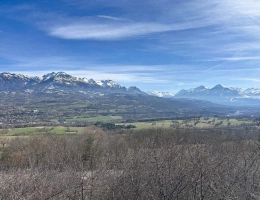
Almost all the herds lie in the middle and upper country: the Var valley towards Puget-Théniers and Guillaumes, the Tinée, the Vésubie, the Bévéra and the Roya, with modest holdings and a strongly pastoral pattern. The pre-Alps of Grasse, the limestone plateaux of Caussols and Calern and the Estéron valley keep extensive grazing within easier reach of the coast. The coastal strip, from Cannes to Menton, and the hills above it release almost no farmland, urban pressure there being beyond what any livestock project could meet.
That imbalance has a compensation: population density and visitor numbers offer an unusually strong direct outlet. The markets of Nice, Grasse, Antibes and Menton, delicatessens, restaurants and producers' shops absorb farmhouse cheeses, fresh curd and tommes, provided deliveries can be made within the day. No protected goat cheese designation covers the department, so value rests on direct selling and on the producer's own reputation.
Taking on a goat cheese farm here means securing the forage base: multi-year grazing agreements, communal ground, arrangements with forest owners, membership of a pastoral body. How long those rights run and whether they transfer must both be verified. Fire risk brings clearance obligations and demands thought about access, water points and protection of the buildings; predation, present in the upper country and around the Mercantour national park, calls for guard dogs and night pens.
Administratively, the unit falls under the departmental health regulation or the French classified installations regime depending on numbers, with the change of operator notified to the prefecture and distances from dwellings to be checked in valleys where housing crowds in. Ask for the herd's health status, including CAEV, the caprine arthritis-encephalitis virus, and paratuberculosis, along with the cheese room's food safety plan. Planning zoning, the rural lease on rented parcels, the structures control and SAFER's involvement complete the file.
This page brings together offers from private owners, rural estate agencies and notarial practices in the middle and upper country. Refine by grazing area, by budget or by the presence of a cheese room, then switch on an e-mail alert: caprine properties are very few here and draw plenty of enquiries. Handing your own farm on? Post your listing. Widen out to goat farms for sale in Provence-Alpes-Côte d'Azur.