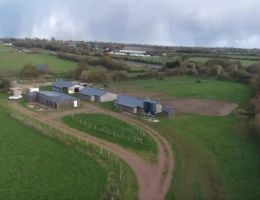
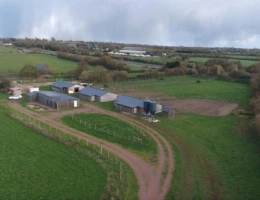
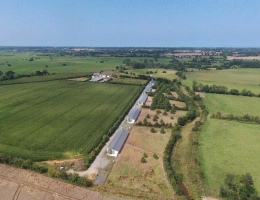
Looking for an arable farm for sale in Manche means reading a department where grain usually supports a livestock enterprise: wheat, barley, maize and triticale feed dairy and suckler herds, while the more open districts, from the Plain to the polders of the bay, carry frankly arable rotations. The holdings shown come from farmers preparing their handover, advisers specialising in rural land and notaries in Saint-Lô, Coutances or Avranches; they set out the cropping plan, the tenure of the land, the storage and the machinery included. You will find them again among the arable farms for sale published across the country.
Beyond the particulars, this page gathers local land value markers, the districts where holdings come up, how to judge a shed and its bins exposed to sea air, and the checks a cereal farm calls for before takeover. Anyone preparing a first entry into farming will find our white paper « Créer une exploitation agricole » (in French) worth reading.
Pricing the land comes first in any plan to buy an arable farm. On the basis of 2025 DVF sales (vineyards excluded), the median in Manche (50) works out at €7,735/ha and the average at €7,788/ha, across 411 transactions. The central range covering 80% of sales runs from €4,957 to €10,831/ha; nationally the median is €5,307/ha.
The SAFER benchmark, the market's second yardstick, gives €8,150/ha in 2025 for vacant land and pasture (+1.0% over twelve months, +16.4% over ten years), beside a national €6,460/ha; tenanted land is worth about 17% less.
The value of a holding here rests on more than area: the depth of loam over schist or granite, drainage in the low ground, the shape and accessibility of blocks in a hedged landscape, bin capacity, whether a drier is present, how the shed roofs are standing up to salt corrosion, the age of the harvesting line, basic payment entitlements, and a secure outlet with a cooperative, a merchant or neighbouring livestock units. Our land price observatory and our financial calculators will help you cost the deal.
Loams formed over ancient bedrock offer fair potential, but their thickness swings sharply from field to field, and waterlogging calls for drainage kept in order in the bottoms and the marshes. The usual rotation runs wheat, maize for silage or grain, barley and temporary leys; oilseed rape stays in the background. Reliable rainfall removes the need to irrigate in most situations, yet it narrows the work windows and makes a functioning drier genuinely valuable. On the sandy ridges of the west coast, light soils suit vegetable growing and demand an altogether different management. Ask for analyses, a drainage record and recent season yields.
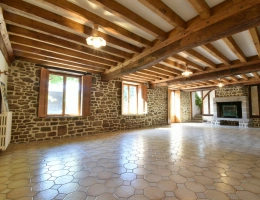
Buildings combine granite farmsteads, former cattle housing and steel-framed sheds. Check the roof structure and covering, bin ventilation and the concrete apron, because the maritime atmosphere speeds up wear on sheeting and fixings. A grain farm with enough storage avoids delivering straight away and steadies cash flow. Where the house belongs to the lot, have it valued on its own: residential demand along the coast and around the bay of Mont-Saint-Michel follows a dynamic of its own.
The Plain and the Carentan district, with their drained marshes, offer the most open units in the department and workable acreage in single blocks. The Val de Saire, in the north-east of the Cotentin, mixes cropping, vegetables and livestock on deep ground. Around Saint-Lô, mixed crop and dairy systems dominate, and arable land there is usually attached to a milking enterprise. The Avranchin and the polders of the bay hold fertile, sought-after ground. The bocage of the Mortainais and the Coutançais remains grass country, where cropping plays a supporting part.
Demand comes mainly from livestock farmers wanting to secure their own forage, which supports values wherever fields are grouped and reachable by lorry. In the tightly divided bocage districts, negotiation becomes possible again, but you should cost the travelling time and the hedge maintenance before building a forecast.
Every takeover comes under the structures control, the administrative authorisation covering entries into farming and expansion, and SAFER may pre-empt once the sale is notified. Read every rural lease closely: how long it still runs, the rent charged, environmental clauses and the tenant's pre-emption right. The department lies in a nitrate vulnerable zone, which frames spreading periods, cover crops between harvests and effluent storage where animals remain on site. In the marshes and along the coast, protection designations and drainage easements can bear on how particular fields are worked, so ask for the relevant documents.
Then make sure the basic payment entitlements transfer and CAP deadlines are met, compare the graphical field register with the advertised areas, and have the workings of the local drainage boards explained: they look after the ditches and water control structures, and they pass on both charges and maintenance duties to the incoming farmer.
This selection is built from mandates entrusted by private sellers, rural estate agencies and Normandy notaries. Set your area, budget and district criteria, switch on an alert to follow every new crop farm coming to market, and carry on towards the arable farms for sale in Normandy.