Acquiring an arable farm for sale in Eure means aiming at some of the steadiest loam plateaux in Normandy: the Neubourg, the Saint-André plain, the Norman Vexin and the Madrie grow wheat, barley, oilseed rape, sugar beet and a textile flax with a strong reputation. The files brought together here come from farmers organising their handover, rural land professionals and notarial offices in Évreux, Louviers or Les Andelys; they describe how the fields are laid out, how much ground is rented, the storage on hand and the machinery line included in the deal. You will meet them again in the national list of arable farms for sale.
The point of this page is to supply what a listing leaves out: local land value levels, the districts where supply renews itself, how to read a courtyard farmstead and its bins, and the checks a cereal farm should face before signature. Our white paper « Créer une exploitation agricole » (in French) throws light on how an entry into farming is put together.
Pricing the land comes first in any plan to buy an arable farm. On the basis of 2025 DVF sales (vineyards excluded), the median in Eure (27) works out at €9,723/ha and the average at €10,355/ha, across 214 transactions. The central range covering 80% of sales runs from €7,000 to €15,212/ha; nationally the median is €5,307/ha.
The SAFER benchmark, the market's second yardstick, gives €10,270/ha in 2025 for vacant land and pasture (+3.1% over twelve months, +14.7% over ten years), beside a national €6,460/ha; tenanted land is worth about 17% less.
Price differences rarely sit in the number of hectares. What counts is loam depth and its water reserve, the state of the drains, how tightly the blocks group together, flat and bin storage capacity, ventilation, a drier, a loading area lorries can reach, the residual value of the harvesting kit, basic payment entitlements, and the commitments held with a cooperative, a grain merchant or a flax scutching mill. Lean on our land price observatory and our financial calculators before settling your position.
The plateaux here carry deep, largely stone-free loams that deliver steady wheat and oilseed rape yields without routine irrigation. The rotation often takes in sugar beet, textile flax, protein crops and sometimes potatoes; each of those needs a contract, a harvesting window and dedicated machinery, all worth checking before you take the cropping plan on as it stands. Soils prone to capping call for careful cultivation and maintained drainage in the low ground. Ask for soil analyses, the drainage plan, the detail of contracted areas and block-by-block yields from recent harvests.
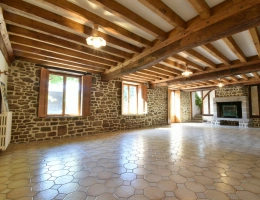
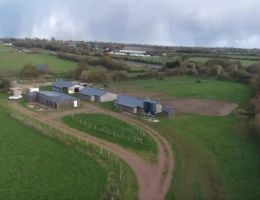
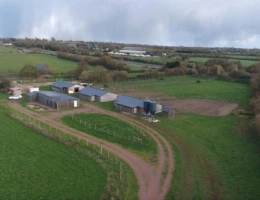
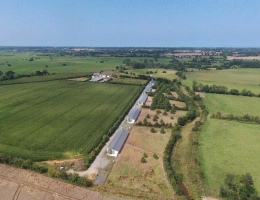
Farms often present as closed courtyards, with a barn, flint and timber-framed buildings and steel sheds added later. Check the roof structure, how weathertight the bins are, the intake pit, the floor of the flat store and the turning room for articulated lorries. A crop farm with a working drier gains real freedom over when to sell. The dwelling, sometimes a house of character, has to be valued in its own right: residential demand along the Seine corridor and within reach of the Paris region would distort any comparison.
The Neubourg plateau remains the department's benchmark: large fields, even soils, well-equipped holdings and firm competition whenever something comes free. The Saint-André plain, between Évreux and Nonancourt, shows a similar profile. The Norman Vexin, around Étrépagny and Gisors, combines arable farming with easy reach of the Rouen and Paris outlets. The Madrie, towards Pacy-sur-Eure and Vernon, feels land pressure from urban growth. The pays d'Ouche and the Lieuvin, heavier and more livestock-minded, offer arable land at noticeably lower levels.
The contrast between plateaux and bocage margins shapes the whole departmental market. Where neighbours are looking to expand and where beet and flax secure the output, values hold high; in the more fragmented districts a takeover stays within reach on a measured deposit, provided you accept longer runs between fields.
The sale falls under the structures control, the French authorisation regime governing entries into farming and expansion, and SAFER may pre-empt as soon as the notary gives notice. Go through the rural leases one by one: remaining term, rent, environmental clauses, the sitting tenant's right of pre-emption. The whole department sits in a nitrate vulnerable zone, with applications regulated and soil cover required between crops. Water catchment protection perimeters, numerous on the plateaux, can restrict certain practices: have the orders listed and gauge their effect on the rotation you have in mind.
Then check that basic payment entitlements genuinely transfer, that the graphical field register matches the advertised areas, and what becomes of the beet and flax contracts, which do not follow the land automatically. Ask as well about infrastructure schemes and planning documents in the communes concerned, since a future land take changes the working value of a well-placed block.
The properties shown here are listed by selling owners, rural property firms and notaries based in the department. Adjust area, budget and search radius, save an alert so no new grain farm slips past you, then open the search out to arable farms for sale in Normandy.