
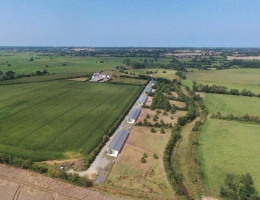
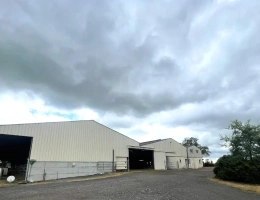
In a department whose cheese reputation was built on cow's milk, a goat farm for sale in Calvados remains an uncommon property and is taken quickly. Goat units here are almost all farmhouse businesses, run on grass with cheese made and sold on site, and they benefit from a cheese culture rooted in both shoppers and cheesemongers. Normandy's protected designations cover cow's milk cheeses: goat cheese therefore sells under the farm's own name, on market stalls and to coastal customers. Sales are initiated by breeders handing over, by rural property firms and by notaries in Caen, Lisieux or Vire, with herd, buildings and acreage specified. Find them among the goat farms for sale followed in other departments.
This page supplies what a listing does not: how grassland values stand locally, which districts see holdings change hands, how to read a livestock building set inside older stonework, and the demands that come with processing before you buy a dairy goat holding. Our white paper « Créer une exploitation agricole » (in French) supports the shaping of the project itself.
Land weighs heavily on the budget for a goat farm. Transfers published by the French tax authorities (DVF, excluding vineyards) put the median for farmland in Calvados (14) at €8,917/ha in 2025, with an average of €9,368/ha over 301 sales. Eight transactions in ten settle between €5,785 and €13,759/ha, where the national median is €5,307/ha.
A second reference, the SAFER land value benchmark, sets vacant land and pasture at €10,390/ha for 2025, +2.8% in a year and +30.0% over a decade; the French average is €6,460/ha, and a sitting tenant costs a plot roughly 17% of its value.
On a business of this type, most of the value sits somewhere other than in the hectares: the shed and bedded area, the parlour and bulk tank, the cheese room, drying room and cellar, hay barn or drier, grazing fences. The herd counts next, through genetics, dairy conformation and health status. Goodwill often makes the difference: a farm shop, the markets of Caen or Bayeux, cheesemongers and restaurants along the Côte Fleurie. Ground the calculation in our land price observatory and our financial calculators.
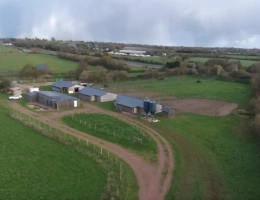
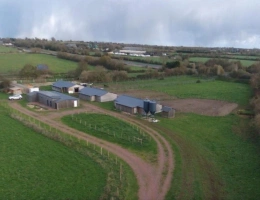
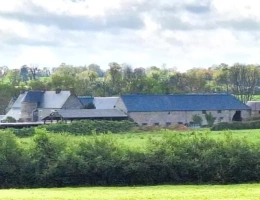
Many local goat sheds have been fitted into buildings inherited from cattle: a converted loose housing unit, a low byre, an enclosed cart shed, sometimes a timber-framed structure attached to a half-timbered farmstead. The inspection points stay the same: frame and roof, ventilation, condition of the bedded area, handling of effluent and manure, movement of animals out to grazing. The milking block, the washing area and the milk room set the daily workload. Where a dairy completes the set, its compliance decides whether selling can resume at once; without that, a patiently built clientele scatters within a season.
The herd is assessed on numbers, replacement kids, the kidding calendar and milking results; Alpine and Saanen animals remain the majority, with some farms keeping Poitevine does for their hardiness. In the Pays d'Auge especially, the dwelling house weighs heavily in the asking price: insist on a breakdown between house, farm buildings, land and stock before making an offer. A worker's cottage or a holiday let, on the other hand, can support cash flow in the early seasons.
The Bessin and the Caen plain, geared to arable cropping and dairy cattle, hold few goat farms and tightly contested land. The Pays d'Auge, between Lisieux, Livarot and Orbec, brings together grass, old buildings and plenty of customers, but competition from residential buyers and stud farms lifts prices. The Virois hedged country and the Pré-Bocage, around Vire, Condé and Villers-Bocage, remain the most affordable areas, with fragmented pasture that suits goats well. The Suisse Normande and the Falaise countryside complete the map, with hillside grazing and nature-based tourism.
Proximity to the coast shapes the selling strategy: between Honfleur, Deauville and Cabourg, demand for farmhouse cheese holds up all year and rises in season, which justifies the higher entry price of a unit near the shore. Towards the south of the department, that gap is offset by wider acreages and selling rounds you will need to organise.
A goat cheese farm falls under the classified installations regime, the French environmental permitting system, above the threshold set in the nomenclature, moving from declaration to registration with herd size and requiring notice to the prefect when the operator changes. Cheesemaking calls for health approval or for the exemption available for direct selling, in both cases with a food safety plan, traceability and own-checks. Since the nitrate vulnerable zone classification applies here, verify effluent storage capacity and the spreading area genuinely available once the sale is done.
Land deserves equally methodical treatment: which parcels are owned and which rented, the landlord's agreement for leases to continue, the farming authorisation, and a possible move by SAFER, the rural land agency, in a department where dairy farms are looking to expand. Hedges and earth banks may be protected under the local planning document. On the animals, ask for health monitoring and milk analyses, then negotiate a supported handover rather than a plain transfer of keys.
Retiring breeders, Normandy rural estate agencies and notaries publish the properties gathered on this page. Filter by forage area, by budget or by the presence of a cheese room, and switch on an alert so you hear as soon as a dairy goat holding appears, since buyers far outnumber the properties. The search can be widened to goat farms for sale in Normandy.