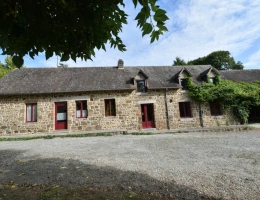
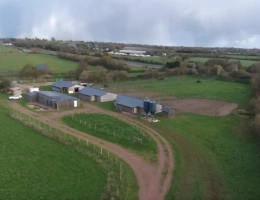
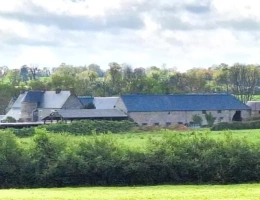
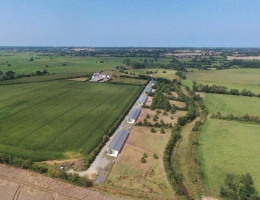
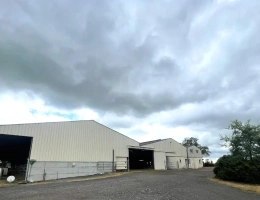
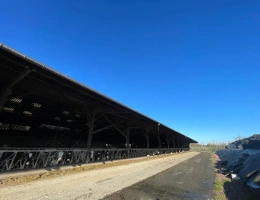
A goat farm for sale in Normandy is sought in a region shaped by the dairy cow, where goats hold a quiet but well-established place: herds of manageable size, processing on the farm and a local clientele fed by tourism and by the coastal towns. Country notaries, firms specialising in rural property and farmers organising their handover supply the listings gathered here; they give herd numbers, the type of building, the milking equipment, whether a cheese room is included and the forage area attached. They sit alongside every goat farm for sale elsewhere in France.
This page goes beyond the listings themselves: it places the price of Normandy grassland, points to where a dairy goat holding is likely to appear, describes what to inspect inside a livestock building and recalls the checks the sector imposes. To shape a setting-up project, our white paper « Créer une exploitation agricole » (in French) sets out the stages one by one.
Land weighs heavily on the budget for a goat farm. Transfers published by the French tax authorities (DVF, excluding vineyards) put the median for farmland in Normandie at €8,305/ha in 2025, with an average of €8,905/ha over 1,442 sales. Eight transactions in ten settle between €5,139 and €13,206/ha, where the national median is €5,307/ha.
A second reference, the SAFER land value benchmark, sets vacant land and pasture at €9,610/ha for 2025, +2.9% in a year and +17.2% over a decade; the French average is €6,460/ha, and a sitting tenant costs a plot roughly 17% of its value.
On a Normandy goat unit, land alone never explains the asking price. What counts first is the housing, its volume, its straw-bedded area and its access to grazing, then the milking parlour and bulk tank, and finally the cheese room where the farm processes its own milk: drying room, ripening cellar, cold store and sales point weigh heavily. The herd, the forage stocks and the established clientele complete the valuation. Our figures are gathered in the land price observatory, and our financial calculators help you build the takeover plan.
In a damp region, the atmosphere inside the building is the first thing to examine: ridge height, openings, orientation to the prevailing wind, clean bedding and a free-draining floor all limit respiratory and parasite problems in the herd. Look next at the milking parlour and its capacity, the machine and its latest test, the wash room, the tank and the collecting yard. A good many dairy goat holdings on the market here earn most of their income from processing: the compliance of the laboratory, the capacity of the drying room and the layout of the farm shop then matter as much as the housing in the price quoted.
The herd follows its own logic of value: Alpine or Saanen animals, sometimes Poitevine where breeders are attached to local breeds, regularity of kidding, yield per goat, replacement rate and screening results. Where the property combines a longhouse, outbuildings and grassland, insist on a split price: the dwelling follows the Normandy residential market, which stays firm, while the production tool is judged on its useful value and the herd on an inventory drawn up at the moment of transfer.
The Calvados, between the pays d'Auge and the Falaise bocage, combines abundant grass with tourist traffic, a setting that suits direct selling but where built property stays dear. The Manche, from the Cotentin to the bocage around Saint-Lô, offers the largest grassland areas and farmsteads that still come up regularly, at levels a first purchase can absorb. The Orne, with the Perche and the pays d'Ouche, brings together pasture, woodland and older buildings; buyers often find complete holdings there that need refurbishment.
The Eure and Seine-Maritime form the arable side of the region, where land trades high and rarely comes free. The exceptions lie in the pays de Bray, grazing country with a long dairy processing tradition, and in the Seine and Eure valleys, where the pull of Rouen and Évreux supports farm-gate selling. A goat cheese farm remains scarce there and is usually sold quickly.
Depending on herd size, the unit comes under the departmental health regulation or the classified installations regime, with a declaration or registration to file and the change of operator to notify to the prefecture. Read the existing order, its distances to dwellings and its effluent storage requirements before imagining any enlargement. As much of Normandy is designated a nitrate vulnerable zone, manure storage capacity and the spreading plan must be checked parcel by parcel, as must access to the more distant grazing blocks.
On health, ask for the herd history: status for CAEV, paratuberculosis and Q fever, worming protocol, parasite management on damp grazing. If the milk goes to a dairy, the contract and the allocated volume are renegotiated with the processor. Rented parcels remain under a rural lease, the structures control, the French authorisation regime for taking over farmland, applies, and SAFER, the rural land agency, monitors the deal: acquiring a smallholding of this kind means running these steps alongside the negotiation.
Retiring farmers, rural estate agencies and Normandy notaries entrust us with the properties you see here. Sort by forage area, budget or the presence of a cheese room, then create an alert so you hear as soon as a new unit goes online, since goat listings stay few. You may also browse every farm for sale in Normandy.