
A historic monument for sale in Hautes-Alpes first brings to mind the Vauban fortifications of Briançon, but the category covers a wider reality too: a fortified farmhouse in the Champsaur, a painted alpine chapel in the Queyras, or an old residence in Embrun or Gap. With part of the territory above a thousand metres, the department has developed a robust mountain architecture in stone and larch, adapted to a harsh climate and rugged terrain. Properties on offer range from residences restored with respect for their original materials to buildings requiring complete renovation. Browse the historic monuments for sale listed by the department's private owners, agencies and notaries.
This page sets out the protected typologies found in Hautes-Alpes, the areas where they cluster, the obligations and grants specific to historic monuments, and the checks essential before buying in a mountain area. To place this project within a broader buying approach, read our guide to buying prestige property in France.
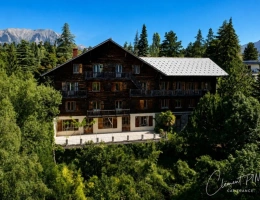
The fortifications built under Vauban at Briançon, ramparts, outworks and barracks, form the department's best-known protected ensemble, built of dressed limestone designed to defend the border. In the Champsaur and the Valgaudemar, the rural fortified house, with thick walls and shallow-pitched roofs covered in larch shingles, still dominates certain hamlets. The Queyras retains alpine chapels with painted décor dating from the fifteenth to the seventeenth centuries, often standing alone along old transhumance routes.
Outbuildings reflect the local mixed farming economy: a stone-and-timber byre-barn, a raised hayloft, a hamlet bread oven, sometimes a mill on a mountain stream. Altitude calls for particular attention to insulation and roof timbers, often solid larch and well preserved, while some interiors, long used for livestock, need complete rework of floors and partitions.
Briançon and its surrounding area hold most of the protected fortified buildings, in a high-mountain setting close to the Italian border. The Champsaur and the Valgaudemar, further south-west, offer fortified houses and quieter high-altitude hamlets, while Embrun and Lake Serre-Ponçon retain older buildings blending Dauphiné and Provençal influences. The Queyras, hemmed in to the east, remains the most remote area, with chapels and old houses accessible only part of the year via mountain passes, and residents there often plan restoration work around the short summer building season.
The department has no TGV station; access is by Intercités and TER connections to Gap or Briançon, or by road from Grenoble and the TGV stations of Isère, a detour that adds noticeably to any winter journey. The Briançon and Serre-Chevalier areas remain the most sought after for a historic monument, while the Queyras and some Champsaur hamlets offer more accessible properties of comparable typology and a genuinely quieter setting.
Check whether the building is classified or registered, since this status determines the extent of oversight exercised by the Architecte des Bâtiments de France and the regional historic monuments office over any visible alteration. A fortified structure may fall under both heritage protection and a particular state-land status, to be clarified before any renovation project, while an isolated high-altitude chapel calls for checks on winter access and avalanche risk.
The historic-monument tax regime, which can ease the cost of restoration under conditions, is worth having assessed by a professional before any commitment, along with grants from the Fondation du patrimoine and the DRAC, which sometimes cover part of a roof or masonry campaign. The buyer must always be informed of the building's protection status, and the sale of a classified building must be notified to the administration. Finally, plan for a heritage architect and qualified contractors skilled in mountain building techniques, since larch framing and dry-stone walling both demand specific know-how.
Historic monument listings in Hautes-Alpes are placed by private owners, mountain-property specialist agencies and notaries; filter them by altitude, typology and protection status, and set an e-mail alert to follow new listings. A first visit is worth timing outside the depths of winter, when snow can hide much of a roof or a boundary wall. To widen the search across the region, browse the historic monuments for sale in Provence-Alpes-Côte d'Azur.