


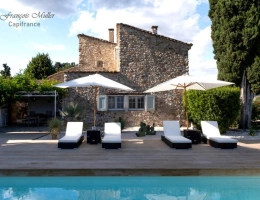
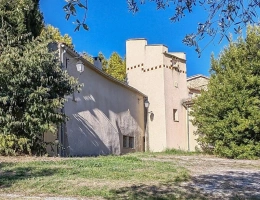
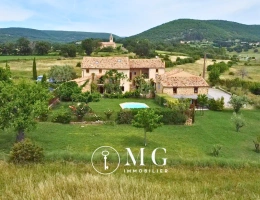
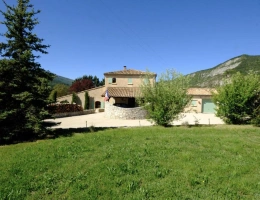
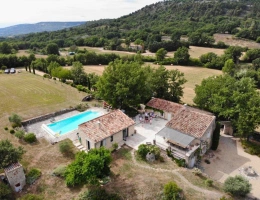
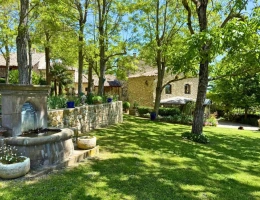
A historic monument for sale in Alpes-de-Haute-Provence most often takes the form of a fortified hilltop village, a Romanesque priory standing alone on a plateau, or a fortified stone house overlooking a valley. Around Sisteron, Forcalquier and Digne-les-Bains, the department has preserved a restrained body of protected buildings, away from the main tourist routes, shaped by mid-mountain terrain and local resources limited to stone, timber and stone-slab roofing. Properties on offer range from carefully restored residences to buildings requiring complete renovation. Browse the historic monuments for sale listed by the department's private owners, agencies and notaries.
Here you will find the protected typologies present in Alpes-de-Haute-Provence, the areas where they occur, the regulatory framework and grants tied to historic monuments, and the checks to carry out before buying. To prepare the purchase of a character property as a whole, read our guide to buying prestige property in France.
The department's protected buildings owe much to a defensive purpose: the citadel overlooking Sisteron is the best-known example, but many villages on the Forcalquier plateau and around Digne retain fortified houses, watchtowers and walls built of limestone laid dry or bonded with lime mortar, remnants of a long-vanished frontier between rival territories. Romanesque priories and chapels, often standing alone in open country or set against a hillside, complete this landscape, with plain façades and roofs of stone slabs or canal tiles depending on altitude.
Outbuildings remain modest but numerous: a vaulted sheepfold, a converted communal bread oven, a buried cistern, sometimes a pigeon house or a small mill on a mountain stream. Altitude and climate demanded very thick walls and small openings, which explains interiors that are often dark and in need of reworking, but also well-preserved timber roofs and original barrel vaults.
The Sisteron area and the Durance valley concentrate citadels and fortified houses within terrain squeezed between limestone cliffs and the river. Forcalquier and its plateau, known for perched villages such as Mane and Lurs, retain priories and chapels amid still well-preserved farmland. Around Digne-les-Bains, protected buildings are scattered through the Bès and Bléone valleys, while the Valensole plateau further south offers isolated fortified houses set among lavender fields and cereal crops.
The department has no TGV station; access is by Intercités and TER connections towards Paris via Marseille or Aix-en-Provence, supplemented by road links to the nearest TGV stations in Bouches-du-Rhône. The Forcalquier area and the Sisteron district remain the most sought after for a historic monument, while the Valensole plateau and the Digne district offer more affordable properties of comparable typology.
Establish from the outset whether the building is classified or registered under the historic monuments system: this status sets the level of oversight exercised by the Architecte des Bâtiments de France and the regional heritage office over any exterior alteration. A building within a perched village, often adjoining other protected structures, may also be subject to particular access easements and to a conservation plan specific to the old centre, and shared walls can complicate even minor repairs.
Ask a professional about the conditions attached to the historic-monument tax regime before building it into your restoration budget, as well as about grants from the Fondation du patrimoine or the DRAC, sometimes increased in fragile rural areas facing depopulation. Regulations require the buyer to be informed of the protection status and the administration to be notified when a classified building is sold. Finally, have a heritage architect carry out a survey and reserve the works for qualified contractors familiar with local materials such as dry-laid limestone and stone-slab roofing.
Historic monument listings in Alpes-de-Haute-Provence are published by private owners, local specialist agencies and notaries; filter them by property type, area and protection status, and set an e-mail alert to follow new listings, which tend to appear at a slower pace than in more urban departments. Buyers coming from further afield often ask for a first visit to be scheduled together with a nearby chapel or citadel. To widen the search across the region, browse the historic monuments for sale in Provence-Alpes-Côte d'Azur.


