


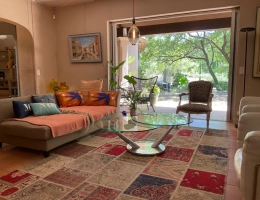
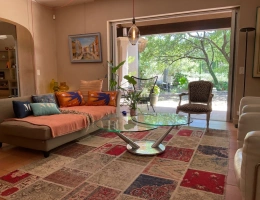
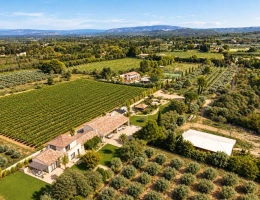
A historic monument for sale in Bouches-du-Rhône spans a particularly wide architectural range: a classified townhouse in Aix-en-Provence, a Romanesque priory in the Alpilles, a fortified farmhouse in the Camargue, an oil mill or a coastal fortification on the Côte Bleue. From Aix-en-Provence to Arles, by way of Salon-de-Provence, the Aubagne area and the Alpilles range, the department holds an unusually dense body of protected heritage, the legacy of two thousand years of continuous Roman and then Provençal settlement. Properties on offer range from residences fully restored and ready to live in to buildings requiring complete restoration. Browse the historic monuments for sale listed by the department's private owners, specialist agencies and notaries.
This page sets out the protected typologies found across Bouches-du-Rhône, the areas where they cluster, the obligations that come with historic-monument protection together with the grants available, and the checks to carry out before committing to a purchase. To place this project within a broader buying approach, read our guide to buying prestige property in France.
The department's protected heritage is read first through its townhouses in Aix-en-Provence, built of local limestone during the seventeenth and eighteenth centuries, with carved façades, courtyards of honour and grand staircases. In the Alpilles and around Salon, Romanesque priories and chapels of coursed stone survive, often adjoining a later farmhouse wing. In the Camargue and the Crau plain, the fortified farmhouse, with thick walls pierced by few openings, reflects an architecture shaped against wind and isolation rather than for display.
Outbuildings frequently complete these ensembles: an oil or wind mill, a dovecote, a private chapel, a vaulted sheepfold, sometimes a pigeon house or a sunken ice house. Many buildings have passed through successive uses, agricultural then residential, which explains reworked interiors and Roman-tile roofs needing attention in places, alongside surviving original features: French-style panelled ceilings, monumental fireplaces, and floors of Salernes tiles or Rognes stone.
The Aix-en-Provence area and its surrounding basin hold the highest concentration of protected townhouses and bastides, alongside the Alpilles, around Saint-Rémy-de-Provence, Maussane-les-Alpilles and Eygalières, known for their limestone farmhouses and priories. The Arles district, between the Camargue and the Baux valley, offers fortified farmhouses and isolated chapels set among rice fields and marshland. The Aubagne area and the Côte Bleue, from Martigues to Carry-le-Rouet, hold coastal fortifications and bastides facing the Étang de Berre and the Mediterranean, while the Salon-de-Provence and Crau areas remain more rural.
Aix-en-Provence TGV station and Marseille Saint-Charles connect the department to Paris in a little over three hours, complemented by Marseille-Provence airport. The Alpilles and the Aix basin rank among the most sought-after areas of the department for a historic monument, while the Salon district and parts of the Crau remain markedly more accessible for a comparable typology.
Establish from the outset whether the building is classified or merely registered on the historic monuments inventory: the two statuses carry different constraints on works and different levels of oversight from the Architecte des Bâtiments de France and the regional heritage office attached to the DRAC. Any work on the façades, the roof or the immediate surroundings requires prior authorisation, and the approval process can lengthen a restoration project's timetable considerably.
The tax regime specific to historic monuments, which allows certain restoration costs to be deducted under conditions, is worth checking with a professional before any decision, as are any grants available from the Fondation du patrimoine or the DRAC. The law also requires the buyer to be informed precisely of the protection status and, for a classified building, the administration to be notified of the sale. On the technical side, entrust the survey to a heritage architect and use qualified contractors, the only ones authorised to carry out compliant works on a protected building.
Historic monument listings in Bouches-du-Rhône are placed by private owners, agencies specialising in built heritage and notaries; filter them by typology, protection status and outbuildings, and set an e-mail alert to follow new listings. To widen the search across the whole region, browse the historic monuments for sale in Provence-Alpes-Côte d'Azur.


