

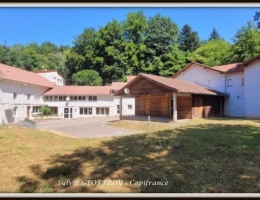
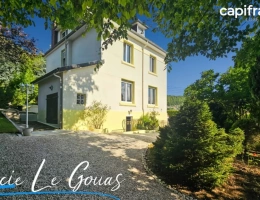
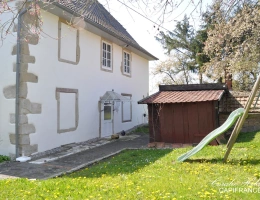
A historic monument for sale in Aube most often brings to mind a timber-framed house in old Troyes, an abbey in the Othe forest, or a classified residence near the lakes of the Orient forest. From Troyes to Bar-sur-Aube, by way of the Champagne humide wetlands and the Othe country, the department holds classified and registered heritage inherited from the medieval cloth trade and a rich religious past. Properties range from restored timber-framed houses to rural residences still needing renovation. Browse the historic monuments for sale listed by the department's private owners, agencies and notaries.
This page sets out the protected building types found in Aube, the areas where they are concentrated, the obligations and grants attached to historic-monument status, and the points worth checking before purchase. To place this project within a broader buying strategy, read our guide to buying prestige property in France.
Protected heritage in Aube is dominated by the timber-framed houses of Troyes, inherited from the golden age of the medieval cloth trade, with jettied upper floors, colourful façades and classified inner courtyards. Outside Troyes, brick and limestone dominate rural residences in the Champagne humide wetlands and the Othe country, while several abbeys and priories dot the Othe and Orient forests. Sixteenth-century religious and civic architecture remains especially prominent in the historic centre of Troyes.
Outbuildings on rural residences often include a timber-framed barn, a dovecote or a private wash-house, inherited from an older farming use. Several buildings retain vaulted cellars and monumental fireplaces still in place. Recent restorations favour rebuilding timber framing to match the original and maintaining flat-tile roofs typical of the Troyes area.
Troyes and its wider area hold the greatest number of timber-framed residences and classified religious buildings, within a dense historic centre. The Champagne humide wetlands, to the east towards the Orient forest and its lakes, offer more secluded rural residences among ponds and woodland. The Othe country, to the north-west, retains understated agricultural and religious heritage. To the south, Bar-sur-Aube and Bar-sur-Seine, on the edge of Burgundy, present classified residences linked to the neighbouring Champagne vineyards.
The department has no TGV station; Troyes station provides Intercités services to Paris in a little over an hour and a half. The A5 motorway crosses Aube from north to south. The most sought-after areas remain central Troyes and the surroundings of the Orient forest; the Othe country and the southern part of the department, more rural, offer protected monuments that stay markedly more accessible for comparable size.
Determine first whether the building is classified or registered, since the two regimes do not impose the same degree of control over planned works. No change to a façade, a roof or the surroundings can proceed without the agreement of the Architecte des Bâtiments de France, and for a classified building, without the additional opinion of the regional heritage office at the Grand Est DRAC. The historic-monument tax regime, which allows part of the restoration costs to be deducted under certain conditions, should be checked precisely with a professional before any commitment. Finally, note that a classified building cannot be sold without the buyer being informed of its status, with the authorities notified of the transaction at the same time.
On the technical side, the timber framing and cob infill of Troyes residences, particularly sensitive to damp, call for regular upkeep and a careful inspection of the lower sections. Vaulted limestone cellars, common beneath these buildings, also deserve a check on their stability, since some older galleries are no longer documented. Near the Orient forest and its ponds, the water-table level and the quality of land drainage affect the long-term condition of the foundations and should be checked before any purchase. Call on a heritage architect, then on contractors familiar with the technical requirements of protected monuments in the Aube.
Historic-monument listings in Aube are placed by private owners, agencies specialising in character properties and notaries; filter them by building type, protection status and outbuildings, and set an e-mail alert to follow new listings. To compare with Ardennes and Marne, browse the historic monuments for sale in Grand Est.


