

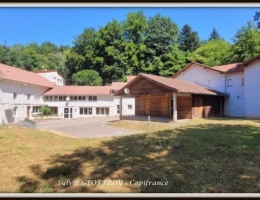
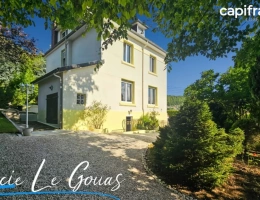
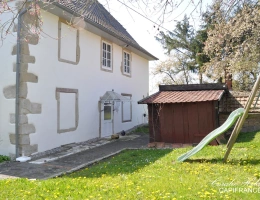
An historic monument for sale in Moselle is often found within reach of Metz, an episcopal city built largely in Jaumont stone, or in the pays messin, where fortified houses and canons' townhouses have survived intact. To the east, the Sarrebourg and Sarreguemines area keeps residences tied to earthenware and glass making, while the Sarre valley and the coal basin retain brick manager's houses inherited from nineteenth-century industry and its rapid growth. Browse the historic monuments for sale listed by private owners, agencies and notaries across the department.
This page sets out the protected building types found across Moselle, the areas where they cluster most, the obligations attached to classification or registration, the grants that may apply, and the points worth checking carefully before buying, without ever mentioning figures. To frame your approach as a whole and anticipate the steps that follow a first viewing, read our guide to buying prestige property in France.
The pays messin stands out for its ochre Jaumont stone, used both for Metz cathedral and for townhouses and canons' residences with carved facades and wrought-iron balconies. Around Sarreguemines, the earthenware industry's heritage has left master's houses adjoining former manufactories, complete with ornamental gardens and glazed outbuildings. In the coal basin, from Forbach to Saint-Avold, red-brick manager's houses survive, some half-timbered, while the Sarre valley keeps mills and fortified houses built in sandstone quarried from the northern Vosges.
The outbuildings combine farm buildings, a private chapel or a garden pavilion depending on the property type and its former use. Many of these residences underwent partial rebuilding after twentieth-century conflicts, which explains preserved older sections alongside more recent work that still needs harmonising with the original fabric. Restoration favours Jaumont stone or local sandstone depending on the area, along with joinery faithful to the original patterns and proportions.
The pays messin, around Metz and its surroundings, holds most of the protected townhouses and fortified houses; the Moselle valley, towards Thionville, adds residences close to former fortifications and old river crossings. Further east, Sarrebourg and Sarreguemines offer sought-after industrial and earthenware heritage, while the coal basin from Forbach to Saint-Avold remains more affordable for a comparable type of building in similar condition. To the south, the pays de Nied and the Seille valley offer fortified farms and mills set in a well-preserved rural landscape of meadows and hedgerows.
Metz has a TGV station serving Paris, Strasbourg and Lyon, with the Lorraine TGV line crossing the north of the department; Thionville and Sarreguemines are linked by regular TER services. The most sought-after areas lie around Metz and the Moselle valley, while the coal basin and the northern Sarreguemines area remain markedly more accessible for a property of equivalent size and condition.
In Moselle, the local law inherited from the Alsace-Moselle regime applies notably to the land register, which replaces the standard French land registry system used elsewhere: have the notary verify the particulars of this registration before any transaction goes ahead. Then distinguish a classified building, requiring the approval of the Architecte des Bâtiments de France for any intervention, from a registered building, where exterior works require prior notice to the DRAC; the historic-monument tax regime remains subject to conditions that must be confirmed with a specialist.
Selling a classified building requires informing the buyer of its exact status and notifying the relevant administration depending on the works planned, a step the notary should confirm clearly in writing before signature. On the technical side, check for damp in the porous Jaumont-stone masonry and the condition of manager's-house roofs and rainwater goods; entrust any restoration work to a qualified contractor experienced with historic monuments and their materials.
Historic monument listings in Moselle come from private owners, agencies specialising in heritage buildings and notarial offices; filter them by area, building type and protection status, and set an e-mail alert to follow new listings closely. To widen the search further still across the wider surrounding region, browse the historic monuments for sale in Grand Est.


