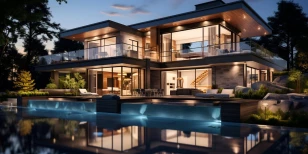

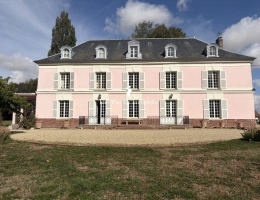
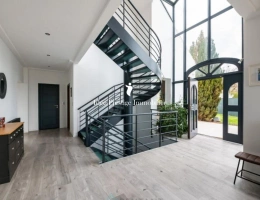
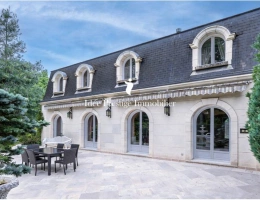
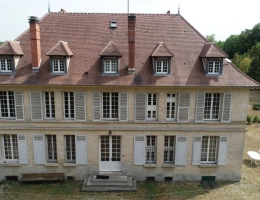
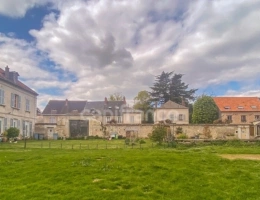
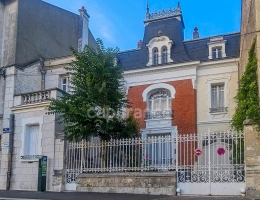
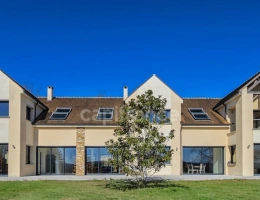
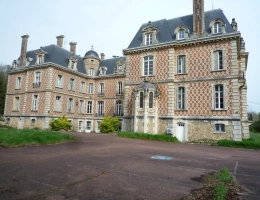
Finding a chateau for sale in Val-de-Marne is the exception, in an inner-suburb department where continuous urban expansion from Paris has largely covered over the former estates that once lined the banks of the Marne river. The surviving bourgeois properties, inherited from the riverside retreats favoured at the end of the nineteenth century by a wealthy Parisian clientele, are now scarce and much sought after, often surrounded by more recent construction. Browse the chateau for sale listings recorded for the department, along with comparable properties from private owners, agencies and notaries.
This page gives a straightforward account of how scarce privately owned historic buildings are in Val-de-Marne and points towards outer departments where the supply of older residences remains considerably more plentiful and easier to reach. It details the heritage features still found along the Marne and the checks specific to these properties in an urban riverside setting. Our guide to buying prestige property in France sets out the wider purchase process from offer to completion.
DVF land registry data does not identify chateaux as such: the benchmarks below cover sales of houses over 300 m² of living space on 0.05 to 10 ha, above €1,000/m², tracked by our observatory. They frame the market for large residences without describing it entirely: an estate with 30 ha of parkland or a listed monument sold with its farmland falls outside this scope.
This inner-suburb department has no rural municipalities: the benchmarks below are those of the Île-de-France region. Across the Île-de-France region, the 2025 median stands at €1,445,000* (90 sales), against €822,000 in France in 2025 (981 sales).
| Scope | Sales | Median price | Floor – ceiling (P10–P90) | €/m² living space (median) |
|---|---|---|---|---|
| Île-de-France (2025) | 90 | €1,445,000* | €700,000 – €3,496,500 | 4,247 |
| France (2025) | 981 | €822,000 | €428,000 – €3,100,000 | 2,308 |
The breakdown by stratum (coastal, rural tourist, ordinary rural) and the five-year trend are in our observatory of prestige property prices in France (in French). Before making an offer, work out purchase costs and borrowing capacity with our financial tools and calculators.
Source: DVF (DGFiP), transactions from 1 January 2021 to 31 December 2025, processed by ma-propriete.fr; prices rounded to the nearest €100. * Fewer than 100 sales: read as an indication only.
The few riverside residences still privately owned in Val-de-Marne mostly date from the late nineteenth or early twentieth century, when the riverbanks hosted guinguettes, villas and pleasure properties built for a Parisian clientele seeking cool air in the summer months away from the crowded city. Surviving façades in meulière rubblestone or cut stone, glazed verandas and ornamental gardens bear witness to this vanished period, but the original large parklands have been subdivided into building plots almost everywhere over time, leaving little intact today.
A property with outbuildings available in Val-de-Marne rarely comes with a full farm complex; it is more likely to be a villa with an old garage, a workshop or a small garden pavilion, on a plot noticeably reduced by successive subdivisions over the decades. The condition of the roof, façades and joinery should be examined carefully, along with any dampness linked to the property's close proximity to the Marne river and its banks.
The few opportunities lie mainly along the Marne, around Saint-Maur-des-Fossés, Nogent-sur-Marne and Champigny-sur-Marne, areas that have kept an older suburban fabric and noticeably more greenery than the rest of the built-up department taken as a whole. Further south, towards L'Haÿ-les-Roses and Villecresnes, a handful of secluded properties also survive amid more recent, denser housing developments. Given how scarce this type of building is, it is worth widening the search towards Seine-et-Marne or Essonne, where the supply of residences with parkland remains substantially larger, steadier and more affordable throughout the year.
The department has no TGV station of its own; access relies on the RER A and D lines, a dense bus network and several tram lines, complemented by the A4 motorway crossing the north of the territory towards Paris and the Marne-la-Vallée–Chessy TGV station in Seine-et-Marne. The few heritage properties available here trade at high levels, with scarcity weighing considerably more heavily on price than the actual size of the property offered.
An older residence in Val-de-Marne may lie within the protected surroundings of a designated site or a historic monument, particularly along the Marne and its old quaysides; any exterior alteration to a façade, roof or window must then first be cleared by the Architecte des Bâtiments de France before a building permit can be issued. Local planning documents, under significant development pressure and constant urban renewal, strictly control building heights and clearly limit the scope for extending the existing structure in any direction.
On the technical side, check the flood zoning along the Marne, which affects several riverside municipalities exposed to seasonal flooding, as well as the condition of the drainage system, sometimes old in the department's historic suburban neighbourhoods. The cost of maintaining an older building in a dense urban area, including property tax and any damp-proofing works, should be budgeted precisely and carefully before any offer is made on this type of riverside property.
The overall market for older residences in Val-de-Marne stays fairly narrow: listings published by private owners, agencies or notaries can be filtered by price, living space and land area, with an e-mail alert notifying you as soon as a matching property appears on the site itself. To widen the search across the wider region, browse the chateaux for sale in Île-de-France.