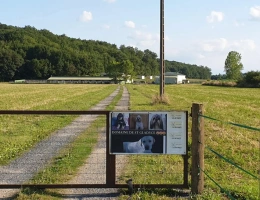
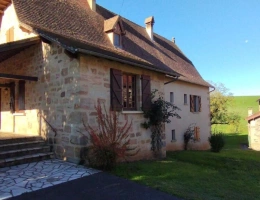
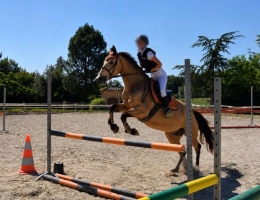
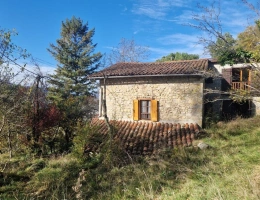
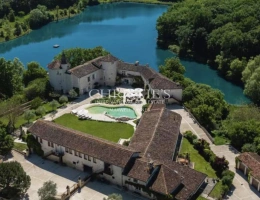
From the hills of the Gers to the garrigue of the Gard, an equestrian property for sale in Occitanie can take many forms. The region, which merged the former Languedoc-Roussillon and Midi-Pyrénées regions, offers equestrian estates for sale in Gascony, breeding farms near Tarbes and Uzès, livery yards around Toulouse and Montpellier, Languedoc mas with an arena and hill farms in the Quercy. Private sellers, rural agents and notaires list them here, with details of land, stabling and the state of the house. For comparison, browse our equestrian properties for sale across France.
Three things drive prices in Occitanie: closeness to Toulouse or Montpellier, the value of the land, which peaks in the Gard and Hérault, and access to water, scarce near the Mediterranean. What follows covers prices by department, the main horse country and what to settle first; our guide to buying equestrian property in France sets out the process.
The price of an equestrian property adds up land, outbuildings and usually a house. Three data sets help to place it: farmland sales, country house sales and asking prices online.
The 995 farmland sales recorded in Occitanie in 2025 (DVF, vineyards excluded) show a median of €7,015/ha; the average reached €7,653/ha and eight sales in ten closed between €3,913 and €11,825/ha. Over four years, the median changed by +3.1% compared with 2021. On the SAFER scale, land and pasture with vacant possession are worth €7,260/ha in 2025 (-0.3% over one year). The national median is €5,307/ha across 14,328 sales.
The house, usually at the heart of a leisure property, costs €210,000 at the median in Occitanie: that is the 2025 country house price, or €1,987/m² across 14,163 sales in rural communes, compared with €189,200 nationally. For homes of over 300 m², common on larger estates, the regional median reaches €640,000 across 786 sales recorded from mid-2020 to the end of 2025.
On 24 September 2026, the 41 equestrian listings in Occitanie showed a median asking price of €650,000, half of them between €418,000 and €899,750, with a median area of 4.7 hectares.
| Department | Farmland: DVF median | Land with vacant possession (SAFER) | Country house: median price | Listings on 24 September 2026 |
|---|---|---|---|---|
| Ariège (09) | not published | €5,900/ha | €160,000 | 3 |
| Aude (11) | €5,765/ha* | €6,610/ha | €210,000 | 3 |
| Aveyron (12) | €7,200/ha | €7,570/ha | €162,300 | 4 |
| Gard (30) | €14,000/ha* | €14,360/ha | €265,000 | 2 |
| Gers (32) | €6,897/ha | €7,100/ha | €176,800 | 5 |
| Haute-Garonne (31) | €7,676/ha | €7,800/ha | €242,000 | 5 |
| Hautes-Pyrénées (65) | €8,219/ha* | €7,850/ha | €187,000 | 1 |
| Hérault (34) | not published | €13,290/ha | €294,425 | 1 |
| Lot (46) | €5,500/ha* | €5,590/ha | €168,508 | 7 |
| Lozère (48) | not published | €4,330/ha | €166,850 | 0 |
| Pyrénées-Orientales (66) | not published | €9,460/ha | €295,000 | 1 |
| Tarn (81) | €6,000/ha* | €6,530/ha | €193,000 | 4 |
| Tarn-et-Garonne (82) | €7,301/ha | €7,540/ha | €200,000 | 5 |
Sources: 2025 DVF sales (French tax authority) processed by ma-propriete.fr, houses in rural communes; 2025 SAFER land value scale (Agreste, July 2026); homes over 300 m²: DVF mid-2020 to end-2025; asking prices of listings on 24 September 2026. * Indicative value (30 to 99 sales). Not published: fewer than 30 sales or area not covered.
The table shows a region priced above the French average, sharply so for land and more moderately for country houses. The Gard, Hérault and Pyrénées-Orientales, pulled up by the coast, sit at the top, while the Lozère, Lot and Ariège remain the cheapest places to buy grazing. Our farmland price observatory breaks the figures down further, and the land value tool will estimate the fields of any listing.
The equestrian estate is the backbone of the market: a Gascon stone farmhouse, a Languedoc mas or a Quercy house with its dovecote, set in fenced pasture with outbuildings turned into stables. The best-equipped combine boxes, a tack room, a sand arena, paddocks with field shelters and a hay barn, and some add an indoor school. In the Gers, Tarn-et-Garonne and Lot, these estates enjoy grassy hillsides; near the Mediterranean they share the land with vines and garrigue, and irrigated fields add value.
Breeders will find the long tradition of the Anglo-Arab here. A stud farm for sale in Occitanie is judged on its grazing, foaling boxes and fodder storage, since dry summers mean feeding hay for longer than in western France. A borehole or a connection to an irrigation network can make a real difference to the property's value.
Around Toulouse, Montpellier and Nîmes, demand for livery sustains a market in private yards and riding centres to take over, with an indoor school, clubhouse, horse walker and sometimes a pony club already running. Further from the cities, the market turns to homes with stables and a few hectares of pasture, popular with endurance and trail riders, horse farms in the Aveyron, Lot or Ariège, and equestrian gîtes in the Cévennes and the Pyrenees. In the Petite Camargue of the Gard, properties keeping Camargue horses form a market of their own.
In the west, Haute-Garonne (31) combines demand from Toulouse, home to La Cépière racecourse, with the arable Lauragais and the pastures of the Comminges. The Gers (32) offers the rolling hills of Gascony, suited to breeding estates, and Tarn-et-Garonne (82) valleys and slopes around Montauban. The Hautes-Pyrénées (65) keep their national stud at Tarbes, cradle of the Anglo-Arab, while the Ariège (09), home of the Mérens horse, has mountain properties with summer grazing.
To the north, the Lot (46) and Aveyron (12) share the dry limestone causses, with thin grazing and old stone barns; the Aveyron adds the grassy Aubrac uplands. The Lozère (48), between the Aubrac, the Margeride and the Cévennes, draws trail and endurance riders and has some of the cheapest land in the region. The Tarn (81), around Albi and Castres, mixes farmed hills with the slopes of the Montagne Noire.
On the Mediterranean side, the Gard (30) has the national stud at Uzès, the Camargue horses of the Petite Camargue and the Cévennes uplands; the Hérault (34) and Aude (11) alternate garrigue, vineyards and coastal plains. The Pyrénées-Orientales (66) have scarce, costly grazing. TGV stations at Toulouse, Montpellier, Nîmes, Béziers, Narbonne and Perpignan serve most of the region; the Ariège, Aveyron, Gers, Lot, Lozère and Tarn have none.
Near the Mediterranean, summer drought makes water the first thing to check: look for a properly declared borehole, a mains connection or an irrigation channel. Heavy autumn rain can bring flash floods in the Gard, Hérault and Aude: check the flood risk plan. In garrigue, owners may have to clear scrub around buildings. Coastal communes fall under the loi Littoral, and in the farming zone of the local plan (PLU) a new indoor school or stable block must be justified by the business.
Fields the seller rents from other landowners still belong to them and are not part of the sale; to keep using them, the buyer has to agree a fresh lease with each owner, any of whom may say no. The seller's lease does not pass to the buyer, except under an uncommon transferable lease (bail cessible) or in limited family situations. The SAFER can also pre-empt farmland offered for sale, and livery or breeding normally counts as farming, with MSA membership depending on scale.
On ma-propriete.fr, listings from private sellers, agents and notaires can be searched by department, then narrowed by acreage, number of boxes or indoor school, with an e-mail alert for new matches. New offers also go out through the Facebook group « Propriétés équestres à vendre - ma-propriete.fr ». If breeding is your plan, browse our stud farms for sale across France.
Own an equestrian estate, a yard or a mas with horses in Occitanie? You can put your property on the market with photos, a field plan and an inventory of facilities, showing its location precisely or only by area to protect a business still trading. We also offer land valuation studies and introductions to rural property specialists.