

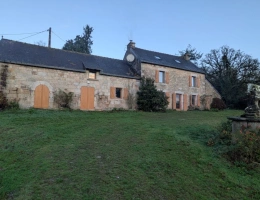
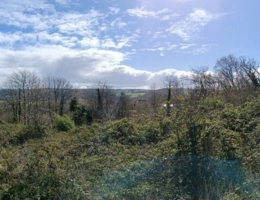
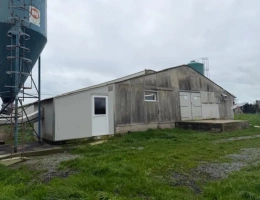
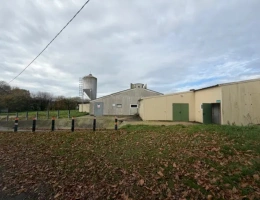
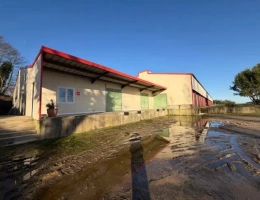
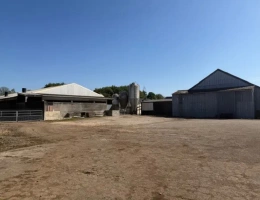
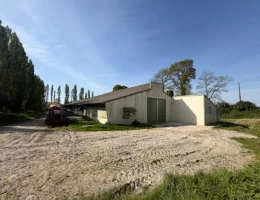
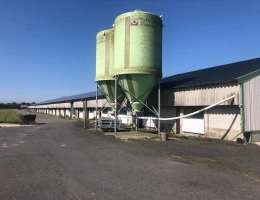
A poultry farm for sale in Ille-et-Vilaine may be a standard house working under contract or a farmhouse unit raising free-range poultry for the Rennes markets. The department, built on mixed farming, carries broilers, turkeys, guinea fowl and laying-hen units producing table eggs. The properties shown here come from farmers organising their handover, from rural agencies and from notaries, with the built area, the production system and the contract in force spelled out. They sit among the poultry farms for sale right across France.
What this page adds to the listings is the means to compare them: where farmland values have got to in the department, how the sales are spread geographically, the building faults that come up most often and the obligations specific to poultry keeping. For new entrants, our white paper « Créer une exploitation agricole » (in French) sets out a method, from choosing a legal form to raising finance.
Land remains the largest item when buying a poultry farm. According to sales recorded by the French tax administration (DVF, vineyards excluded), the median price of agricultural land in Ille-et-Vilaine (35) stood at €5,100/ha in 2025, with an average of €5,387/ha across 357 sales; 80% of transactions fall between €3,114 and €8,000/ha, against a national median of €5,307/ha.
The SAFER benchmark of land values (2025 figures) puts vacant land and pasture at €5,280/ha (-1.7% year on year, +11.9% over ten years), against a national average of €6,460/ha; land already let sells around 17% lower.
What makes the price of a chicken farm goes well beyond the number of hectares. Capacity per batch, the age and upkeep of the buildings, the ventilation and heating systems and the silos all weigh in, as does the quality of the range where birds go outdoors. The outlet finishes the job: a contract with a producer group, a label rouge specification, or a direct-sale clientele. Two benchmarks help you decide: our land price observatory and our financial calculators.
Local units range from a few hundred square metres of farmhouse shed with a wooded range to a recent standard house run in batches. Inspection starts with the structure: frame, cladding, roof watertightness, insulation. Then come ventilation, usually forced, the heating, the water circuit, the feed line and the silos. The biosecurity entry room, the concreted apron and the ability to run a full downtime between batches close the survey. A house recently brought back up to standard is negotiated on quite different terms from one needing work from top to bottom.
Management explains the rest. Under an integration contract, the production organisation supplies the birds and the feed and handles collection, which secures income but narrows room for manoeuvre; a buyer reads the remaining term and the transfer terms before committing. A unit built around laying hens is judged instead on its housing system and on the egg collection round. A broiler farm sold without its land also turns up, usually where a holding is reorganising, and an egg farm is appraised on separate terms again. Where a dwelling and land come with the tool, insist on a price broken down line by line.
The south-east, around Janzé, Retiers and La Guerche-de-Bretagne, has long been identified with free-range farmhouse poultry. The Vitré and Fougères areas combine poultry, dairy and crops on medium-sized holdings. Westward, the Montfort-sur-Meu and Brocéliande sector offers complete holdings with a dwelling, while the Redon country and the southern margins come with somewhat more affordable land. The immediate surroundings of Rennes and the Saint-Malo coast remain the most contested zones. Between those two extremes, availability shifts a good deal from one canton to the next as retirements come through, so a search worth its name covers several sectors at once.
Urban pressure around the Rennes conurbation pushes land values up and thins out the complete holdings available nearby. Moving towards the edges of the department, buyers find larger farms for a comparable budget, with buildings that are often older but genuinely capable of being adapted. Proximity to the hatcheries, feed mills and abattoirs of western France also remains an asset for anyone intending to work under contract, whichever commune is finally chosen.
Poultry keeping falls within the classified installations regime: declaration, registration or authorisation applies according to flock size, and the prefecture must be told of a change of operator. Reread the operating order, which sometimes sets distances or requirements that would rule out an extension. Biosecurity rules and the avian influenza response call for specific equipment: entry rooms, fencing, management of the surroundings, batch traceability. Anything missing turns into work at the buyer's cost. The operating file handed over by the seller should be complete before signature, prefectural orders and inspection reports included.
Effluent comes next: manure storage capacity, the spreading plan and the constraints of the nitrates directive, which bite hard in a department with this density of livestock. On the land side, an existing rural lease passes to the buyer with the landlord's agreement, and the sale stays subject to the structures control, the French clearance required to take over farmland, and to SAFER. Having buildings, equipment and land valued separately avoids unpleasant surprises when the finance is arranged.
The properties visible here are put online by farmers, by rural estate agencies and by notaries' offices in the department. Select by production, area or budget, save an alert to follow new handovers, and carry your search on through the poultry farms for sale in Brittany. The best-placed properties rarely stay online for long.


