

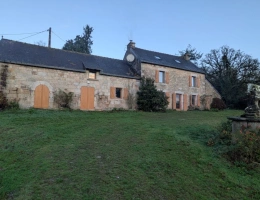
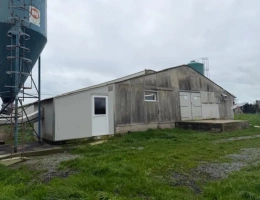
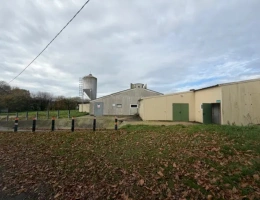
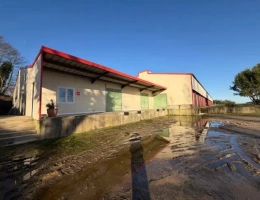
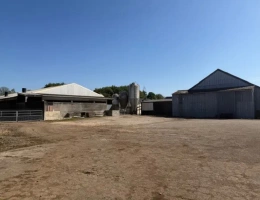
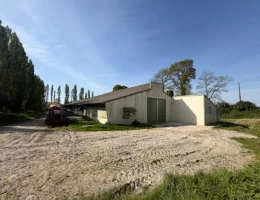
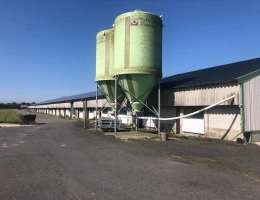
Nowhere else in Brittany does the city weigh so heavily on farmland: looking at farms for sale in Ille-et-Vilaine means reckoning with the growth of Rennes, with road and rail schemes and with a standing appetite for development land, in what remains the region's leading dairy department. Sales come from stockmen preparing to step back, from farming companies being reshaped, from notarial offices and from handover consultants; each listing fixes the area farmed, how the parcels are occupied, how the steading is equipped and whether stock is included. They join the national record of farms for sale in France.
The page goes beyond posting what is available: land values across the department, the sectors dominating each pays, the districts where handovers follow one another, and the rules that decide whether a takeover is feasible at all. Anyone still assembling a project will find the route mapped in our white paper « Créer une exploitation agricole » (in French), from company structure through to working-capital needs.
Land forms the base of a farm's value. DVF, the property sales database published by the French tax administration (vineyards excluded), records a 2025 median of €5,100 per hectare in Ille-et-Vilaine (35), an average of €5,387 and 357 sales; four transactions in five fall between €3,114 and €8,000, against a national median of €5,307.
The SAFER land value benchmark sets €5,280 per hectare for vacant land and pasture offered for sale in the same year, -1.7% over one year and +11.9% over ten, against €6,460 nationally. Land sold with a tenancy in place is valued at €4,990, a discount of about 5%.
Against the Bretagne region, whose median is €5,500 per hectare, this department sits 7% lower. For commune-level detail and comparisons with neighbouring areas, see our land price observatory, then cost your purchase with our financial calculators.
Dairy holdings shape almost the entire department, with wide forage areas, maize silage, temporary leys and parlours frequently renewed over recent years. Around them sit poultry and pig units, more scattered than elsewhere in Brittany, and suckler herds on the hedged country to the east. Arable cropping gains ground to the south and east, where wheat, rape and grain maize are sold off the holding. The polders and sandy ground to the north, towards the bay, carry field vegetables and seed crops.
A buyer has to choose a road. Taking on a herd in milk means heavy working capital, technical skill and a daily tie, but income from the first season. Buying a lighter mixed holding, or a block of cropping, asks for less labour, more area and expensive machinery. A working farm is therefore judged first on the system it carries and only then on its hectares.
The pays de Fougères, the pays de Vitré and the Coglais, to the east, form the densest dairy base: well-kept hedgerow, properly sized businesses, regular handovers. The Bretagne romantique, around Combourg and Tinténiac, offers smaller units that more often lie in one block. To the south, the pays de Redon and the Vilaine valley combine wet meadows, stock and cropping at more approachable entry prices. To the north, the bay of Mont-Saint-Michel, the Dol marshes and the Saint-Malo hinterland grow field vegetables and seed on drained ground, where value per hectare climbs steeply.
The Rennes belt is the exception to all of it. For a dozen miles around the city, and along the roads leading out of it, farmland competes with building plots, infrastructure schemes and precautionary buying. Ground there is let rather than sold, short-term arrangements multiply, and a complete agricultural property becomes scarce. New entrants do well to push their search out towards the eastern marches or the south of the department.
Look at the zoning before the price. Intercommunal planning documents, protected farmland perimeters and reserved sites govern the future of a parcel as much as its agronomic value; a strip held as a land reserve cannot be treated like a block in settled agricultural zoning. Road and rail projects under way have already cut into several steadings, and the terms of compensation are worth understanding in advance.
The regional mechanisms apply on top of that. A sitting tenant holds first refusal and a lease the owner cannot simply end, so the extent of free ground is read in the contracts. SAFER Brittany, notified by the notary, may buy and reallocate. Structural control, framed by the regional plan, makes farming the land conditional on an authorisation assessed against the area already held. As the department lies in a nitrate vulnerable zone, storage and spreading obligations apply to any unit taken on.
Those listing here are largely local stockmen closing a career, partners leaving a farming company, and rural agencies instructed to run the handover. Use the filters — production system, herd size, area, budget — to tighten the list, then ask for an e-mail whenever something new appears. Sellers can post their own holding. Widen the search afterwards to farms for sale in Brittany.


