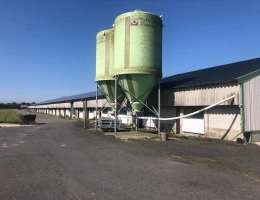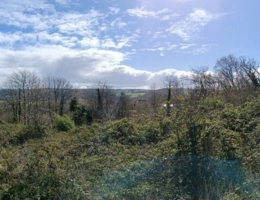
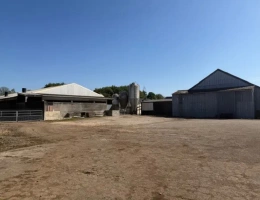
One department, two farming worlds: that is the first thing to grasp before shortlisting farms for sale in Finistère. In the north, the Léon vegetable belt lives on remarkably deep loam, tight rotations and packing facilities; inland, towards the Monts d'Arrée, grass, hedgerow and stock decide everything. Sellers — coastal growers, inland stockmen, companies being restructured — work through rural agencies, notaries or handover advisers, and their listings state the area farmed, the soil, the buildings, the washing lines or parlours and the machinery included. These offers complete our record of farms for sale in France.
Choosing between those two worlds takes more than a catalogue. The sections below give land values across Finistère, the productions carrying each district, the areas where handovers follow one another and the regulatory checks peculiar to the Breton tip, well before a first viewing. For a first entry into farming, our white paper « Créer une exploitation agricole » (in French) sets out the paperwork, the grants available and how to build the figures.
Land forms the base of a farm's value. DVF, the property sales database published by the French tax administration (vineyards excluded), records a 2025 median of €5,751 per hectare in Finistère (29), an average of €6,059 and 276 sales; four transactions in five fall between €3,909 and €9,022, against a national median of €5,307.
The SAFER land value benchmark sets €5,560 per hectare for vacant land and pasture offered for sale in the same year, +2.6% over one year and +16.3% over ten, against €6,460 nationally. Land sold with a tenancy in place is valued at €5,450, effectively the same level as vacant land, where the national discount runs close to 17%. That near-parity most likely reflects the fact that a sale of let land escapes SAFER's pre-emption right, and that the stated price of vacant land is held down by side arrangements, key money or the separate sale of payment entitlements. The gap is too small to read as anything other than parity.
Against the Bretagne region, whose median is €5,500 per hectare, this department sits 5% higher. For commune-level detail and comparisons with neighbouring areas, see our land price observatory, then cost your purchase with our financial calculators.
Market gardening and field vegetables made the reputation of northern Finistère: globe artichoke, cauliflower, shallot, pink onion and early potato follow one another on deep loam, with collective marketing and demanding production standards. The rest of the department belongs mainly to milk: dairy holdings cover the hedged country of the centre, the Poher and Cornouaille, with grassier systems to the west. Pig enterprises and poultry units fit into that mesh, while suckler herds hold on across the moorland and the least workable ground of the Arrée.
The nature of the investment changes completely from one sector to the next. A working farm in the Léon is valued on the agronomic quality of its parcels, on access to water and on harvesting, washing and storage equipment. A dairy business inland is judged on the forage block reachable from the steading, on the parlour and on effluent storage capacity. In both cases, ask for the yield or delivery history rather than the declared area alone.
The coastal strip of the Haut-Léon, between Plouescat, Cléder, Saint-Pol-de-Léon and Roscoff, is the most contested ground on the peninsula: area rarely changes hands and values reach regional highs. Moving down towards Landivisiau, Landerneau and the pays de Daoulas, the landscape turns to milk and pigs, with well-equipped businesses and a steadier flow of sales. The Châteaulin basin, the Poher around Carhaix and the pays glazik form the farming core of the interior. The Monts d'Arrée and the Yeun Elez belong to grass, heath and extensive stock, with the lowest entry values.
To the south, Cornouaille, the Bigouden country and the Aven and Odet valleys combine forage crops, seasonal vegetables and a few horticultural units. The coastal fringe, from the Crozon peninsula to the Fouesnant country, faces constant competition between farming, housing and tourism: parcels are fragmented, sometimes landlocked, and plans to extend a building meet dense neighbouring use. An agricultural property further inland almost always offers a tighter block of land for less capital.
All of Finistère is designated a nitrate vulnerable zone, with a reinforced action programme in several bays affected by green algae strandings, notably towards Douarnenez and along the Léon coast. Holdings in those catchments commit to controlled fertilisation plans, systematic cover crops and sometimes a change in their rotation. Pig and poultry units also fall under the classified-installation regime: read the operating order, check the authorised capacity, the spreading plan actually available and any agreements with third parties, which do not always follow the sale.
In communes governed by coastal planning rules, new building and the extension of a steading are tightly controlled: a construction project must be tested before purchase, never after. Beyond that come the filters common to every Breton takeover — notification of SAFER by the notary and its power to pre-empt, authorisation to farm under the regional structural plan, and the sitting tenant's right of first refusal, which determines how much land is genuinely free at completion.
An efficient search starts with the choice of district, since the Léon and the Argoat behave as opposite markets. Then combine sector, area and budget, save your criteria and let the e-mail alert flag each new entry. Local sellers, their agencies and their notaries lodge instructions as handovers arise. A wider view remains open through farms for sale in Brittany.