
Looking for a market garden for sale in Alpes-de-Haute-Provence means aiming at an upland department where vegetable growing clusters along the irrigated valleys and where organic farming holds a decisive place. Holdings tend to be mixed, geared to markets, producer shops and a large summer clientele; alongside them work nurserymen specialising in aromatic plants and lavandin propagation material. The files gathered here come from farmers preparing their succession, from rural property negotiators and from notaries in the department; they set out the irrigable area, the covered cropping, the altitude and the sales routes. Find them among our market gardens and nurseries for sale.
We add to each offer what a listing never carries: local land values, the valleys where handovers surface, how to read a water right and a set of structures, and the formalities framing a takeover. To shape your project, our white paper « Créer une exploitation agricole » (in French) sets out the forecast accounts, the set-up grants and the choice of legal framework.
Land value drives much of the asking price for a market garden or nursery. French tax transfer statistics (DVF, vineyards excluded) show, for 2025, a median of €6,436/ha in Alpes-de-Haute-Provence (04), an average of €7,310/ha and 9 sales; 80% of transactions settle between €5,413 and €9,686/ha, against a national median of €5,307/ha. * Fewer than 30 recorded sales: indicative value.
On the SAFER side, the value of vacant land and pasture is set at €7,670/ha for 2025, moving +5.1% over a year and +13.8% over ten, against €6,460/ha nationally; expect an average discount of 17% where a lease is running.
Here, area explains very little. Value rests on the water right attached to the parcel, the reliability of the canal or the borehole, the aspect and the shelter from wind, how stony the soil is, the protection against late frost and hail, the condition of the tunnels, the cold room and the washing area. Add to that how long the organic certification has run and the customer base built up by a long-established holding. Measure all of it with our land price observatory and our financial calculators.
Holdings here usually pair irrigated open ground with a range of tunnels used to bring the season forward or stretch it out. Check how the structures cope with wind and, at altitude, with snow load, how they are anchored, the state of films and vents, whether frost fleece or covers are on hand, and then the network itself: where the water comes from, filtration, pressure available, drip programming. On propagation sites, look at the multiplication house, the benching, the movable shading and the drained standing ground. A plant nursery for sale in aromatics is judged as well on the plant health status of its stock.
Then comes selling, which weighs heavily in a department far from the big distribution platforms. Turnover built on open-air markets, farm-gate sales and boxes rests on a physical presence and a local reputation that do not transfer by themselves. Have the selling calendar spelled out, the market pitches held, the arrangements with restaurants and tourist accommodation, and then value the dwelling, the working buildings and the land separately from one another.
The Durance valley forms the productive spine of the department: around Manosque, Oraison, Les Mées, Peyruis and Château-Arnoux, irrigated alluvial terraces carry orchards, vegetables and field crops, with good road access. Forcalquier country and the foothills of the montagne de Lure hold a dense fabric of small mixed holdings, many of them certified organic. The Valensole plateau follows another logic, dominated by perfume plants and cereals, with room for propagation growers. Northwards, the Blanche valley, the Sisteronais and the Ubaye bring altitude with them and shorten the season markedly.
Pressure on land follows that same order. Near Manosque and along the Durance axis, nearby employment and housing demand lift the price of irrigated ground. In the back country, a parcel served by a canal stays more affordable, but the season is shorter, frosts run later into spring and the drive out to the selling points that matter is a long one.
Much of the irrigation runs through canals managed by authorised syndical associations, a French form of collective water body. Ask whether the parcel belongs to the association, what watering turn it is allotted, the annual charge, the condition of the works and how much of the network is still gravity-fed, which means hands-on management. For a borehole, ask for the abstraction licence, the meter and the record of drought orders. Probe the climate risk too: spring frost, hail, wind episodes, and the protective equipment already installed.
Part of the territory lies within regional nature parks and in designated mountain zones, which frames what may be built and can open access to specific support. The takeover goes through the structures control, the authorisation required before farming land in France, and through SAFER, which holds a pre-emption right. Finally, check the organic certification parcel by parcel and the agricultural leases in force, which continue with you even where structures stand on rented ground.
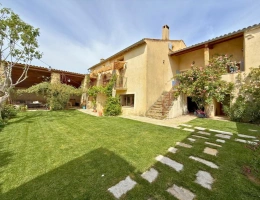
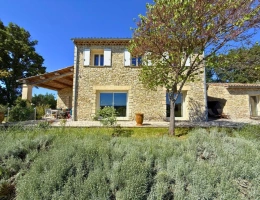
This selection carries property entrusted by outgoing farmers, by firms specialising in rural estates and by notarial offices in the department: micro-farms selling direct, irrigated units in the Durance valley, or a greenhouse business sold with its customer file. Set out the area, the budget and the valley you have in mind, switch on an alert, then explore the market gardens for sale in Provence-Alpes-Côte d'Azur.