Jura gives a coherent search area to anyone after a dairy farm for sale in Jura: from the Revermont ridge to the heights of the Grandvaux, nearly all the milk goes to a fruitière to become Comté, Morbier or Bleu de Gex. Farming is grass-based, without silage, with Montbéliarde cows and a growing role for rotational grazing. Sales circulate through notarial practices, a handful of rural agencies and word of mouth among retiring farmers, and set out the grass area, the milking plant and the volumes delivered. They join the national selection of dairy farms for sale.
This page adds to the listings what actually weighs on a decision: the value of land in Jura, the areas where dairying still dominates, how to read a building and its outbuildings, and the paperwork to open early. If you are starting from nothing, our white paper « Créer une exploitation agricole » (in French) describes the stages of a start-up.
Pricing the land comes first in any plan to buy a dairy farm. On the basis of 2025 DVF sales (vineyards excluded), the median in Jura (39) works out at €2,304/ha and the average at €2,546/ha, across 124 transactions. The central range covering 80% of sales runs from €1,650 to €4,123/ha; nationally the median is €5,307/ha.
The SAFER benchmark, the market's second yardstick, gives €2,540/ha in 2025 for vacant land and pasture (+3.7% over twelve months, +12.4% over ten years), beside a national €6,460/ha; tenanted land is worth about 17% less.
What makes a Jura holding valuable goes past the hectare count: the state of the housing and the lying area, the age of the robot or parlour, the tank and dairy room, hay storage and drying, a compliant muck pad and slurry store, the herd and its heifers, and above all a steady cooperative outlet. To put benchmarks behind those criteria, consult the land price observatory and model your takeover with the financial calculators.
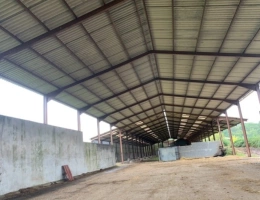
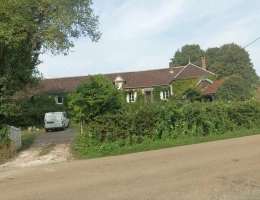
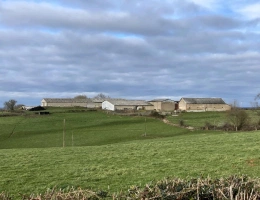
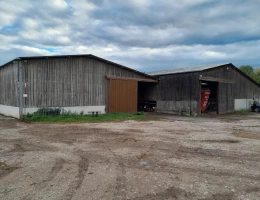
Holdings here usually occupy older farmsteads extended by a recent shed, with cubicles or a straw yard depending on herd size. Because silage is banned, hay storage capacity and drying performance govern winter self-sufficiency: a ventilated barn, a grab crane and drying cells deserve as much attention as the parlour. Inspection also covers the roof frame, watering, machinery access, slurry capacity and the water supply, often a weak point on limestone plateaux where springs run low in summer. Older farmsteads built into a slope also repay a look at drainage and at how easily the herd reaches grazing from the shed.
The herd is negotiated along with the working unit: cows in milk, heifers, health status, fitness for the cheese specification. Many handovers take the form of joining an existing company, which means reading the articles, the accounts and the share value as closely as the listing itself. Where a substantial village house comes with the farm, have the dwelling valued separately, as its residential worth can exceed that of the working unit.
The first plateau, around Poligny and Arbois, combines vineyards with dairying and a high density of cheese cooperatives. The Champagnole plateau and the Nozeroy area form an open grassland core, while the Grandvaux and the Haut-Jura, towards Saint-Laurent-en-Grandvaux and Morez, gather high-altitude holdings with short summers. The Revermont, overlooking the plain, mixes pasture with steeper ground. Westwards, the Bresse jurassienne and the Dole plain follow another model, turned towards crops and poultry, where dairy units become scarcer.
The value of grass tracks cheese returns closely: it is highest on the Comté plateaux and drops markedly in the plain. Higher up, water supply, the length of winter and the isolation of some hamlets temper that pressure. Anyone setting up for the first time does well to look at the edges of the cheese area, where prices stay more affordable.
As in neighbouring Doubs, everything turns on access to the designations. Comté volumes are capped, Morbier and Bleu de Gex have their own areas and their own rules, and a holding outside the area cannot claim them, however good it is. Ask for proof of approval, the holding's position in the collection plan, the date of the last inspections and the supply commitments signed. Question the cooperative membership too: a place in a fruitière is not transferred like a building.
The rest comes under ordinary French rural law: the structures control, meaning the prefect's authorisation to farm, a possible pre-emption by SAFER, and the continuation of existing rural leases. Check spreading compliance in nitrate vulnerable zones and near water catchments, the unit's classification under the classified installations regime and what happens to basic payment entitlements. In communes classified as mountain areas, compensatory payments and planning rules deserve a separate look, as they shape both the running costs and what may be built or converted on the holding.
What you see here is placed by farmers preparing to step back, by rural property professionals and by notaries. Restrict the list to the area, the acreage or the milking system that suits you, then switch on an alert to follow new entries. Nothing stops you widening afterwards to every dairy farms for sale in Bourgogne-Franche-Comté.