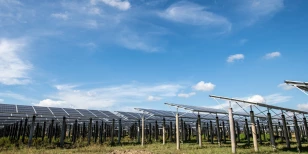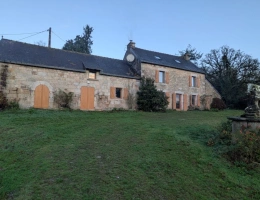
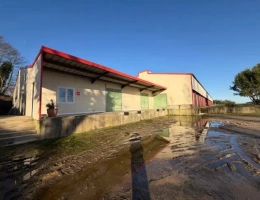
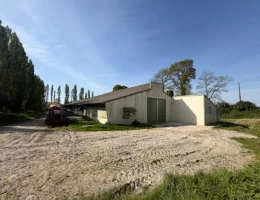
An arable farm for sale in Morbihan belongs to a department where maize, wheat and barley are grown first to feed the pig and poultry units of central Brittany, and only then sold into the collection trade. The holdings shown here are entrusted to us by farmers preparing to step back, by agencies focused on rural land and by notaries in Pontivy, Vannes or Ploërmel; the particulars set out the cropping plan, how much of the ground is rented, the bin capacity on site and the machinery travelling with the deal. They join the arable farms for sale circulated throughout the country.
The page fills in what a listing never says: where local land values stand, which districts see the most handovers, how to judge a drier and bins exposed to salt air, and the steps required of anyone taking over a crop farm here. Our white paper « Créer une exploitation agricole » (in French) walks through the build-up of a takeover project.
Pricing the land comes first in any plan to buy an arable farm. On the basis of 2025 DVF sales (vineyards excluded), the median in Morbihan (56) works out at €5,507/ha and the average at €5,980/ha, across 293 transactions. The central range covering 80% of sales runs from €3,748 to €9,162/ha; nationally the median is €5,307/ha.
The SAFER benchmark, the market's second yardstick, gives €5,360/ha in 2025 for vacant land and pasture (+3.7% over twelve months, +26.4% over ten years), beside a national €6,460/ha; tenanted land is worth about 17% less.
The gap between two comparable holdings rarely comes from acreage alone. Soil texture and load-bearing capacity count, as do upkeep of the drains, field shape and distance from the yard, the tonnage that can be held on farm, a drier, the age of the tractor and the harvesting line, whether basic payment entitlements can be transferred, and the nature of the contract with the collector. Nearby feed mills and livestock units secure an outlet for the crop. To frame a valuation, consult our land price observatory and our financial calculators.
Soils formed over granite and schist stay light and shallow across much of the department, with modest water reserves that leave crops exposed to a dry spell in late spring. The better ground lies in the Vannetais plain and on the open low plateaux of the pays de Ploërmel; the landes de Lanvaux, thinner and often wooded, carry few cash crops. Wheat, maize, barley and sometimes oilseed rape make up the rotation, with temporary leys where a livestock enterprise remains. Have analyses carried out, ask for the drainage record and compare the yields quoted with the results actually achieved field by field.
The buildings tend to be open-sided sheds, bins added over the years and former livestock housing put to another use. Check that roofs are watertight, that ventilation works, that the bins are clean and that articulated lorries can reach the loading area. A cereal farm able to keep its harvest at home sells its parcels on better terms. Where the farmhouse forms part of the sale, ask for a separate valuation: the Morbihan coast and its second homes pull residential values far beyond any farming logic.
Around Pontivy and Locminé, the web of intensive livestock units and food processing plants sustains steady demand for grain and for spreading area: deals there are contested and seldom slow to close. The pays de Ploërmel and the Oust valley, towards Josselin and Malestroit, offer more open ground that suits large machinery. The inland Vannetais, from Grand-Champ to Elven, feels the suburban pressure of the city. Westwards, the country around Le Faouët and Guéméné-sur-Scorff keeps a fragmented hedged pattern, cheaper to buy but dearer to farm. The southern coast, towards the ria d'Étel, is largely a residential market.
Value therefore follows access and the density of neighbouring livestock more than sheer size. A grain farm whose arable land sits close to a collection silo commands a full price; one scattered between several villages can be argued down, provided you accept the road time and the extra machinery involved. Bare fields with no buildings belong to a different segment again.
The structures control, the prior authorisation governing both entry into farming and expansion, applies to every takeover, and SAFER, the rural land agency, may pre-empt once the notary has notified the sale. Work through the rural leases one by one: expiry, rent, environmental clauses, the sitting tenant's priority. The entire department lies in a nitrate vulnerable zone, under an action programme setting cover crop obligations, spreading periods and effluent storage capacity. Where spreading agreements tie the holding to neighbouring livestock units, look closely at their term and transferability: they form part of the economics.
Finally confirm that basic payment entitlements really do pass over, that the graphical field register agrees with the advertised areas, that any water abstraction is licensed, that the crop-protection store complies and that the fuel tanks are sound. Where the land belongs to a landholding company and the business to an operating company, the sale splits into two separate transactions, each with its own advisers, timetable and tax treatment.
The offers come from owners at the end of their careers, from rural property professionals and from notaries practising in the department. Work the area, budget and commune filters, set up an alert to follow new listings as they appear, then widen your search towards the arable farms for sale in Brittany.