

An arable farm for sale in Ille-et-Vilaine sits in a department where wheat, maize, barley and oilseed rape have been taking more room alongside dairy and pig units, from the reclaimed ground of the Dol marshes to the deeper silts of the pays de Vitré. What appears here is put on the market by farmers organising their exit, by firms dealing in rural property and by notaries based in Rennes, Fougères or Redon; each file states the cropping plan, the split between owned and rented ground, on-farm storage and the machinery leaving with the business. The same search widens to all the arable farms for sale listed across France.
Added to the particulars are the things they leave out: local land values, the communes where holdings come up most regularly, how to judge a grain store and its bins, and the formalities waiting for whoever takes over a crop farm in Brittany. Our white paper « Créer une exploitation agricole » (in French) covers the financing and paperwork side.
Pricing the land comes first in any plan to buy an arable farm. On the basis of 2025 DVF sales (vineyards excluded), the median in Ille-et-Vilaine (35) works out at €5,100/ha and the average at €5,387/ha, across 357 transactions. The central range covering 80% of sales runs from €3,114 to €8,000/ha; nationally the median is €5,307/ha.
The SAFER benchmark, the market's second yardstick, gives €5,280/ha in 2025 for vacant land and pasture (-1.7% over twelve months, +11.9% over ten years), beside a national €6,460/ha; tenanted land is worth about 17% less.
At equal acreage, value is decided elsewhere: soil depth and how quickly fields dry out, a drainage network still doing its job, blocks gathered around the yard rather than scattered, storage capacity and bin ventilation, a drier, the condition of the drill and the harvesting line, basic payment entitlements that can genuinely be transferred, and a delivery agreement with a cooperative or a merchant. The density of neighbouring livestock units, which eat the grain locally, weighs on the bargaining too. An asking price reads more clearly once you have our land price observatory and our financial calculators to hand.
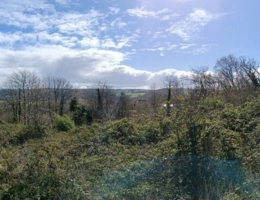
Silty soils over Brioverian schist cover much of the centre of the department, with workable water reserves but a sensitivity to compaction that makes the structural state of each field worth checking. Northwards, the alluvium of the Dol marshes and the ground of the pays de Dol reach depths that are rare in Brittany and suit demanding crops; eastwards, the pays de Vitré and the Marches de Bretagne alternate cereals with temporary leys. The usual rotation combines wheat, maize for grain or silage, barley and rape, sometimes with protein crops added. Ask for soil analyses, the drainage plan, yield records block by block and the field operation history before settling on an offer.
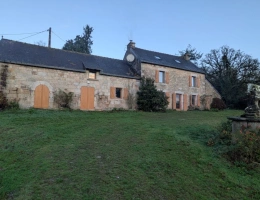
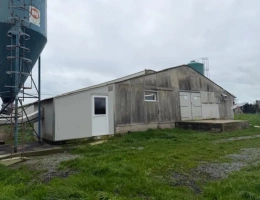
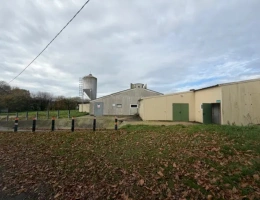
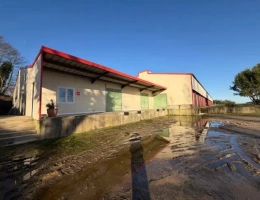
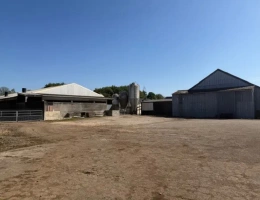
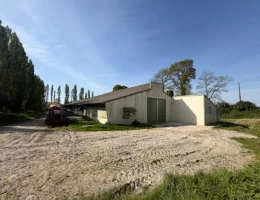
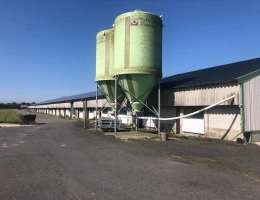
Buildings usually mix an old stone longère, cattle housing left idle and a more recent steel-framed shed. Look at the roof structure, the covering, the floor slab, lorry access and bin ventilation, the weak point in a damp climate. A grain farm with enough storage lets you spread selling over the season instead of tipping straight into a trailer. Where the dwelling is part of the lot, value it on its own: residential pressure around Rennes distorts any comparison with the working side of the holding.
Competition is sharpest in the Rennes basin, where expansion by neighbours and urban growth thin out what comes to the market and push values up. The pays de Vitré and the eastern edge, towards La Guerche-de-Bretagne and Argentré-du-Plessis, remain mixed farming country in which cash crops keep gaining ground. Around Fougères and the Coglais, hedged field patterns are more broken up. In the north, the pays de Dol and the bay offer deep soils that field vegetable growers also want. Towards Redon and the Vilaine valley, alluvial bottoms make drainage the first thing to test.
Price gaps between these districts owe less to the buildings than to soil quality and to the hunger for land among neighbouring businesses. A cereal farm held as one block of arable land, reachable by lorry, moves quickly; a holding spread over several communes leaves more room to bargain, provided you cost the travelling and the extra machinery it implies.
Every purchase goes through the structures control, the French authorisation regime covering entry into farming and expansion, and SAFER, the rural land agency, may pre-empt as soon as the notary notifies the sale. Go through each rural lease, noting how long it still has to run, what rent is charged, which environmental clauses are written in and what priority the occupier enjoys. The whole department lies within a nitrate vulnerable zone, which sets spreading periods, compulsory cover crops between cash crops and effluent storage requirements, even where the grain leaves for the cooperative. Water catchment protection areas and river quality programmes add further local constraints on practice.
Then check that basic payment entitlements transfer properly, that the graphical field register matches the advertised areas, that abstraction permits are current where fields are irrigated, and that the crop-protection store and the fuel tanks are in order. Where the business is held in a company, the deal may cover shares: tax treatment, warranties against hidden liabilities and timing then look nothing like a straightforward land purchase.
Retiring farmers, agencies specialising in rural property and local notaries keep this list supplied. Narrow it down by area, by budget or by district, save an alert so that a new offer reaches you the day it appears, and carry the search on towards the arable farms for sale in Brittany.


