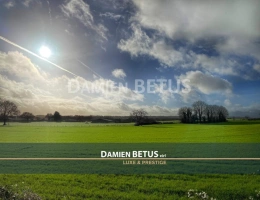
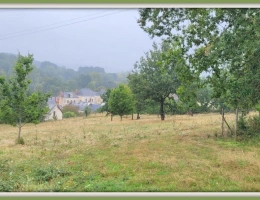

The search for an arable farm for sale in Maine-et-Loire plays out mainly east of Angers: the Baugeois, the Saumurois plateaux and the Authion valley hold the best cropland in the department, with wheat, barley, oilseed rape, maize and sunflower in the rotation, rounded out by protein crops and by seed multiplication. The offers gathered here come from farmers embarked on a handover, from rural property professionals and from notaries in Angers, Saumur and Baugé-en-Anjou; they show the irrigated share, the detail of the buildings and the machinery included. Each one joins the register of arable farms for sale kept for the whole country.
This page goes further than a listing: the land values recorded across Anjou, the districts where holdings change hands, how to read a set of grain bins and a drier, and the checks to run on water abstraction permits. The road to a first entry into farming is mapped out in our white paper « Créer une exploitation agricole » (in French).
Pricing the land comes first in any plan to buy an arable farm. On the basis of 2025 DVF sales (vineyards excluded), the median in Maine-et-Loire (49) works out at €3,055/ha and the average at €3,388/ha, across 408 transactions. The central range covering 80% of sales runs from €2,350 to €4,831/ha; nationally the median is €5,307/ha.
The SAFER benchmark, the market's second yardstick, gives €3,820/ha in 2025 for vacant land and pasture (+2.1% over twelve months, +25.7% over ten years), beside a national €6,460/ha; tenanted land is worth about 17% less.
Two farms of identical size can trade at very different levels. Soil type comes into it, from the sands of the Baugeois to tuffeau ground and the alluvium of the valley floor, along with the security of abstraction and the irrigation kit, the upkeep of the drains, how compact the field blocks are, storage volume, the condition of the combine and the machinery line, the basic payment entitlements and contracts held with a cooperative, a merchant or a seed company. A cereal farm committed to seed multiplication is valued differently from one on the usual circuit. Comparison comes easier with our land price observatory and our financial calculators.
In the east of the department irrigation is part of the working plant and must be checked as such. Ask for the abstraction permit, the volume authorised for the season, any membership of a collective management body and whether those rights can pass to the buyer; inspect the borehole, the pump station, the reels and the buried mains, whose replacement runs to a serious budget. On heavier ground it is drainage that governs how steady yields are: call for the scheme plans, the age of the collectors and the state of the outfalls. Soil analyses and block-by-block records usefully complete the file.
Storage is judged on bin volume set against the harvest, on ventilation, the intake pit, the drier and whether an articulated lorry can get into the yard. Go through the machinery piece by piece, separating outright ownership, sharing with neighbours and work put out to a contractor. Where the sale takes in a tuffeau stone house or a dwelling in the village, obtain a separate valuation of the residential element: buyers along the Loire do not reason like someone taking on a grain farm.
The Baugeois, around Baugé-en-Anjou, Noyant and Longué-Jumelles, combines sandy plateaux, woodland and large cultivated fields; this is where arable land forms the broadest blocks. The Authion valley, from Beaufort-en-Anjou to La Ménitré, rests on deep alluvium behind the flood levees, irrigated for generations and contested by vegetable and ornamental growers. The Saumurois plateaux, towards Doué-en-Anjou and Montreuil-Bellay, mix cash crops, vines and livestock, with a more fragmented supply.
Westward the picture changes: the Segréen and the Mauges, from Segré-en-Anjou Bleu to Cholet, remain hedgerow country, milk and beef country, where crops feed the herd first. The Layon slopes and the Saumur vineyard fall outside cereal logic altogether, land there trading on its vine value. Visiting two or three districts before pricing anything is still the surest way to match a budget to genuine agronomic potential.
Start with water. The department is classified as a nitrate vulnerable zone, with fertiliser plans, winter soil cover and grass buffer strips along watercourses. The eastern catchments see recurrent summer restrictions: have it confirmed that the notified volumes match the irrigated area advertised and that every structure is declared. Add to the review the drinking-water catchment perimeters, the flood-prone ground behind the Loire and Authion levees, and any areas under environmental protection, which can restrict ploughing up grassland or removing hedges.
Then comes the legal side: the structures control, the French authorisation required before any entry or expansion, and notification of the sale to SAFER, the rural land agency, by the notary. Take apart every rural lease, its remaining term, the rent charged, the environmental clauses and the tenant's right of pre-emption. Finally, have the transfer of basic payment entitlements set against the CAP calendar, the treatment of company shares where the business is incorporated, and any multiplication contracts already signed for the coming season.
Sellers dealing privately, rural agencies acting under mandate and Anjou notaries keep this selection renewed. Set your criteria for area, budget and district, switch on an alert so no listing slips past, then push the survey out to the arable farms for sale in Pays de la Loire.