
An arable farm for sale in Loire-Atlantique is seldom a pure cropping unit: wheat, barley, maize and oilseed rape sit alongside grass, field vegetables or a livestock enterprise being wound down. The pays de Retz, the Loire valley towards Ancenis and the northern plateaux carry most of the cropland. The holdings gathered here come from farmers preparing their exit, from negotiators specialising in rural property and from notaries in Nantes, Savenay and Châteaubriant; they state the rotation, the rented share, the drainage and the buildings. They round out the national picture of arable farms for sale.
Beyond the particulars, this page gives you the land values measured across the department, the districts where handovers cluster, a way of judging a shed and its storage capacity, and the checks a takeover on Armorican soils calls for. The steps of a first entry into farming are covered separately in our white paper « Créer une exploitation agricole » (in French).
Pricing the land comes first in any plan to buy an arable farm. On the basis of 2025 DVF sales (vineyards excluded), the median in Loire-Atlantique (44) works out at €2,200/ha and the average at €2,476/ha, across 380 transactions. The central range covering 80% of sales runs from €1,596 to €3,533/ha; nationally the median is €5,307/ha.
With no local SAFER average published, the French reference applies: €6,460/ha for vacant land and pasture, €5,350/ha for tenanted land.
Beyond the hectares, price is built on the depth of the loams and the pH of the schist soils, on drainage that has been maintained, on how the blocks gather together, on bin volume and whether a drier is in place, on the condition of the sprayer and the combine, on the basic payment entitlements tied to the holding and on how close a collection silo lies. A crop farm near a port delivery point keeps haulage costs down for good. Place yourself with our land price observatory and our financial calculators.
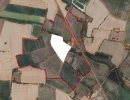
On schist and granite bedrock, success rests on the depth of soil and on controlling excess water. Ask for the analyses, the liming record, the drainage plan, the age of the collectors and the state of the outfalls: replacing a drainage system weighs on cash flow and on the yield of the blocks concerned for years. Look at the field pattern just as closely, because hedgerows, still numerous, cut the ground into short blocks that lengthen working hours. Agronomic potential shifts sharply from one commune to the next: two neighbouring farms will not deliver the same consistency.
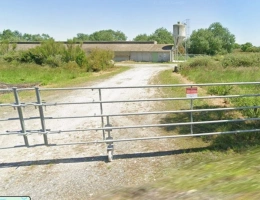
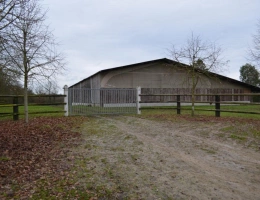
As for buildings, the open-plain steel shed is in the minority here: many holdings rely on converted cattle housing and on limited storage, which forces delivery to the cooperative straight off the combine. Cost an extension of the bins before you conclude. If the yard takes in a restored longhouse or a gentleman's residence, insist on a separate valuation of dwelling, machinery and land: residential pressure from the Nantes conurbation distorts the asking price of a grain farm.
The pays de Retz, between Machecoul, Sainte-Pazanne and Pornic, mixes cropland, field vegetables and marsh; it is one of the few districts where arable land forms coherent blocks, though competition from market gardening keeps prices firm. The Loire valley, from Nantes to Ancenis and Varades, benefits from deep alluvium and irrigated crops. To the north, the plateaux of Blain, Nozay and Châteaubriant, long given over to milk and beef, are seeing cash crops gain ground as livestock enterprises close.
Two areas largely escape that logic: the Nantes vineyard, around Vallet and Clisson, where land trades on its vine value, and the marshes of the Brière, Grand-Lieu and the coast, kept under grass and constrained by flooding. Comparing several districts before putting in an offer remains the best protection against overestimating potential.
The whole department is classified as a nitrate vulnerable zone: fertiliser plans, spreading records, soil cover between crops and grass buffer strips along watercourses all bind the incoming farmer. Wetlands, numerous near the marshes and the headwaters, restrict ploughing up and govern any drainage or building project. Also check easements tied to drinking-water catchments, whether a flood risk prevention plan applies along the Loire, and that the crop-protection store and the fuel tank meet current requirements.
Legally, the sale remains subject to the structures control, the French prior authorisation governing entry and expansion, and the notary informs SAFER, the rural land agency, of the transaction. Go through the rural leases one by one: term, rent, environmental clauses, the sitting tenant's right of pre-emption. Have the transfer of basic payment entitlements spelled out, along with the CAP declaration calendar, commitments to a cooperative or a merchant and, where relevant, the carry-over of an organic certification in progress.
Owners at the end of their career, rural property agencies and notaries feed this page as mandates come in. State the area you want, the budget available and the district, put an alert in place to follow new listings, then carry your watch on into the arable farms for sale in Pays de la Loire.