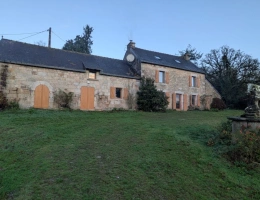
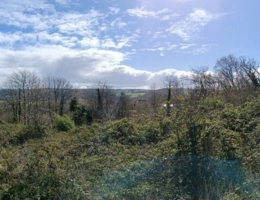
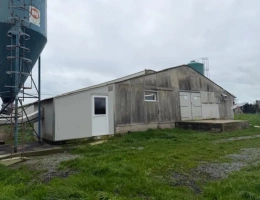
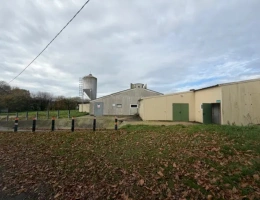
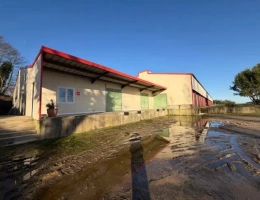
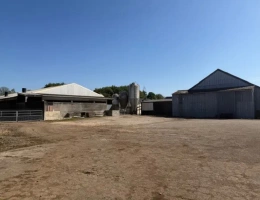
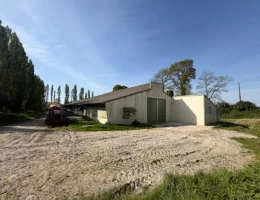
A goat farm for sale in Brittany looks little like those of the great goat regions further south: herds here stay modest in size, very often run with a cheese room and a local outlet, in a farming landscape dominated by cow's milk, poultry and pigs. What you see gathered on this page is released by keepers passing on their business, by agencies that deal in rural property and by notaries. Each entry covers the herd, the breeds, grass and grazing areas, the parlour and the processing facilities. They add to our national picture of goat farms for sale.
Alongside the listings you will find what needs deciding before the first viewing: land and pasture prices across the four departments, the areas where farms are coming free, the items to inspect in a livestock building and the paperwork specific to the sector. Whether you are taking over or starting from scratch, our white paper « Créer une exploitation agricole » (in French) sets out the path from qualification to bank funding.
Land weighs heavily on the budget for a goat farm. Transfers published by the French tax authorities (DVF, excluding vineyards) put the median for farmland in Bretagne at €5,500/ha in 2025, with an average of €5,803/ha over 1,297 sales. Eight transactions in ten settle between €3,510 and €8,658/ha, where the national median is €5,307/ha.
A second reference, the SAFER land value benchmark, sets vacant land and pasture at €6,540/ha for 2025, +0.3% in a year and +16.8% over a decade; the French average is €6,460/ha, and a sitting tenant costs a plot roughly 17% of its value.
Value rests first on the working tool and the customer base. The goat house, its bedded areas and ventilation, the parlour, the milk room and the tank form the foundation; the cheese room, very common here, adds a making room, a drying room, a cellar and often a farm shop. Then come the herd, its health status and the steadiness of its yield, and the contact book: markets, box schemes, cheesemongers, restaurants and producers' shops. Set all that against the local land market with our land price observatory and check your funding plan with our financial calculators.
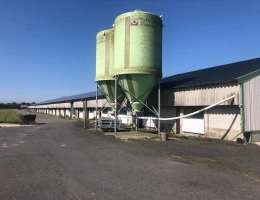
Breton goat houses frequently occupy former dairy buildings or converted sheds, so a purchase starts with a hard look at the roof structure, the covering, the cladding and the drainage around the walls, because damp Atlantic air is quickly paid for in respiratory trouble within the herd. Check airflow, the state of the bedded areas, the width of the feed passage, the feed barriers and the kid-rearing space, then the parlour, the milk line, automatic washing and the bulk tank. A dairy goat holding already meeting milk hygiene standards spares you a heavy item of work.
Processing on site often changes the nature of the deal. In a goat cheese farm, each space is judged on its own merits, from the making room to the drying room, the ripening cellar, the cold store, the wash-up area and the sales point, and the health approval or direct-sale exemption has to be reissued in the new operator's name, which means a file with the veterinary services. Where the sale includes a house, outbuildings and land, ask for a clear split of the price: the residential share and the working share are neither valued nor financed in the same way.
Ille-et-Vilaine benefits from the Rennes catchment, which suits direct sale and box schemes, but pressure on land is strong and prices are among the highest in the region. Morbihan, from central Brittany down to the gulf coast, combines affordable grassland farms inland with a large customer base on the coast, especially in season. Côtes-d'Armor offers farmsteads in the Mené hills, the Argoat and the Trégor at more reachable prices as soon as you move away from the shore, usually with well-grouped blocks of grass.
Finistère, between the Monts d'Arrée, the Léon and the Pays Bigouden, holds scattered goat units, nearly always paired with farmhouse processing and with heavy summer visitor traffic. Across the region as a whole, supply stays limited and businesses often change hands before they are widely advertised, which makes an e-mail alert and direct contact with rural agencies genuinely worthwhile. Buyers do better to open their search to all four departments than to fix on a single area.
Brittany carries no protected designation for goat cheese: value therefore comes from the farm's own name, the quality of the product and a steady customer base, sometimes from organic certification. Goat milk collection is also thinner here than in the main western and central basins, so if the holding supplies a creamery, get written confirmation that the contract will pass to you and on what terms. Where it does not, direct sale becomes the backbone of the project, with everything that implies for organisation, logistics and working hours.
On the regulatory side, herd size sets the regime, from the departmental health rules to a declaration under the classified installations system, with the change of operator notified to the prefecture. The density of livestock farming in the region makes effluent storage and the spreading plan particularly sensitive, since much of the territory is classified as a nitrate vulnerable zone. Lastly, check the status of the parcels, very often rented here, the passage through the structures control and SAFER, and the CAEV and paratuberculosis screening results before you commit.
Retiring owners, rural property specialists and notaries all place their properties on this page. Pick a department, a range of areas or a budget, save an alert so a smallholding reaches you ahead of other buyers, and widen your horizon where needed to all the farms for sale in Brittany.