

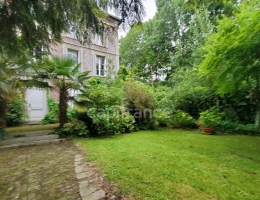
A historic monument for sale in Seine-Maritime most often brings to mind a clos-masure farmstead in the Pays de Caux ringed by its planted earth banks, a timber-framed manor house on the plateau, or a classical townhouse in Rouen along the Seine's great loop. Between the cliffs of the Alabaster Coast, the deep valleys of the Pays de Bray and the river estuary, the department has kept a dense built heritage, shaped by the former merchant and shipowning prosperity of the Duchy of Normandy. Browse the historic monuments for sale listed by the department's private owners, agencies and notaries.
This page presents the protected building types found in Seine-Maritime, the areas where they cluster, the obligations and grants attached to a classified or registered building, and the checks to make before buying. To place this project within a broader purchase strategy, read our guide to buying prestige property in France.
The clos-masure of the Caux area, an enclosure planted with elms or beeches to shelter the house from sea winds, typically shelters a timber-framed house with flint infill, roofed in thatch or tile. In the Pays de Bray, clay favoured a more brick-based architecture, while in Rouen and along the Seine loop, the classical limestone townhouse dominates, with orderly facades and paved courtyards. Chequerboard patterns of black flint and red brick, typical of the Pays de Caux, are among the facade features most closely watched by heritage authorities.
A residence to restore in this territory often comes with large outbuildings: a square dovecote, a cider press, a bread oven and timber-framed barns set around the clos-masure's yard. The flint and chequerboard brick, common on the facades, call for craftsmen familiar with these techniques; thatched roofs, rarer today, require specialised and costly upkeep to plan for. The planted earth banks ringing the clos-masure also need regular upkeep if they are to keep sheltering the buildings from the prevailing winds.
The Pays de Caux, between Yvetot, Fécamp and Dieppe, holds the greatest concentration of clos-masures, on a farming plateau bordered by the cliffs of the Alabaster Coast. The Seine loop, around Rouen, Caudebec-en-Caux and Duclair, offers properties overlooking the river amid state-owned forests. To the north-east, the Pays de Bray, around Neufchâtel-en-Bray, retains a more scattered settlement pattern and farming heritage that is less sought after, and therefore more affordable. Along the coast, Dieppe, Fécamp and Étretat hold a few townhouses and classified villas linked to the seaside resort boom of the nineteenth century. Between these poles, the central Pays de Caux, around Cany-Barville and Doudeville, offers clos-masures less sought after than those near the coast.
The department has no TGV station; Intercités and TER services connect Rouen to Paris-Saint-Lazare, Le Havre and Dieppe, and the A13 motorway crosses the territory from east to west. The most sought-after areas remain the coast and the Seine loop, close to Rouen; the Pays de Bray and the interior of the Pays de Caux offer comparable properties on more measured terms, particularly for clos-masures whose restoration has yet to begin.
First check whether the property is classified or registered: a classified building requires approval from the regional heritage office for any work, a registered building a less demanding prior notification. In areas close to Rouen and the notable sites of the Alabaster Coast, the Architecte des Bâtiments de France also reviews projects affecting unprotected neighbouring structures within the surroundings perimeter. Also check for unstable-cliff zoning along the coast, which can restrict certain landscaping works.
The historic-monument tax regime can apply under precise conditions; have it confirmed by a professional before committing. Selling a classified building requires the buyer to be informed of its status and the administration notified; entrust timber framing, flint infill and thatched roofs to a qualified contractor, and have the stability of the clos-masure's planted banks checked, along with exposure to sea spray in coastal areas.
Historic monument listings in Seine-Maritime are placed by private owners, agencies specialising in character properties and notaries; filter them by protection type, land and outbuildings, and set an e-mail alert to follow new listings. To compare with the other Normandy departments, browse the historic monuments for sale in Normandy.