

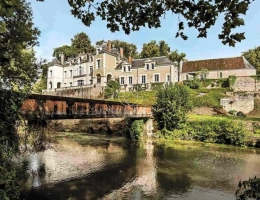
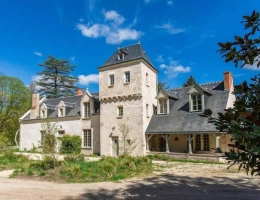
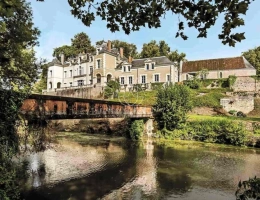
A historic monument for sale in Loir-et-Cher can mean a tuffeau-stone residence in the Blésois, a Sologne hunting lodge surrounded by ponds, a manor in the Vendômois on the banks of the Loir, or a townhouse in old Blois. Marked by the Loire, the Loir and the Sologne forest, the department holds a dense protected heritage, inherited from a long seigneurial and royal tradition tied to the court's stays. Browse the historic monuments for sale listed by the department's private owners, agencies and notaries, from a modest residence to a much larger one.
This page presents the protected building types in Loir-et-Cher, the areas where they are most numerous, the obligations and grants specific to a classified or registered property, and the checks to make before buying. To approach the purchase of a character property as a whole, read our guide to buying prestige property in France. A first viewing rarely reveals the full extent of the works a protected residence may still need.
Tuffeau, a soft white limestone, dominates protected buildings in the Blésois and the Vendômois, allowing fine carving around windows and dormers under steeply pitched slate roofs. In the Sologne, to the east and south of the department, residences are often covered in red brick and timber framing, with more modest volumes suited to hunting and fishing, while the townhouses of Blois and Vendôme show classical seventeenth-century façades.
Outbuildings play an important role: kennels and garden follies in the Sologne, dovecotes and chapels in the Blésois, mills on the Loir in the Vendômois. Some of this heritage retains carved panelling, floors and fireplaces, while other residences need a renewal of the roof or the façade; recent restorations favour local tuffeau stone and renders that let water vapour pass, essential on this soft limestone. Formal gardens surrounding certain residences contribute to the coherence of the site and deserve careful preservation.
The Blésois, around Blois, Chambord and Cheverny, holds a particularly dense protected heritage at the heart of the valley listed as a World Heritage site, while the Vendômois, around Vendôme and Montoire-sur-le-Loir, offers residences and mills along the Loir in a more intimate setting. The Sologne, around Romorantin-Lanthenay, offers hunting lodges surrounded by ponds, much sought after for their quiet, and the Vendômois Perche, to the north, holds a more discreet heritage close to the Sarthe and Eure-et-Loir borders.
Vendôme-Villiers-sur-Loir station is served by TGV, a little over an hour from Paris-Montparnasse, while Blois is reached by TER or Intercités; the A10 motorway crosses the department from north to south. The immediate surroundings of the listed valley, around Blois and Chambord, are among the most sought-after areas; the Vendômois Perche and the south of the Sologne, away from the main roads, remain more accessible for a comparable size. Small towns such as Mondoubleau, in the Perche vendômois, occasionally list more discreet protected residences.
Establish first whether the building is classified or registered: a classified building requires the approval of the regional heritage conservation office before any intervention, while a registered building follows a lighter declarative process with the DRAC. Within the surroundings of the Loire valley listed as a World Heritage site and around any protected building, the Architecte des Bâtiments de France must approve façade, roof, boundary and outdoor-development projects.
Subject to strict conditions to verify with a professional, the historic-monument tax regime can ease the cost of restoration; the seller, for their part, is required to disclose the protection status as early as the preliminary sale agreement. Tuffeau stone, sensitive to erosion, the watertightness of the Sologne ponds, ageing pipework and the condition of the roof timbers deserve a thorough survey, as does the choice of qualified contractors for restoring protected heritage. Also check any fishing or maintenance rights attached to the ponds, a common question in the Sologne. Also check fishing and maintenance rights attached to the ponds, a frequent question in the Sologne.
Historic monument listings in Loir-et-Cher are placed by private owners, agencies specialising in character properties and local notaries; filter them by type, outbuildings, area and protection status, and set an e-mail alert to hear about new listings as they appear. A viewing accompanied by a heritage professional helps you gauge, from the first visit, the real condition of the stonework and the roofs. To widen your search beyond the department, browse the historic monuments for sale in Centre-Val de Loire. Comparing several properties before deciding helps gauge how much restoration work each one genuinely still needs.