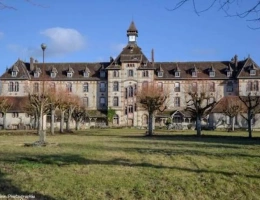
A historic monument for sale in Indre-et-Loire can be a cave dwelling carved into the tuffeau of the Chinonais, a townhouse in old Tours, a manor at the confluence of the Vienne and the Loire, or a former commandery in the southern Touraine. The historic heart of the Val de Loire, the department holds a densely protected heritage, between cave-riddled valleys and vine-covered hillsides planted for centuries. Browse the historic monuments for sale listed by the department's private owners, agencies and notaries, from a residence awaiting restoration to one already habitable.
This page details the protected building types in Indre-et-Loire, the areas where they are most numerous, the obligations and grants attached to a classified or registered status, and the checks to make before buying. The particular features of the region's cave architecture call for specific checks, detailed further below. To approach the purchase of a character property as a whole, read our guide to buying prestige property in France.
Tuffeau stone shapes most of the region's protected buildings, whether in carved façades in Tours and Amboise or in partly cave-cut residences dug into the hillsides of the Chinonais and the Véron. Steeply pitched slate roofs, ornate dormers and vaulted cellars, sometimes extended by galleries cut into the rock, mark both former commanderies and the wine-growers' residences of the Chinonais and the Bourgueillois.
Outbuildings often combine a cave cellar, a wine press, a dovecote and a private chapel, an ensemble inherited from an economy built on wine and livestock. Some buildings retain decorated ceilings, carved fireplaces and original staircases, others call for the underground galleries to be consolidated or the roof renewed; recent works favour local tuffeau stone, renders that let water vapour pass and drainage suited to hillside sites. Vines attached to certain residences, where they exist, form a separate holding distinct from the protected building itself. Vines attached to certain residences, where they exist, form a separate holding distinct from the building itself.
The Touraine around Tours, near Tours, Amboise and Montlouis-sur-Loire, holds a particularly dense protected heritage at the heart of the valley listed as a World Heritage site, while the Chinonais, around Chinon and l'Île-Bouchard, offers cave dwellings and former commanderies along the Vienne. To the south, the southern Touraine, around Loches and Montrésor, retains a more rural and more affordable heritage in the Indre valley, and the Véron, between the Loire and the Vienne, offers sought-after wine-growers' residences near the Chinon and Bourgueil vineyards.
The stations at Saint-Pierre-des-Corps and Tours are served by TGV from Paris, in a little over an hour, and the A10 motorway crosses the department from north to south. The immediate banks of the Loire, around Tours and Amboise, are among the most sought-after areas; the southern Touraine, around Loches and further from the river, remains more accessible for a comparable type. Smaller towns such as Sainte-Maure-de-Touraine, to the south, occasionally list more accessible protected residences.
Before any project, distinguish a classified from a registered building: the former requires the approval of the regional heritage conservation office for the smallest intervention, including underground galleries, while the latter follows a prior declaration to the DRAC. The World Heritage listing of the Loire valley heightens scrutiny of projects visible from the river, with the Architecte des Bâtiments de France weighing in both on the surroundings of protected monuments and on the landscape impact of works, including the restoration of cave cellars and planted hillsides.
The protection status must be disclosed to the buyer before signing, and the tax advantages tied to historic monuments, real but conditional, are worth verifying in advance with a specialist notary. On the technical side, have the stability of cave cellars and galleries surveyed, along with the damp levels in the tuffeau, hillside water run-off and the roof timbers, and entrust the works to qualified contractors experienced in restoring cave-cut buildings. Also check access rights to adjoining vineyard plots, sometimes governed by leases or farming agreements.
Historic monument listings in Indre-et-Loire are published by private owners, agencies specialising in character properties and local notaries; filter them by type, outbuildings, area and protection status, and set an e-mail alert to hear about new listings as soon as they go online. Arrange several viewings at different times of year if possible, since the humidity of cave cellars can vary noticeably with the seasons. To widen your search beyond the department, browse the historic monuments for sale in Centre-Val de Loire. A second visit focused on the cellars and cave galleries is often worthwhile before making an offer.