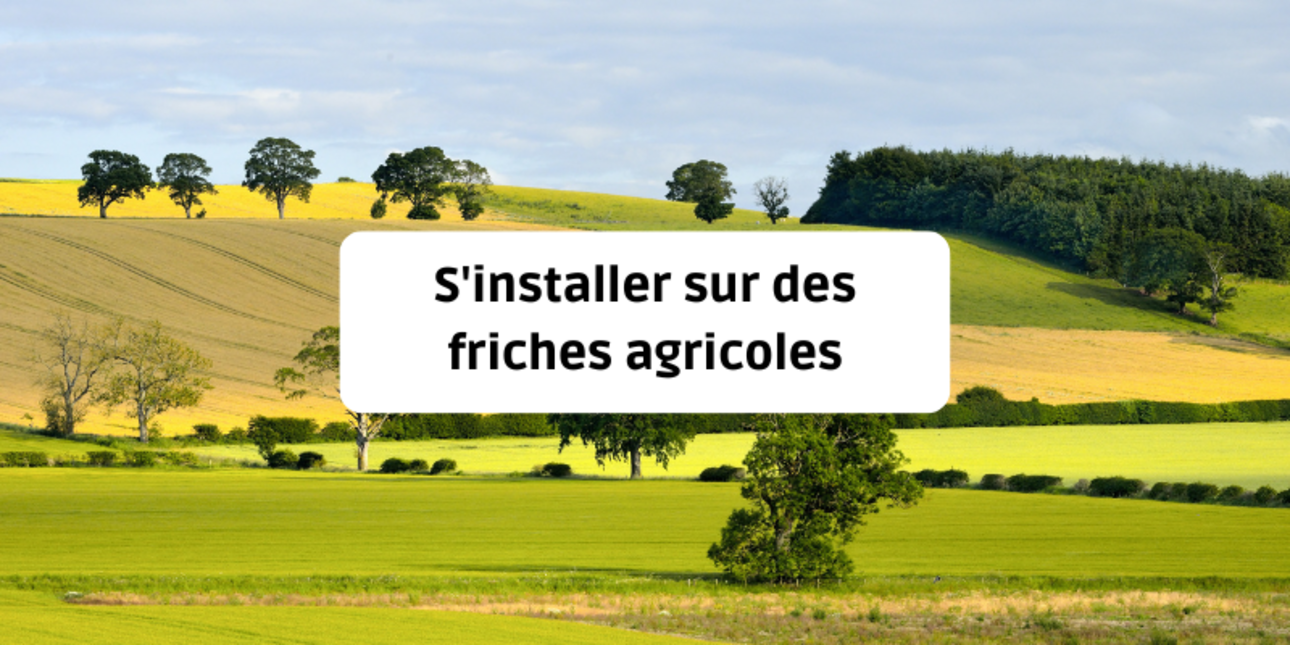
Access to land is one of the main difficulties in a project to buy a farm. Competition is indeed very strong between farmers already established and candidates for installation.
However, it is unfortunately common to find fallow agricultural land near cities, motorways or tourist areas. The Rural and Maritime Fishing Code provides for procedures to restore this land when it belongs to  private owners.
The interest in fallow agricultural land lies partly in its acquisition cost, which is often lower than the market rate. As a reminder, the average price of vacant agricultural land was €6,038/ha in 2024 (DVF data). Fallow land can be negotiated with a significant discount depending on its condition and its potential for recultivation. You can find market references by department on our land price observatory.
Land pressure is very high in France, and a hectare of agricultural land that becomes available is often coveted by several people. This pressure results in a steady increase in prices, which have doubled over the last thirty years.
However, it is common to find fallow agricultural land on the outskirts of major cities, tourist areas or main roads. Some owners have chosen not to re-let or sell plots in the hope of a reclassification as building land, which would bring them a substantial capital gain. Some plots are held in joint ownership (indivision) without the possibility of agreement between the co-owners, or are part of estates without heirs. These very diverse situations last over time and result in transforming agricultural land into fallow land.
Whatever the origin of the situation, if the land is classified as agricultural in urban planning documents, it is possible to initiate a procedure to restore this uncultivated or clearly under-exploited land.
But the first step will be to contact the owner.
You must start by identifying the plot and its owner.
The geoportail.fr site can allow you to identify a plot. You type in the address of the plot and start a search. You then choose the map you wish to view: choose "aerial photographs" and then "cadastral plots". By clicking on the plot, you will easily access the administrative details of the plot in question.
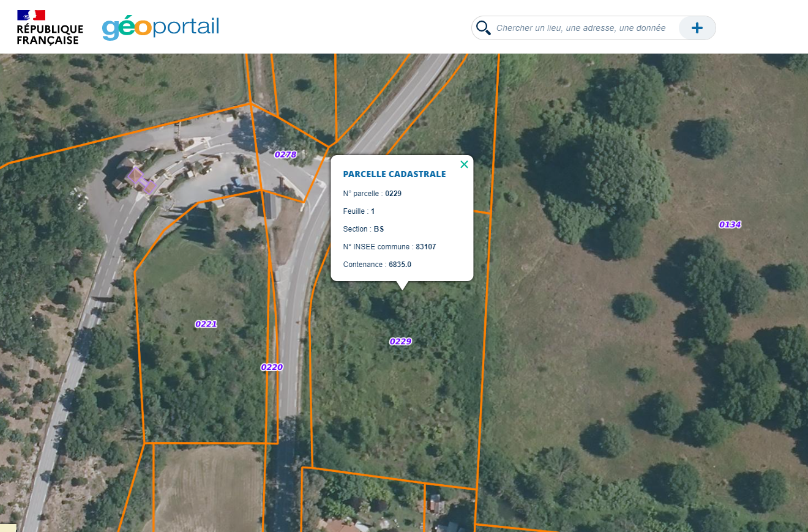
There are other online tools such as cadastre.gouv.fr, geofoncier.fr, etc. to carry out this type of research.
The Land Value Request (DVF) service also allows you to quickly access sales of fallow plots carried out over the last 5 years. In the absence of a recent sale, you will need to continue your investigations.
With this information, go to the town hall of the municipality to ask for the identity of the owner.
You can also contact the land ownership service at your Tax Center (formerly the mortgage registry). For a modest fee, you will have access to the history of the various owners and the sale prices.
With the name and address of the owner, it will be easy for you to contact them and offer to take over their plot by buying or renting it. 
If the owner cannot be reached or refuses to rent it, you can eventually initiate an administrative process.
This administrative process is provided for in articles L125-1 to 125-15 of the Rural and Maritime Fishing Code.
Any natural or legal person can thus ask the prefect for authorization to farm an agricultural or pastoral plot that has not been exploited for at least 3 years. After a procedure before the Departmental Land Development Commission (CDAF) and with the owners, it will then be possible to obtain an authorization to farm and a rural lease from the said owner.
If the property is rented, the procedure can also lead to the termination of the lease without compensation, thus giving the owner the possibility of farming the land or re-letting it.
The owner naturally benefits from appeals against this procedure, which can result in significant delays.
As a recent ministerial response reminds us, the Departmental Commission for the Preservation of Natural, Agricultural and Forest Spaces (CDPENAF) is responsible for "carrying out an inventory of land considered fallow, which could be rehabilitated for agricultural or forestry activity. Once the inventory of these agricultural fallow lands has been completed, public authorities can decide to initiate the procedure for the restoration of uncultivated or clearly under-exploited land."
But this process is still too rarely activated. While land pressure remains very high, this relatively unknown mechanism would allow many project carriers to find land to restore in areas allowing, in particular, the development of short circuits and direct sales.
Here are some examples of steps that have been put in place to restore fallow land to agricultural land and thus facilitate the installation of farmers:
| Newspaper | Publication Date | Article |
|---|---|---|
| Paysan Breton | February 15, 2020 | |
| Ouest-France | January 3, 2020 |
Finistère. The prefecture encourages the recultivation of fallow agricultural land |
| CDPENAF of Loiret | January 25, 2018 | |
| DDTM of Somme | May 2020 | |
| La France Agricole |
Creation of an Agricultural Land Association to restore fallow land to cultivation |