

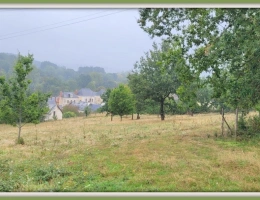
Hunting for a poultry farm for sale in Sarthe means looking at a department where free-range production carries as much weight as contracted housing. The same phrase covers very different holdings: a standard broiler house set among arable fields, a label rouge unit opening onto wooded range, a turkey or guinea fowl building, or an egg farm supplying nearby shops. Farmers reaching the end of their career, agencies specialising in rural property and notaries entrust these properties to us, stating the covered area, the production system and the producer organisation behind it. Each one adds to the countrywide picture of poultry farms for sale.
Past the description, this page gives you local land values, the areas that generate most handovers, the parts of the buildings worth having surveyed and the checks required of anyone buying a chicken farm here. A setting-up project is built well in advance: our white paper « Créer une exploitation agricole » (in French) sets out each stage, from the legal structure to the funding plan.
Land remains the largest item when buying a poultry farm. According to sales recorded by the French tax administration (DVF, vineyards excluded), the median price of agricultural land in Sarthe (72) stood at €4,245/ha in 2025, with an average of €4,629/ha across 346 sales; 80% of transactions fall between €3,000 and €6,535/ha, against a national median of €5,307/ha.
The SAFER benchmark of land values (2025 figures) puts vacant land and pasture at €4,650/ha (-1.1% year on year, +8.4% over ten years), against a national average of €6,460/ha; land already let sells around 17% lower.
Land explains only part of the asking price. What weighs more is the usable length of the houses, the quality of ventilation and heating, the silos and feed line, the presence of planted range where the specification calls for it, and above all the regularity of collections and the strength of the outlet. To place an asking price and test a takeover plan, work from our land price observatory and then our financial calculators.
The local stock mixes long standard houses, smaller label rouge buildings opening onto range, turkey, duck and guinea fowl units, and a few laying-hen buildings in aviaries or free range. A visit should cover the frame and insulation, the type of ventilation, the heating system and what it costs to run, the condition of the concrete floor, the biosecurity entry room and the silos. A recent building, or one properly brought up to standard, sells well above an older house whose takeover means partial rebuilding. Width, eaves height and how easily the sanitary break between batches can be carried out matter just as much.
Many units work with a producer group or under an integration contract: a buyer needs to know how much of the commitment remains and on what terms it will pass into their name. Holdings that process or sell direct are judged differently, along with their workshop, health approval and local customer base. Where the sale includes the dwelling house and land, ask for an item-by-item breakdown: the production tool and the house do not follow the same market logic.
Poultry production has mainly taken shape in the west, around Loué and Sablé-sur-Sarthe, where farm-scale flocks sit alongside hatcheries and processing plants: this is where handovers recur most often and where buildings find a buyer quickly. The south, from La Flèche to the Loir valley, combines poultry with arable crops and grassland, with complete holdings offered house included. To the north, the Saosnois and the country around Mamers offer cheaper land and frequently mixed holdings. Around Le Mans, urban pressure cuts the areas available and pushes up the properties on the market.
Distance to hatcheries, feed mills and abattoirs remains a very practical criterion: it governs haulage costs as much as access to contracts. A first-time buyer does well to look inland, where a broiler house can be bought on better terms than in the heart of the poultry districts, at the cost of a slightly longer run for collection.
Depending on flock size, a unit falls under declaration, registration or authorisation as a classified installation, the French environmental permitting regime for livestock, and any change of operator must be notified to the prefecture. Read the order in force before making an offer: older requirements can block an extension or force immediate work. The biosecurity plan, the state of entry rooms, fencing and range, effluent storage capacity and the spreading plan are among the basic checks, in a context where avian influenza regularly brings housing orders.
Part of the land is usually rented: the rural lease continues with the buyer subject to the landlord's agreement, and the deal remains subject to the structures control, the French authorisation regime for taking over farmland, and to SAFER's pre-emption right. Ask for three separate figures — houses, equipment, land — instead of a single global price. If you are seeking setting-up aid, the agricultural qualification and the application come before signature, so agree the timetable with the seller.
Behind each property stands a farmer handing over, a rural estate agency or a local notary. Sort by covered area, budget or production — free-range poultry with wooded range, an empty building, a laying hens unit — then switch on an alert to follow new sales. One level up you will find every poultry farm for sale in Pays de la Loire.