

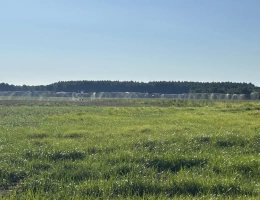
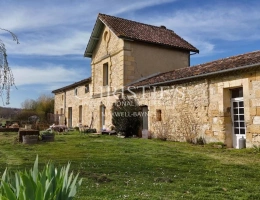
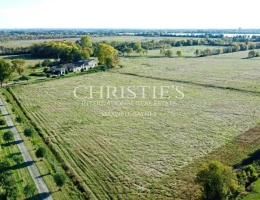
In a department the vine occupies on a vast scale, vegetable growing and horticulture settle into the gaps, often at the gates of the city. A market garden for sale in Gironde may be an irrigated holding on the alluvial palus of the Garonne, a glasshouse unit supplying wholesalers and producer shops, an ornamental horticulture business serving garden centres and landscapers, or a nursery with a broad catalogue. These properties reach us from growers engaged in a handover, from rural property firms and from Gironde notaries; the listings give the covered area, abstraction rights and the nature of the outlets. They form part of our offering of market gardens and nurseries for sale.
This page supplies the bearings a decision needs: land values in the department, pulled hard by both the vine and the city, the areas where holdings come free, a method for appraising glasshouses and an irrigation system, and the checks that frame any takeover. Our white paper « Créer une exploitation agricole » (in French) adds legal form, support schemes and the funding plan.
Land value drives much of the asking price for a market garden or nursery. French tax transfer statistics (DVF, vineyards excluded) show, for 2025, a median of €5,000/ha in Gironde (33), an average of €5,536/ha and 85 sales; 80% of transactions settle between €2,244 and €8,978/ha, against a national median of €5,307/ha.
On the SAFER side, the value of vacant land and pasture is set at €8,340/ha for 2025, moving -2.7% over a year and +56.5% over ten, against €6,460/ha nationally; expect an average discount of 17% where a lease is running.
The advertised price takes in far more than croppable area: the nature of the soil, sandy in the Médoc or alluvial on the palus, the quality of the drainage, the covered area and the generation of the glasshouses, heating and screens, security of water, the washing station, cold storage, the loading bay and container beds, then the goodwill built on a dense urban clientele, well-known markets, wholesalers and garden centres. Compare those bearings in our land price observatory before turning them into monthly repayments in our financial calculators.
Being close to a large urban market justifies investment rarely seen elsewhere in the region: heated glass, multi-span houses fitted with thermal screens, long tunnels, benching and sub-irrigation among ornamental growers. Examine the generation of the structures, how watertight they are, corrosion, the heating circuit and its fuel, climate control and electrical compliance. Irrigation must be documented: where the water comes from, the borehole and its abstraction licence, any connection to a network, the volume allocated, buffer storage, fertigation and how far drip lines reach. On the palus, drainage comes first, along with the ditches and the working order of the outfall structures.
Downstream matters greatly in a negotiation: washing and grading lines, a packing bench, cold storage, a room approved for supplying customers direct, a bay and handling gear. A greenhouse business in ornamentals is valued instead on its drained container beds, shading, water reserve, potting system and public retail area. Where the lot includes a dwelling, often lifted by residential demand, secure a written split between house, working buildings and land before approaching a lender.
The historic vegetable belt lies north-west of Bordeaux, along the jalles of Eysines, Le Haillan, Blanquefort and Parempuyre, where damp fertile ground carries an old growing tradition but takes the full force of urban expansion. The palus of the Garonne and the Dordogne, from Macau across to Saint-Loubès and Izon, offer deep alluvial soils. The Blayais has specialised in asparagus and spring crops. Around the Bassin d'Arcachon, holiday and residential trade sustains direct selling, while the Entre-deux-Mers and the Bazadais leave room for mixed projects.
Land values in Gironde answer to two forces that have nothing to do with vegetables: what a slope is worth planted to appellation vines, and housing demand from the metropolitan area. A plot that can be built on or planted therefore trades at a level unrelated to its growing merit, and openings close to Bordeaux are few. Buyers find more room towards the north of the department and the Bazadais hinterland, at the cost of longer deliveries.
Irrigation is managed catchment by catchment, with allocated volumes and restrictions when rivers run low: ask for the current licence, the meter, the record of past limitations and how dependable the aquifer drawn on is, since its use is regulated. Then study the zoning of the parcels, decisive on the metropolitan fringe, where a classification may bar any new building or, conversely, feed speculation. On the palus and in wetland, verify drainage easements, ditch maintenance and flood risk, which govern both insurance and where permanent structures may stand.
Every takeover goes through the structures control, the administrative authorisation required to farm, and SAFER may pre-empt, small acreages included; rented parcels stay covered by their rural lease. Call for soil analyses and the crop protection history, particularly on former vineyard plots turned to vegetables, where copper residues deserve attention. Check how long organic certification has run and whether it transfers, then the terms on which seasonal workers are recruited and housed, a heavy constraint on hand-picked crops.
The properties shown here are entrusted to us by private sellers, by rural property professionals and by notarial offices in the Gironde. Spell out your criteria for area, budget and district, create an alert so you hear of new offers, then widen the search to market gardens for sale in Nouvelle-Aquitaine.


