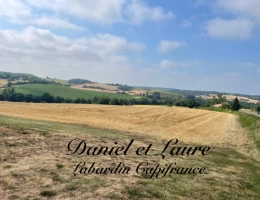
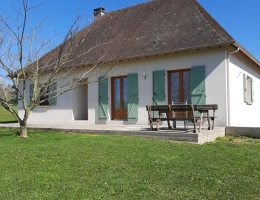
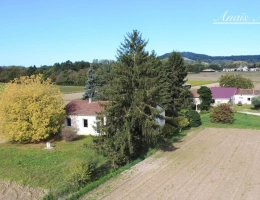
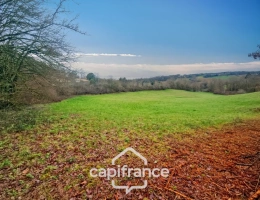
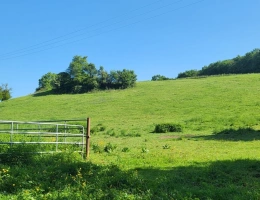
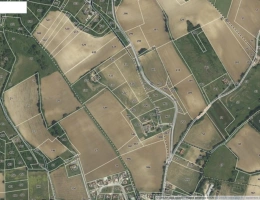
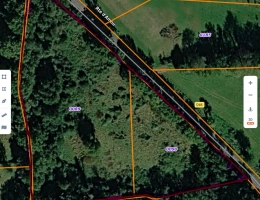
Two Corrèzes sit side by side for anyone looking at vegetables: the Brive basin, early and sheltered, and the higher, colder plateaux to the east. A market garden for sale in Corrèze is therefore sometimes a valley holding combining open field and tunnels, sometimes a modest unit living off direct sales, sometimes a nursery or an ornamental horticulture business supplying local authorities and garden centres. These files come to us from growers preparing a handover, from rural agencies in the Limousin and from Corrèze notaries; the listings state the covered area, access to water and the customer base in place. They sit within our selection of market gardens and nurseries for sale.
This page adds what the particulars usually leave out when a decision is near: land values in the department, the valleys where holdings come free, how to judge growing structures pitched on a slope, and the checks that belong to a farm takeover. To build your plan, lean on our white paper « Créer une exploitation agricole » (in French), which covers legal form, support schemes and cash flow.
Land value drives much of the asking price for a market garden or nursery. French tax transfer statistics (DVF, vineyards excluded) show, for 2025, a median of €3,682/ha in Corrèze (19), an average of €3,797/ha and 33 sales; 80% of transactions settle between €2,447 and €5,297/ha, against a national median of €5,307/ha.
On the SAFER side, the value of vacant land and pasture is set at €3,880/ha for 2025, moving +2.4% over a year and +12.1% over ten, against €6,460/ha nationally; expect an average discount of 17% where a lease is running.
On this kind of relief, value owes less to acreage than to how the ground lies and what comes with it: aspect and slope, soil depth, access to a steady water supply, the covered area and the condition of the tunnels, a washing room, cold storage, a processing workshop where there is one, and the goodwill built on weekly markets, producer shops, restaurants and school kitchens. Set your bearings with our land price observatory, then check that the plan balances in our financial calculators.
Growing under cover in Corrèze rests mainly on cold tunnels and a few multi-span houses, heated glass remaining the preserve of ornamental growers. Look closely at where the structures stand: a badly terraced slope makes run-off hard to shed and wears the frames out. Check anchorage, venting, how the films are holding, whether there is a thermal screen and how any heating works. Water deserves the same attention: spring, borehole and abstraction licence, hillside reservoir, low-flow yield, drip network and storage capacity. On the light sandstone-derived soils of the Brive basin, available water is limited and irrigation has to respond fast.
Downstream equipment is often modest and repays a careful look: washer, sorting bench, cold store, a room approved for supplying customers direct, a van fitted out for market days. A plant nursery for sale is judged on other things, its container beds, shading, water reserve, rootstocks in the ground and the standing of its name among landscapers. Where dwelling, buildings and land form a single lot, obtain a written breakdown of the price before arranging finance.
The Brive basin carries most of the vegetable production: light soils that warm quickly, a sheltered climate, a tradition of fine crops and a town close enough to sustain direct selling. The Corrèze and Vézère valleys, from Tulle up to Uzerche and Terrasson-Lavilledieu, offer narrow but fertile alluvial floors, generally worked by small mixed holdings. Eastwards, around Ussel and on the Millevaches plateau, altitude shortens the season and turns farming towards livestock; vegetable growing exists there mainly as micro-holdings selling locally.
Land in Corrèze is among the more affordable in the wider south-west, which draws in newcomers, but good valley-bottom ground is scarce and much wanted. Around Brive, urban spread and competing uses tighten supply, while the plateaux offer larger and less contested acreages, at the cost of a shorter season and a thinner customer base.
In a department of springs and small rivers, water looks plentiful yet grows scarce by late summer. Have the legal status of every abstraction point spelled out, the licence attached to it, the volume permitted and how dependable the flow is in dry spells; an older hillside reservoir calls for a check on both the structure and its declaration. Look too at how the parcels are zoned, particularly on the edges of Brive and Tulle, and at whether permanent structures and farm buildings are in order, since family holdings here were often built up in stages.
A handover goes through the structures control, the prior authorisation needed to farm, and SAFER may step into the sale; rented ground stays subject to its rural lease. Ask for soil analyses and the cropping history, especially on former orchard plots turned over to vegetables. Verify how long organic certification has run, common locally, and how it passes on, then how solid the outlets are: market customers attached to the seller do not simply transfer with the keys.
The properties gathered here come from private sellers, from agencies specialising in rural property and from notaries practising in Corrèze. Set your criteria for area, budget and district, create an alert to follow new listings, then widen the field to market gardens for sale in Nouvelle-Aquitaine.