
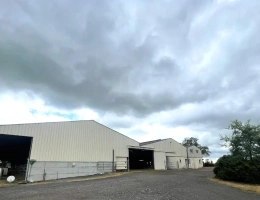
Looking for a dairy farm for sale in Calvados means aiming at one of the cradles of French milk production, where Normande cows sit alongside Prim'Holstein and where the milk feeds long-established cheese designations — camembert de Normandie, livarot, pont-l'évêque — as well as the Isigny butter and cream PDOs in the Bessin. The holdings on offer frequently combine grassland, standard apple orchards and traditional buildings. Listings come from farmers ending their careers, specialist agencies and notaries in Caen, Lisieux, Bayeux or Vire, with detail on herd and acreage. You will meet them again among the dairy farms for sale listed elsewhere in France.
The benchmarks a decision needs are gathered here: what grassland is worth in Calvados, which districts see the most handovers, the usual weak points of older buildings, and the collection and designation rules a milk producer has to live with. Preparing the paperwork and the financing of a setting-up project is dealt with in our white paper « Créer une exploitation agricole » (in French).
Pricing the land comes first in any plan to buy a dairy farm. On the basis of 2025 DVF sales (vineyards excluded), the median in Calvados (14) works out at €8,917/ha and the average at €9,368/ha, across 301 transactions. The central range covering 80% of sales runs from €5,785 to €13,759/ha; nationally the median is €5,307/ha.
The SAFER benchmark, the market's second yardstick, gives €10,390/ha in 2025 for vacant land and pasture (+2.8% over twelve months, +30.0% over ten years), beside a national €6,460/ha; tenanted land is worth about 17% less.
Beyond the grazing acres, the price of a dairy holding in Calvados is built on the milking block and its compliance, on housing for cows and heifers, on the slurry store and midden, on forage storage capacity, then on the herd itself, its breeding and its records. Eligibility for the protected cheese chains and an established farm-gate trade also weigh in. Anchor your figures with our land price observatory and our financial calculators.
The department holds many timber-framed or stone farmsteads of the Pays d'Auge type, to which cattle housing was added later, so the whole reads as successive layers. You check the structure and roof of the older buildings, the electrical safety work, ventilation in the cow shed, the sizing of the slurry store and the tightness of the silage clamps. The milking parlour is gone through point by point: number of stalls, automatic cluster removal, the wash circuit, the cooling unit and the pre-cooler. A milking robot fitted recently and still followed by its dealer shifts the acceptable price level noticeably, since it spares a heavy outlay in the first years after the handover.
A Normande dairy herd is valued for its cheese-making qualities and its fat and protein content, a Prim'Holstein herd for its yield; both are read through milk recording, health status and the share of heifers available. Where the sale takes in the farmhouse, the orchard and the land, refuse a single figure: ask what is attributed to the dwelling, to the agricultural land and to the production tool, since they are not financed on the same basis.
The Pays d'Auge, from Lisieux to Livarot and Orbec, remains the grassland heart of the department, with dense hedgerows, orchards and land prices held up by second homes. Westwards, the Bessin around Bayeux and Isigny-sur-Mer combines wet meadows with herds geared to butter making. The Bocage Virois in the south-west offers larger units and more affordable land. The Caen plain and the Falaise country, largely given over to arable crops, carry fewer milking herds, while the Suisse Normande and the Pré-Bocage keep medium-sized farms on broken ground.
Price differences follow that map: the coast and the tourist Pays d'Auge on one side, the inland hedgerow country on the other. For a first purchase, a unit in the Bocage Virois or in the south of the department leaves more room, provided you accept scattered blocks of land and longer journeys between them.
The whole of Normandy is designated for nitrate action, so a farm takeover is prepared accordingly: effluent storage, the spreading calendar and winter soil cover follow an action programme that has to be measured against what is actually built. Depending on cow numbers the unit falls under declaration or registration among classified installations, and the change of operator is notified to the prefecture. In the wet districts of the Bessin and the marshes, look at how the fields stand under French water law, at drainage easements and at mowing dates imposed by any agri-environment commitments.
If the farm supplies a protected designation, study the geographical area, the commitment given to the managing body and the rules on feeding the herd: a change of system can cost the benefit of the PDO. The rest is standard French rural law — leases continuing with the buyer, authorisation to farm under the structures control, possible pre-emption by SAFER, transfer of payment entitlements and the end date of the milk contract. Standard apple orchards may also carry a separate cider supply commitment.
This page brings together offers placed by farmers, rural agencies and local notaries. Refine by acreage, price or milking equipment, whether you are after a small unit or a farm already scaled up, switch on an alert so no handover passes you by, and look as well at dairy farms for sale in Normandy.