Buying a dairy farm for sale in France often starts in Normandy, the cradle of French milk: grassland, hedged bocage, the Normande breed and protected-origin cheeses have shaped a trade still passed from one generation to the next. The properties gathered below come from farmers handing over their business, negotiators who specialise in rural land and notarial offices; they set out how the herd is housed, the type of milking installation, the share of grass in the cropping plan and the processor that collects the milk. You will find them among the dairy farms for sale across the whole country.
This page goes further than a listings catalogue: the value of Normandy's pasture and arable land, the departments and districts where handovers arise, the building survey to carry out on site, and the obligations specific to milk production. Anyone shaping a setting-up project can lean on our white paper « Créer une exploitation agricole » (in French).
Pricing the land comes first in any plan to buy a dairy farm. On the basis of 2025 DVF sales (vineyards excluded), the median in Normandie works out at €8,305/ha and the average at €8,905/ha, across 1,442 transactions. The central range covering 80% of sales runs from €5,139 to €13,206/ha; nationally the median is €5,307/ha.
The SAFER benchmark, the market's second yardstick, gives €9,610/ha in 2025 for vacant land and pasture (+2.9% over twelve months, +17.2% over ten years), beside a national €6,460/ha; tenanted land is worth about 17% less.
Beyond acreage, a holding is judged on how well it hangs together: access and ground-bearing quality of the paddocks around the milking building, the grazing block itself, tracks and water points, then the housing, the slurry store, the dung pad and the silos. The herd, its genetics and its heifers count as much as the fabric, as do the commitment to the processor and, where it applies, a protected-origin outlet. Put figures against those points with our land price observatory and our financial calculators.
The Normande breed is still widely kept, often alongside Prim'Holstein cows and sometimes on its own where the farm supplies a protected-origin cheese, since the breed is written into the rules. A buyer therefore studies the dairy herd before the walls: age structure, number of in-calf heifers, milk recording results and health status. Then comes the milking equipment, which shapes the working day: a herringbone or rear-exit parlour, a milking robot already through several seasons, tank volume, the washing system, the dairy room and the store for spare parts and consumables.
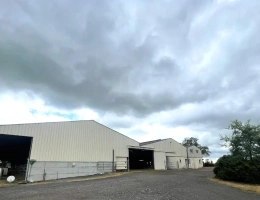
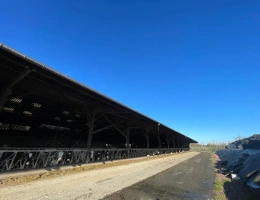
Normandy buildings are recognisable by the runs of housing added through successive enlargements, sometimes joined to an old stone or half-timbered farmstead. Damp, roof timbers, covering and rainwater management deserve close attention, as does effluent storage capacity. Where the farmhouse, frequently handsome and generous in size, forms part of the sale, insist on a price split between the dwelling, the working buildings, the machinery and the land: those four items answer to quite different markets.
The Manche (50) holds the region's leading dairy district: the Saint-Lô bocage, the Cotentin, the Val de Saire and the Avranchin line up solid grass-based holdings, with processing capacity on the doorstep and the Isigny butter and cream designation reaching across into the neighbouring Bessin. The Calvados (14) blends three settings: the Pays d'Auge, heart of the cheese appellations and a country of pasture and cider orchards; the Bessin, turned towards grass and butter; and the Bocage virois, hillier, where complete farmsteads still change hands at contained prices.
The Orne (61) carries those landscapes inland. The Pays d'Auge ornais and the bocage around Flers and Domfront remain milk country, the Perche mixes livestock with cropping, and pressure on land stays gentler than near the coast: this is often where the most coherent units for a first takeover are found. In the Seine-Maritime (76) the split is sharp: the Pays de Bray concentrates dairying and the Neufchâtel designation, while the Pays de Caux combines milk, flax and cereals on sought-after, expensive ground.
The Eure (27) sits in between. The Lieuvin and the Pays d'Ouche, wooded and damp, keep their herds and still release livestock buildings; on the plateaux of the Vexin normand and the plaine de Saint-André, by contrast, arable farming has taken over, so what comes up for sale tends to be a farmstead to convert rather than a working unit. From one department to the next, the real difference lies less in the trade than in the balance between land prices, the share of grass reachable from the buildings and the distance to the dairy: three criteria worth weighing before narrowing the search.
Much of the region is a nitrate vulnerable zone: slurry store volume and watertightness, dung pad dimensions, the spreading plan, winter soil cover and grass buffer strips along watercourses should all be checked against documents. Depending on herd size, the unit falls under declaration or registration as a classified installation, and the prefect must be informed of a change of operator. The bocage adds its own topics: hedge upkeep, drainage, wetlands and access to outlying parcels, all of which bear on how grazing can be organised.
The legal side needs equal care. Tenancy is the norm: the rural lease continues with the incoming farmer, subject to the landlord's agreement, and the deal remains subject to the structures control, the French authorisation regime for taking over farmland, and to SAFER's pre-emption right. Many holdings trade as a GAEC or an EARL, so the takeover runs through a purchase of company shares, with an audit of accounts, loans and outstanding commitments. Plan ahead for the transfer of basic payment entitlements and the qualification required to claim setting-up aid.
The areas covered by the Normandy designations, from Camembert de Normandie to Pont-l'Évêque, Livarot and Neufchâtel, take in part of the region and open the way to a higher milk price, in exchange for demanding rules on breed, the share of grass in the ration, grazing and herd management. A dairy unit already inside one of those schemes is worth more, but the same constraints come with it; check that the herd and the grazing area genuinely allow them to be met once you take over.
Where the farm has a cheese room, a processing area or a shop, the valuation splits in two: the dairy tool on one side, a going concern on the other, with its customers, health approval and delivery rounds. How much of that transfers once the seller steps back is worth discussing openly, along with the length of any handover period. Many successful transmissions in Normandy rest on a spell of working side by side, sometimes formalised within a company, before the seller withdraws completely.
Sellers, rural property firms and notaries publish their listings here, from a grassland farm complete with herd and collection contract to buildings offered on their own with pasture. Sort by area, budget or milking system, then create an alert to follow new listings as they are published. To open the search to other productions, browse the farms for sale in Normandy.