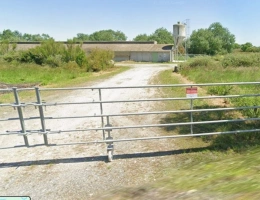
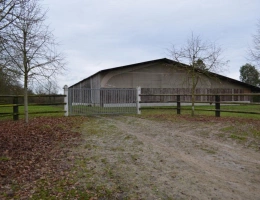
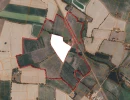

Looking for a goat farm for sale in Pays de la Loire means exploring a region geared to milk delivered to dairy companies, with the Vendée extending France's leading goat-farming basin. What comes on the market ranges from a functional shed attached to a mixed crop and livestock farm to a small bocage unit that makes and sells its own cheese. Rural agencies, notaries and farmers reaching the handover stage send us these listings, stating the size of the building, the milking equipment, the herd and where the milk goes. They form part of the national offer of goat farms for sale.
This page goes further than the listings: land values across the region, the departments where sales are concentrated, the condition of livestock buildings and the sector-specific checks to run before signing. To prepare a first setting-up project, our white paper « Créer une exploitation agricole » (in French) works through the stages, from the entry route to the cash-flow plan.
Land weighs heavily on the budget for a goat farm. Transfers published by the French tax authorities (DVF, excluding vineyards) put the median for farmland in Pays de la Loire at €3,267/ha in 2025, with an average of €3,842/ha over 1,873 sales. Eight transactions in ten settle between €1,990 and €6,500/ha, where the national median is €5,307/ha.
A second reference, the SAFER land value benchmark, sets vacant land and pasture at €4,100/ha for 2025, +1.5% in a year and +11.7% over a decade; the French average is €6,460/ha, and a sitting tenant costs a plot roughly 17% of its value.
Beyond acreage, equipment makes the difference on a goat holding here: the size and condition of the shed, the milking parlour and how far it is automated, the bulk tank, silos and forage storage, the genetic level of the herd, any cheese room with its approval, and the strength of the outlet, whether a collection contract or a local customer base built up over years. Compare the asking price with our land price observatory and cost the takeover using the financial calculators.
Sheds in this region tend to be wide and steel-clad, with straw bedding, self-locking feed barriers and a central passage; some combine a converted cattle building with a newer extension, so frame, cladding, ventilation and floor condition need checking section by section. The parlour, usually herringbone, is judged on the number of units, automatic cluster removal, washing and cooling. Add the kid rearing area, the sick pen, the dairy room and hay storage, a critical point in a system where indoor feeding dominates. A dairy goat holding recently re-equipped sells well above a site awaiting modernisation.
Management matters too: Alpine or Saanen herds, yield per doe, batch kidding or out-of-season breeding, and forage self-sufficiency from grassland and maize grown on the farm. Many farms coming up for sale deliver to a cooperative or a private dairy; a smaller number have built a cheese room and a following on markets, box schemes and producer shops. Where the farmyard includes a dwelling, ask for the house, the production tool and the livestock to be valued separately before discussing any overall figure.
The Vendée carries most of the activity: its bocage and plain continue the large Poitou goat basin, with sizeable herds, organised milk collection and dairies within easy lorry reach. The Maine-et-Loire follows, between the Mauges and the Saumurois, where goat units often sit alongside mixed farming or vineyards. In the Loire-Atlantique, goat farming is more scattered and leans towards on-farm cheese, supported by demand from the Nantes conurbation and the coast.
The Mayenne and the Sarthe have fewer holdings but frequently offer complete units — building, land and house — on cheaper farmland than in the south of the region. Protected-origin goat cheeses begin beyond the regional boundary, in Poitou and Touraine, so value here is built on delivered volume and consistent milk quality, or, for farmhouse producers, on the customer base. Land around Nantes and Angers remains the tightest in the region, and a buyer gains from comparing several departments before settling on one, since the gap in value between the Vendée and the edges of the Mayenne is often wider than the listings suggest.
Goat units fall under the French classified installations rules above a given herd size: check the applicable regime, the notification of a change of operator, distances to neighbouring dwellings and effluent storage capacity, documents in hand. The manure spreading plan must match the land genuinely available, in a region where competition for ground is keen. On the herd side, look at health certification, monitoring for caprine arthritis encephalitis, cell counts and recent milk payment statements: they often say more than a tour of the buildings.
Then test the legal footing of the deal: existing rural leases and the landlord's agreement, the structures control that authorises taking over farmland, notification to SAFER, and a clear split between company shares and assets where the farm trades as a company. A goat farm being handed over with its collection contract still needs the dairy's agreement on the volume, and nothing guarantees it passes on unchanged. Have buildings, machinery, livestock and land valued separately rather than accepting a single figure.
Private sellers, rural property firms and notarial offices supply this Loire selection. Narrow it by department, by area or by budget, and create an e-mail alert: the goat sector draws more would-be buyers than there are farms on the market, and many deals are done as soon as a listing goes live. You can also widen the search to farms for sale in Pays de la Loire.