
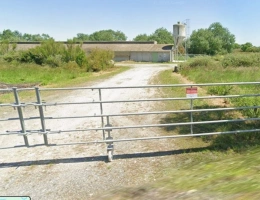
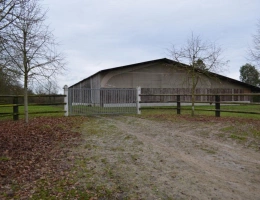

Acquiring a goat farm for sale in Maine-et-Loire means settling in one of the best organised caprine departments in the country, where milk collection has processing plants close at hand and where herds reach sizes seldom met elsewhere. The properties published on this page reach us from breeders arranging their succession, from practices specialising in farming estates and from notaries in the Saumurois, the Mauges and the Segréen; each description states how many dairy goats are milked, how the building is laid out, what milking plant is installed, the forage area and the contract or sales route. They join our national directory of goat farms for sale.
Past the description, this page gathers what tips a decision: local land values, the districts where a caprine unit comes free, how to appraise a large-volume shed and the checks specific to the dairy chain. Our white paper « Créer une exploitation agricole » (in French) sets out the stages of setting up.
Land weighs heavily on the budget for a goat farm. Transfers published by the French tax authorities (DVF, excluding vineyards) put the median for farmland in Maine-et-Loire (49) at €3,055/ha in 2025, with an average of €3,388/ha over 408 sales. Eight transactions in ten settle between €2,350 and €4,831/ha, where the national median is €5,307/ha.
A second reference, the SAFER land value benchmark, sets vacant land and pasture at €3,820/ha for 2025, +2.1% in a year and +25.7% over a decade; the French average is €6,460/ha, and a sitting tenant costs a plot roughly 17% of its value.
On a caprine unit, buildings and animals often count for more than the hectares: the length and ventilation of the shed, the parlour and its hourly throughput, the bulk tank, silos and forage barn, effluent works, young stock housing and, on farms that process, the make room, drying room, cellar and shop. The breeds kept, the yield achieved, the health status and the outlet, whether a milk contract or an own clientele, round out the judgement. Set those against our land price observatory and our financial calculators.
The department holds sheds designed for substantial herds: long buildings in ventilated cladding, wide bedded areas, a central feed passage, sometimes mechanised feeding. The examination bears on the atmosphere actually achieved inside, on the state of the frame and the cladding, on how the milk room is built, then on the parlour, its throughput, its washing system, its metering and the cooling capacity. Slurry store, muck pad and concreted traffic areas deserve careful checking, since bringing them into compliance can weigh heavily on a takeover plan. Forage and concentrate storage shows how secure the unit's supply is.
Part of the holdings process on site: make room, drying room, ripening cellar, cold store and sales point then form an asset appraised on the approval, the volumes handled and the customers won on market stalls and in producers' shops. Units that deliver are judged on the contract, its volume and how long it still runs. When the sale covers a whole with house, outbuildings and land, ask for a breakdown: in the Saumurois and along the Loire, old stone reaches levels unrelated to farming use.
Caprine holdings are spread mainly across the south and east. The Saumurois, around Doué-en-Anjou, Montreuil-Bellay and Vihiers, brings together sizeable herds and purpose-built sheds. The Mauges, from Chemillé to Beaupréau and Cholet, combine hedgerow country, dense livestock farming and well equipped farms. The Baugeois, towards Baugé and Noyant, offers light soils, woodland and more affordable land. The Segréen, around Segré and Candé, keeps meadows and livestock buildings that come up for takeover. The Layon vineyard and the Authion valley with its horticulture, by contrast, hold their land at levels hard to reconcile with livestock.
No caprine designation covers the department, the Touraine and Poitou areas stopping at its boundaries: the value of the milk therefore rests on collection and on the processors established in the region, completed for farmhouse units by the markets of Angers, Saumur and Cholet, by producers' shops and by steady visitor numbers along the Loire.
With herds that are often large, a caprine holding here frequently falls under registration, sometimes authorisation, within the French classified installations regime, the change of operator being brought to the prefecture's notice; smaller herds remain governed by the departmental health regulation. Ask for the receipt or the order in force, for the manure spreading plan and the area it covers, and for effluent storage capacity measured against the period when spreading is banned. Check finally which nitrate vulnerable zones apply to the parcels, where the water comes from, the abstraction permit and the summer restrictions applied recently.
The health side is documented through CAEV monitoring, the caprine arthritis-encephalitis virus, paratuberculosis screening and cell count results; where milk is processed, call for the food safety plan, the approval or derogation covering direct supply and the self-monitoring records. An organic commitment, for its part, is confirmed by the body that certifies the holding. Rented parcels stay under a rural lease, transferable with the landlord's agreement, and the takeover passes through the structures control, the French authorisation regime for taking over farmland, then through SAFER.
Retiring breeders, rural estate agencies and notaries based between Angers, Saumur and Cholet feed this page. Compare holdings on herd size, on forage area or on how the milk is valued, then switch on an e-mail alert, because a caprine unit meets more buyers than sellers here. Preparing your own sale? Post the listing. Then widen to goat farms for sale in Pays de la Loire.