
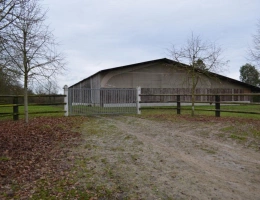
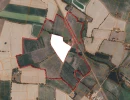

Looking for a goat farm for sale in Mayenne takes you into hedgerow country where livestock shapes the landscape, yet where caprine herds sit well behind dairy cattle: openings are therefore rarer than in neighbouring Anjou, and usually family-sized units geared towards processing. The properties shown here come from breeders arranging their exit, from rural estate agencies covering the west of France and from notaries in Laval, Château-Gontier and Mayenne; they state the herd, the nature of the shed, the milking equipment, the forage area and how the milk is valued. All of them appear in our selection of goat farms for sale.
What the listing leaves aside follows: the level of local land and pasture values, the districts where a caprine unit comes forward, the recurring shortcomings of converted buildings and the checks tied to farmhouse cheese making. Our white paper « Créer une exploitation agricole » (in French) maps out the groundwork for setting up.
Land weighs heavily on the budget for a goat farm. Transfers published by the French tax authorities (DVF, excluding vineyards) put the median for farmland in Mayenne (53) at €6,059/ha in 2025, with an average of €6,502/ha over 343 sales. Eight transactions in ten settle between €4,600 and €9,000/ha, where the national median is €5,307/ha.
No SAFER land value is published for this territory, so the benchmark stays national: €6,460/ha for vacant land and pasture and €5,350/ha where a tenant is in place.
On this kind of property most of the value lies somewhere other than in the hectares: the shed and its ventilation, the parlour, the bulk tank, the hay barn, concreted areas and effluent storage works, the young stock building, then the make room, drying room, cellar and shop where the farm processes. The breeds, the herd's health status and its ability to rear replacements come next, along with the strength of the outlet and how the parcels sit around the buildings. Cross-read those headings with our land price observatory and our financial calculators.
Most caprine units here occupy former cattle buildings or reworked barns rather than purpose-built housing. You therefore need to measure the headroom above the bedded areas, and to judge the width of the feed passage, the air intake and how damp is handled in this Atlantic hedgerow country. The milking plant follows, with its washing system, its metering and the tank capacity, then the slurry store, muck pad and concreted surfaces, whose compliance puts a figure on the work to undertake. The forage barn, the state of the roof frame and the access for the collection lorry close the inspection.
Where milk is processed on site, value shifts to the make room, the drying room, the ripening cellar, the cold store and the sales point, appraised on the approval held, the volumes made and the customers already won over. A herd supplying a dairy is read differently, through the reliability of collection and the years left on its contract. Faced with a farmstead sold with house, stone outbuildings and land, insist on a breakdown, since the residential share of old stone can come as a surprise.
A dairy goat holding is most often met with in the southern and western half of the department. The pays de Craon and the Sud-Mayenne, around Craon, Cossé-le-Vivien and Château-Gontier, bring together pasture, livestock buildings and medium-sized farms. The hedgerow country of the Ernée and the Bas-Maine, towards Ernée and Gorron, keeps a dense field pattern and affordable land. The Coëvrons, around Évron and Sainte-Suzanne, offer drier soils and rough grazing. To the north, the surroundings of the mont des Avaloirs and Pré-en-Pail combine grass, relief and lower values under harsher weather.
The department is covered by no caprine cheese designation: value depends on regional collection, on a well established organic sector and on direct selling, supported by the markets of Laval, Mayenne and Château-Gontier, by producers' shops and by the short supply chains built around the market towns. Competition from cattle farming for grassland remains the main source of tension on land.
According to herd size, the unit falls under declaration, registration or authorisation within the French classified installations regime, with any change of operator notified to the prefecture; below those thresholds the departmental health regulation applies, with its distances from dwellings, often demanding where settlement is scattered. As the whole department lies in a nitrate vulnerable zone, check effluent storage capacity against the periods when spreading is banned, the spreading plan itself and the area genuinely available. Where the water comes from, the abstraction permit and drinking arrangements for distant groups also deserve verification.
Ask for the herd's status regarding CAEV, the caprine arthritis-encephalitis virus, and paratuberculosis, together with the milk analysis results; where cheese is made, the food safety plan, the approval or derogation covering direct supply and the self-monitoring records must be supplied. Any organic certification is attested by the body that follows the farm. Rented land stays under a rural lease, which continues with the buyer subject to the owner's agreement, and the transaction passes through the structures control, the French authorisation regime for taking over farmland, then through SAFER.
The properties gathered on this page are entrusted by retiring owners, by rural estate agencies and by notarial offices established between Laval, Château-Gontier and Mayenne. Sort on forage area, on budget or on where the milk goes, then arm an e-mail alert, as sales stay few in this department. Is a handover being prepared on your side? Post the listing. Continue the search among goat farms for sale in Pays de la Loire.