Finding a historic monument for sale in Brittany can lead from the granite Trégor to the Rance valley, taking in the parish enclosures of the Léon and the seaside chapels of the Morbihan. The peninsula holds a very dense religious and seigneurial heritage, between medieval fortresses, turreted manor houses and shipowners' townhouses in old port towns. A great many of these buildings are classified or registered, often still set within the rural or coastal landscape around them. Discover the historic monuments for sale listed by Brittany's private owners, agencies and notaries.
This page details the protected building types found in Brittany, the areas where they cluster, the administrative duties attached to a classified building or a registered one, and the technical checks specific to an Atlantic climate before any restoration, from the coast to the inland Argoat. To place this purchase within a wider approach, read our guide to buying prestige property in France.
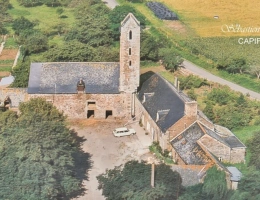
Granite dominates everywhere, from the pink granite of the Trégor to the grey granite of the Léon and the Vannetais, often paired with dark kersantite for carved surrounds and statues. Turreted manor houses, fortresses reworked in the Renaissance and chapels standing alone amid the moorland make up most of the protected buildings, alongside a handful of abbeys and priories in the Léon. In port towns such as Saint-Malo or Lorient, shipowners' townhouses display dressed-granite façades and steeply pitched slate roofs above narrow cobbled streets.
Outbuildings often complete the picture: a dovecote, a bread oven, a private chapel or a granite wayside cross, and sometimes a tide mill set on an estuary channel. These residences to restore frequently keep original timber frames and fireplaces, but need particular attention paid to joinery, heavily exposed to sea spray all along the Breton coast. Restorations favour lime renders and locally quarried slate, the only materials genuinely accepted on a protected building.
Ille-et-Vilaine, around Rennes, Saint-Malo and the Rance valley, brings together urban townhouses and manor houses close to the coast. Côtes-d'Armor, from the Trégor to the Goëlo and the Penthièvre, holds a large number of noble residences, some only a few kilometres from the pink granite coast. Finistère, from the Léon to Cornouaille and the Bigouden country, offers isolated chapels, parish enclosures and manor houses near ports such as Douarnenez or Concarneau. Morbihan, around Vannes, Auray and the gulf, rounds out the picture with residences and chapels close to the water, often set within their own grounds.
All four Breton departments are served by TGV, at Rennes and Saint-Malo for Ille-et-Vilaine, at Saint-Brieuc, Lamballe, Guingamp and Plouaret for Côtes-d'Armor, at Brest, Morlaix and Quimper for Finistère, and at Vannes, Lorient and Auray for Morbihan, with all four airports within easy driving distance. Coastal areas, from the Gulf of Morbihan to the Rance and the pink granite coast, remain the most sought-after; the inland Argoat and central Finistère offer more secluded monuments, generally more affordable for a comparable restoration project.
The same building can be classified for all or part of its features, or only registered on the regional inventory: this distinction sets the scope of approval required from the Architecte des Bâtiments de France for any project, and the seller must inform the buyer of the exact status before signing, with the administration also notified at the time of sale. The historic-monument tax regime allows, under conditions to be checked with a professional, part of the restoration costs to be deducted over several years.
In coastal municipalities, the Loi Littoral severely restricts extensions and the conversion of outbuildings, even on a building already protected as a historic monument. Have the property checked carefully for dry rot, a fungus very present in Brittany, and ask for a radon survey linked to the granite subsoil across much of the region. Finally, check the condition of the slate roofing, often worn by repeated Atlantic storms, and the drainage system, which frequently needs upgrading in the most isolated hamlets.
Historic monument listings in Brittany come from private owners, agencies specialising in heritage property and notaries; filter them by department, building type, outbuildings and protection status, and set an e-mail alert to track new listings as soon as they are published. Widen your search through prestige property for sale in Brittany.