

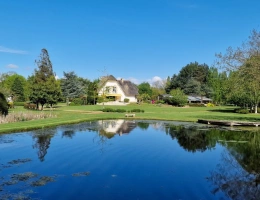
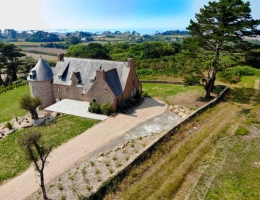
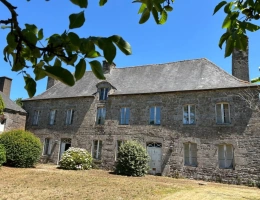

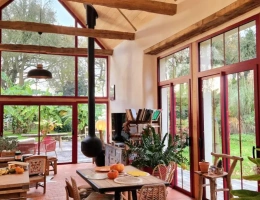
A historic monument for sale in Côtes-d'Armor often turns out to be a fortified residence in the Trégor built of pink granite, a priory in the Dinan district, or a classified chapel near a walled town such as Dinan. From the Trégor to the Dinan district, by way of the Goëlo, the Penthièvre and the Argoat, the department holds varied classified and registered heritage shaped by maritime life, the flax trade and former fortified strongholds inland. Properties on offer range from restored residences with converted outbuildings to older houses still needing renovation. Browse the historic monuments for sale listed by the department's private owners, agencies and notaries.
This page sets out the protected building types found in Côtes-d'Armor, the areas where they are concentrated, the obligations and grants tied to historic-monument status, and the checks worth making before any commitment. To place this project within a broader buying strategy, read our guide to buying prestige property in France.
Protected heritage in Côtes-d'Armor rests largely on pink granite from the Trégor and grey granite from the Goëlo, used in fortified residences, town walls such as those of Dinan, and rural priories scattered across the Argoat. Pardon chapels, tide mills on the Goëlo coast and noble residences from the old fortified country sit side by side, each carrying its own degree of protection, from a single listed element to an entire classified complex.
Outbuildings contribute fully to the heritage value: a dovecote, a bread oven, a private chapel, sometimes a former cider press tied to the apple orchards of the Argoat. Many of these buildings kept a farming use well into the twentieth century, which explains interiors that need modernising but façades and roof timbers that remain largely well preserved. Recent projects favour lime renders and local oak joinery.
The Trégor, around Lannion, Tréguier and Perros-Guirec, holds the greatest number of protected buildings close to the pink granite coast. The Goëlo, from Paimpol to Plouha, and the Penthièvre, around Saint-Brieuc and Lamballe, retain coastal residences and chapels. The Dinan district and the Rance valley, to the east, keep a walled town and priories sought after by buyers from Rennes. In the centre, the Argoat around Guingamp, Callac and Rostrenen offers more secluded monuments set among forests and moorland.
The stations at Saint-Brieuc, Lamballe, Guingamp and Plouaret-Trégor are served by TGV from Paris-Montparnasse, in a little over two hours to Saint-Brieuc; the expressway linking Rennes to Brest crosses the department from east to west. The most sought-after areas remain the Trégor coast and the Dinan district; the more rural Argoat offers protected monuments that stay markedly more affordable for comparable size.
Clarify from the outset whether the building carries classified or registered status, since this distinction sets the degree of control over future works and over the pace at which a restoration project can move forward. Any project touching the exterior elevations, the load-bearing structure or the immediate surroundings first needs a favourable opinion from the Architecte des Bâtiments de France, and a classified building additionally calls for the regional heritage office to weigh in before works can start; the historic-monument tax regime can, under conditions worth checking in detail with a specialist, ease part of the restoration bill. A classified building also cannot simply be handed over: French law requires the seller to spell out its exact status to the buyer, and the relevant administration has to be told at the same time.
On the technical side, have the property checked for dry rot (mérule), a timber fungus particularly present in Brittany, and check salt-spray exposure on façades near the Trégor and Goëlo coasts, where onshore winds accelerate stone and joinery wear. In walled towns such as Dinan, check the stability of nearby town walls and any easements tied to being within a monument's surroundings, since neighbouring plots can carry restrictions of their own. Bring in a heritage architect early, together with contractors whose references on protected buildings can be verified rather than simply assumed.
Historic-monument listings in Côtes-d'Armor are placed by private owners, agencies specialising in character properties and notaries; filter them by building type, protection status and outbuildings, and set an e-mail alert to follow new listings. To compare with Ille-et-Vilaine, Finistère and Morbihan, browse the historic monuments for sale in Brittany.