A chateau for sale in Hérault lies in a department that runs from the Mediterranean coast to the first foothills of the Cévennes, taking in the broad wine-growing plains of the Biterrois and the Piscénois. Local buildings reflect this diversity: nineteenth-century wine-estate manor houses around Pézenas and Béziers, fortified garrigue farmhouses and a handful of plainer residences in the upper Languedoc towards Lodève, in a department that is otherwise densely populated around Montpellier. Browse every chateau for sale listed by the private owners, agencies and notaries who know this large Languedoc territory.
This page gathers real price benchmarks for large Hérault residences, the areas where they are concentrated, the particularities of the local building stock and the points to check before committing, especially on an estate tied to a wine-growing operation. It also distinguishes current uses of these properties, from a second home to a continued winemaking activity or event hosting, depending on proximity to the coast or the hinterland. To plan a heritage purchase from start to finish, read our guide to buying prestige property in France.
DVF land registry data does not identify chateaux as such: the benchmarks below cover sales of houses over 300 m² of living space on 0.05 to 10 ha, above €1,000/m², tracked by our observatory. They frame the market for large residences without describing it entirely: an estate with 30 ha of parkland or a listed monument sold with its farmland falls outside this scope.
In Hérault, 95 sales were recorded from 2021 to 2025, with a median price of €1,050,000*, a floor/ceiling range (P10–P90) of €556,800 to €1,977,800 and a median of €2,879/m² of living space, for an average of 386 m² of living space and 8,283 m² of land. Across the Occitanie region, the 2025 median stands at €662,500 (126 sales), against €822,000 in France in 2025 (981 sales).
| Scope | Sales | Median price | Floor – ceiling (P10–P90) | €/m² living space (median) |
|---|---|---|---|---|
| Hérault (2021-2025) | 95 | €1,050,000* | €556,800 – €1,977,800 | 2,879 |
| Occitanie (2025) | 126 | €662,500 | €430,000 – €1,477,000 | 1,804 |
| France (2025) | 981 | €822,000 | €428,000 – €3,100,000 | 2,308 |
The breakdown by stratum (coastal, rural tourist, ordinary rural) and the five-year trend are in our observatory of prestige property prices in France (in French). Before making an offer, work out purchase costs and borrowing capacity with our financial tools and calculators.
Source: DVF (DGFiP), transactions from 1 January 2021 to 31 December 2025, processed by ma-propriete.fr; prices rounded to the nearest €100. * Fewer than 100 sales: read as an indication only.
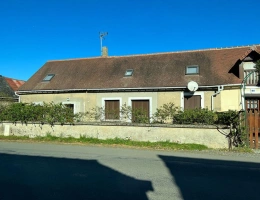
Hérault buildings combine garrigue limestone, often used raw or as rubble stone, with ochre renders reminiscent of nearby Roussillon and Provence. Low-pitched canal-tile roofs and the large symmetrical façades of nineteenth-century wine-estate manor houses mark the landscape of the Biterrois and the Piscénois. Older fortified garrigue farmhouses and plainer halls in the upper Languedoc towards Lodève and Saint-Chinian round out a varied offer in which the true turreted, moated chateau remains rare.
Properties frequently include wine-related outbuildings: a vaulted winery, a fermentation hall, farm sheds and sometimes a dovecote standing alone amid the vines. Caution is warranted with the term "chateau" attached to a wine estate, which is a commercial wine designation rather than an architectural title; the condition of the roof timbers and renders should always be checked before a restoration budget is set. Older wineries with generous volumes often lend themselves to conversion into an event space or a group gîte.
The Piscénois, around Pézenas, and the Biterrois, towards Béziers and Capestang, hold most of the large wine-estate manor houses, in a landscape of vineyards stretching to the horizon. The Saint-Chinian and Faugères areas, further north, offer hillside estates renowned for their wines. Along the coast, Sète, Agde and the Thau lagoon combine a few residences with immediate proximity to the sea and the lagoons. Further north, the Lodève area and the first Cévennes foothills, around Lodève and Clermont-l'Hérault, have a more rural, wooded character.
Rail access is helped by the TGV stations of Montpellier, Béziers, Agde and Sète, complemented by the A9 motorway crossing the department from east to west and by the A75 linking Clermont-l'Hérault to the Massif Central. Areas close to the coast and to Pézenas command the highest values; the Lodève area and the upper Languedoc, more remote, remain more affordable for comparable building quality and offer more surrounding land.
Some manor houses and old farmhouses are listed historic monuments, notably around Pézenas and along the coast; exterior works then require the opinion of the Architecte des Bâtiments de France, sometimes together with the regional heritage office. On a wine estate, check the farming status, planting rights and any existing rural tenancy before committing to the land price.
The Mediterranean climate exposes properties to periods of drought and to sometimes violent Cévennes storms in autumn; check the flood zoning near watercourses and coastal lagoons, as well as the drainage system, often a private arrangement in rural areas. The tramontane wind should also be taken into account when assessing roof condition, along with the risk of ground movement on some of the Biterrois's clay soils and the reliability of irrigation for planted vineyards.
Chateau listings in Hérault come from private owners, specialist agencies and notaries; you can filter them by price, living space, land area and wine-related outbuildings, with an e-mail alert for new properties as they are listed. To widen the search across the whole region, browse the chateaux for sale in Occitanie.