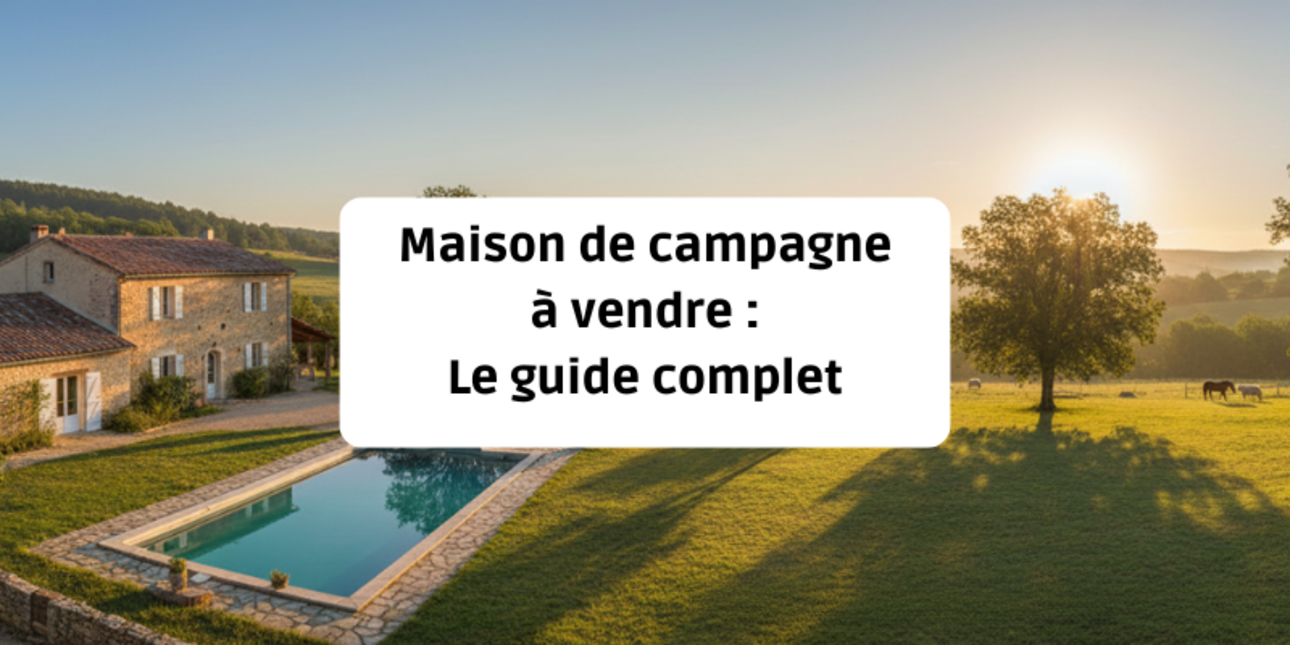
Today, more and more city dwellers are taking the step of leaving the city. Whether you are from Paris, Lyon, or Bordeaux, you might have this desire: exchanging a small, noisy apartment for a large house with a garden.
The idea is appealing. For the same price, you gain space, peace, and fresh air. It is the dream of a "life in the green." But be careful, you shouldn't dive in with your eyes closed. Buying a country house is a real life project. It requires preparation. Between falling in love with an old building and the reality of renovations or maintenance, there is often a gap.
This guide is here to help you. We will look together, point by point, at what needs to be checked to avoid unpleasant surprises. The goal? That your dream doesn't turn into a nightmare.
The first rule of country real estate is simple: time is money.
Unlike the city, the price of a country house depends mainly on its accessibility. The easier and faster it is to get there, the more expensive it is. We can divide the market into three zones:
This is the most expensive zone. It allows for very frequent round trips, sometimes even during the week. Prices are high because everyone wants this convenience.
Discover:
This is often the best compromise. You are a bit further away, but prices drop significantly. You can have a larger house and a larger plot of land. It is ideal for spending weekends and holidays.
The question to ask: Are you willing to drive 20 or 30 minutes after your train journey? Often, it is this small effort that allows you to find the best deals.
Discover:
Here, prices are very low. You can find large houses (requiring renovation work) for less than €100,000. But beware: at this distance, you will go less often. It will be a house for long holidays, not for every weekend.
Ten years ago, when visiting a house, people first looked at the condition of the roof. Today, for many of you, the priority has changed: it's the internet.
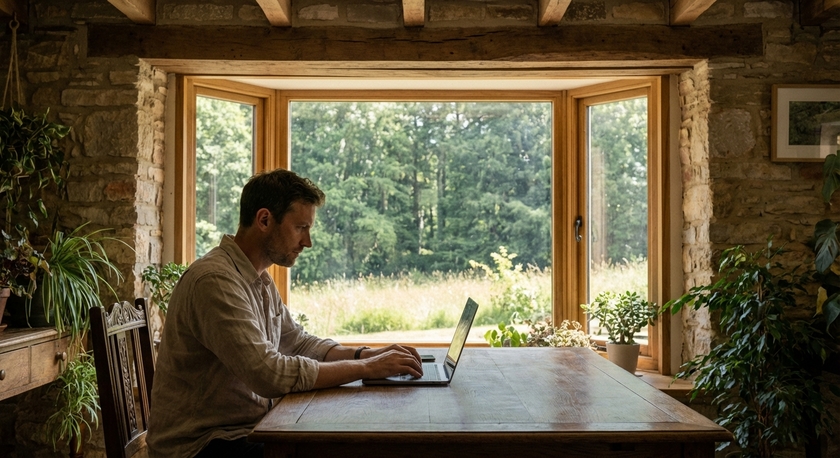
If you plan to telework from your country house (sometimes called "workation"), you cannot afford to get it wrong. A poor connection can ruin everything. Imagine: impossible to have a video meeting, impossible to send a large file... Your house would become unusable for work.
Despite progress, there are still poorly covered areas in France, known as "white zones."
Simple advice: Don't just take someone's word for it when they say "the internet works well." Check for yourself.
TO GO FURTHER: HOW TO TEST THE REAL SPEED? WHAT TO DO IF FIBER IS NOT AVAILABLE (4G BOX, SATELLITE)?
READ OUR DOSSIER: TELEWORKING AND INTERNET CONNECTION, VITAL IN 2026
This is often the sticking point of the project. You visit an old farmhouse; it has charm with its exposed stones and beams. But beware: the charm of the old often hides major expenses.
You shouldn't just look at the purchase price. You must calculate the total cost (Purchase + Renovations). Here are the three largest expense items:
Don't rely on a quick "ballpark" estimate. Materials are expensive right now.
FOR A DEEPER LOOK: HOW TO ESTIMATE YOUR RENOVATIONS WITHOUT ERROR? WHAT ARE THE PITFALLS TO AVOID?
READ OUR ARTICLE: THE REAL COST OF RENOVATIONS? AVOID UNPLEASANT SURPRISES
This is an expense often forgotten in calculations. Even if you don't live in the house year-round, you will pay taxes on it.
The taxation of secondary residences is specific:
Some town halls even increase these taxes to encourage owners to rent or sell. It is therefore important to find out more before buying.
TAX DETAILS: HOW MUCH WILL IT COST YOU? WHICH ARE THE MOST EXPENSIVE AREAS?
TAX DETAILS: HOW MUCH WILL IT COST YOU? WHICH ARE THE MOST EXPENSIVE AREAS?
READ OUR GUIDE: EVERYTHING ABOUT LOCAL TAXATION
We often hear this phrase: "I'll rent my house on Airbnb when I'm not there; it will pay my mortgage."
Let's be honest: that is very optimistic. It is very difficult to pay off the entirety of your mortgage through seasonal rentals.
On the other hand, renting is an excellent idea for paying current charges. By renting your house for a few weeks a year (in summer and at Christmas, for example), you can earn enough money to pay the property tax, heating, and maintenance. That is already huge! It allows you to have a country house that costs you nothing on a daily basis. But beware, renting requires work (cleaning, hosting, key management).
THE RENTAL STRATEGY: HOW MUCH CAN YOU EARN? WILL YOUR HOUSE APPEAL TO HOLIDAYMAKERS?
THE RENTAL STRATEGY: HOW MUCH CAN YOU EARN? WILL YOUR HOUSE APPEAL TO HOLIDAYMAKERS?
SPECIAL DOSSIER: THE TRUTH ABOUT RENTAL PROFITABILITY IN THE COUNTRYSIDE
A country house is like a living being. If left alone for too long, it deteriorates.
Damp sets in, grass grows very quickly in the garden, and a storm can displace a few tiles. Distance creates two major concerns for owners:
To truly enjoy your weekends (without spending them mowing the lawn as soon as you arrive), you need to get organized. Having a trusted neighbor or a gardener is often indispensable.
Practical solutions: Alarms, cameras, neighbors, or security companies?
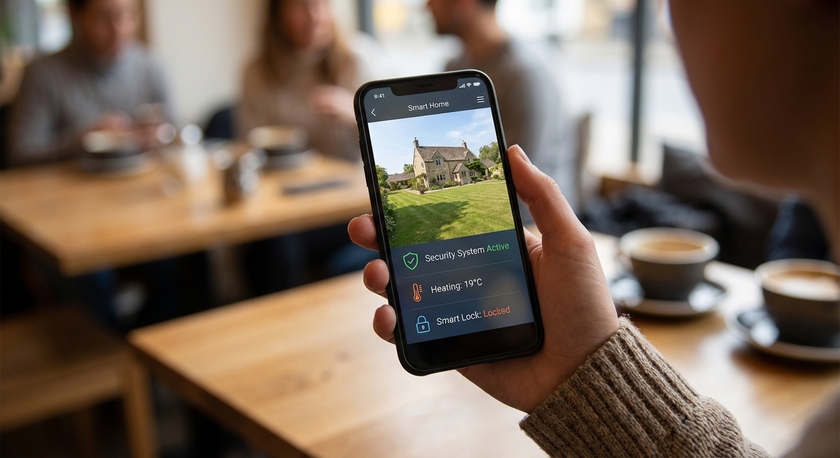
PRACTICAL SOLUTIONS: ALARMS, CAMERAS, NEIGHBORS, OR SECURITY COMPANIES?
PRACTICAL GUIDE: SECURITY AND REMOTE MANAGEMENT OF YOUR HOME
Have you fallen in love? Is the house beautiful, the view magnificent? Keep a cool head. Before making an offer to purchase, check these 5 essential points:
Buying a country house is a wonderful adventure. It's about giving your family unforgettable memories, outdoor meals, and evenings by the fire. But for this dream to remain a pleasure, it must be well thought out. Don't look for the perfect house 1 hour from Paris for a pittance: it doesn't exist. Look for the right compromise for you. A successful country house is one that is well-bought, well-insulated, and easy to manage. If you follow this advice, you will turn your desire for nature into a solid and lasting investment.
Want to make sure you don't forget anything during your visit? Download our checklist below. Print it out and take it with you on your next visits!
 |
By Bernard Charlotin, rural real estate expert for over 20 years. |