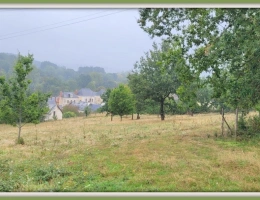
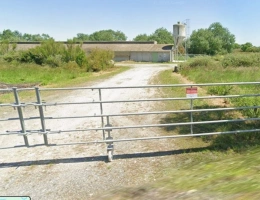
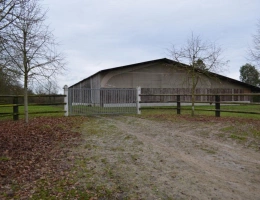

Looking for a dairy farm for sale in Pays de la Loire? This western French region is one of the country's main milk-producing areas, with herds grazed and fed on maize silage, holdings of medium to large size, and a dense collection network run by cooperatives and private groups based in the region itself. The properties gathered here come from farmers preparing their handover, from specialist rural agencies and from notaries, and each one states the forage area, how the herd is housed, the milking equipment and the condition of the buildings. You can also browse every dairy farms for sale listed across France.
Beyond the listings, this page gives the benchmarks that matter at decision time: the value of land and grassland locally, the departments where handovers are most frequent, the wear on livestock buildings, and the sector-specific checks. If you are preparing a first setup, our white paper « Créer une exploitation agricole » (in French) sets out the process step by step.
Pricing the land comes first in any plan to buy a dairy farm. On the basis of 2025 DVF sales (vineyards excluded), the median in Pays de la Loire works out at €3,267/ha and the average at €3,842/ha, across 1,873 transactions. The central range covering 80% of sales runs from €1,990 to €6,500/ha; nationally the median is €5,307/ha.
The SAFER benchmark, the market's second yardstick, gives €4,100/ha in 2025 for vacant land and pasture (+1.5% over twelve months, +11.7% over ten years), beside a national €6,460/ha; tenanted land is worth about 17% less.
Hectares account for only part of the value of a holding here. The rest rests on the cubicle or straw-bedded housing, on the milking parlour or milking robot and its age, on the bulk tank, the slurry store, the manure pad and the silage clamps, and on the dairy herd: breeds, health status and replacement heifers. The milk contract attached to the site and the distance to the dairy count just as much. To place an asking price in context, use our land price observatory and our financial calculators.
Local building stock ranges from recent cubicle houses and generous straw-bedded yards to tie-stall barns nobody ever replaced. Look at ridge height, ventilation, the state of passageways and scrapers, feed-barrier space, and how cows move between the shed, the milking block and the grazing platform. The milking installation is the heaviest single item: a well-maintained herringbone or rotary parlour, or one or two robots still covered by a service contract, will not trade like an ageing plant that has to be replaced in the first season. The bulk tank, the plate cooler and milk storage capacity deserve the same scrutiny.
Where a property is offered with a farmhouse, land and livestock, ask for a line-by-line breakdown: the house, the production unit, the machinery, the forage stocks and the animals follow different valuation logics and are financed in different ways. Herd value depends on genetics, health monitoring and age structure; machinery value on real condition far more than on purchase date. A dairy holding is easier to take over when these figures are on the table before negotiation opens, not after.
Mayenne (53) is the dairy heartland of the region: hedgerow country, abundant grass, a high density of herds, and processing and collection facilities close at hand, including the headquarters of one of the world's largest dairy groups in Laval. Holdings change hands regularly here, both as sole traders and as GAEC partnerships, on land that stays more affordable than further west. Loire-Atlantique (44) combines a hedgerow north, from the Ancenis area to the Châteaubriant countryside, where milk still dominates, with a south turned towards vines and market gardening; commuter pressure around Nantes and Saint-Nazaire pushes land prices up and makes complete units scarce.
Maine-et-Loire (49) is split between the Segréen and the Mauges, where hedgerow country carries most of the herds, and the Saumur area, given over largely to vines and specialist crops. Properties released here are often mixed, milk plus arable, so the cropping plan deserves as much attention as the milking block. Sarthe (72) is more scattered: herds cluster in the north and west of the department, on hedgerow soils and grassy plateaux, while the Loir valley and the corridor towards Le Mans leave more room for arable farming. Land here is among the most affordable in the region.
Vendée (85) retains substantial dairy farming in the hedgerow country of its north-east, from the Les Herbiers area across to Pouzauges and Chantonnay, with well-organised holdings and processing sites nearby; the plain and the coastal strip, by contrast, leave little room for milk. Across the region, supply follows the age profile of the profession: handovers are plentiful where farmers are nearing retirement without a family successor, and scarce where urban growth or other enterprises compete for land. Widening your search to two or three neighbouring departments markedly improves the odds of finding a coherent unit.
Above a certain herd size, a dairy unit is a classified installation under French environmental law: depending on cow numbers it is subject to declaration, registration or full authorisation, and any change of operator must be notified to the prefecture. Read the order in force, its requirements and any formal notices left unresolved. Much of the region lies in a nitrate vulnerable zone, the French implementation of the EU nitrates directive: effluent storage capacity, the spreading plan and winter soil cover follow strict rules there, and are better audited before you make an offer than after you sign.
On the land itself, much of the area is usually rented. A French rural lease continues with the buyer, subject to the landlord's agreement, and the deal goes through the structures control, the authorisation regime governing who may take over farmland, as well as SAFER's pre-emption right. Where the business is held through a company, examine the articles, partner current accounts and the seller's exit terms before considering a share purchase. Basic payment entitlements and running commitments, organic conversion included, transfer under conditions you should verify from the file rather than on a verbal assurance.
The region is well served by collection and processing sites, which shortens tanker rounds and secures the outlet. What remains is to read the milk contract attached to the property: remaining term, contracted volume, transfer conditions for the buyer, payment grid and specification requirements. Buyers who skip this sometimes find afterwards that the volume does not carry over unchanged. Units committed to organic production, GM-free feed schemes or guaranteed grazing operate under specific specifications, and continuity of those schemes accounts for part of the milk price received.
Farms that process on site, into butter, cream, yoghurt or cheese, and sell through short supply chains are valued separately: the approved workshop, the laboratory, the cold room, the farm shop and the customer base form a business asset distinct from the dairy unit. What you buy there is know-how and local standing as much as walls. Allow for a handover period with the seller: the sales network usually sits with them, and a few months alongside changes the shape of the first seasons.
The properties shown here are listed by farmers stepping back, by rural estate agencies and by notary offices across western France. Narrow the results by forage area, milking equipment or budget, save an alert so new entries reach you early, then widen your search to every farm for sale in Pays de la Loire.