


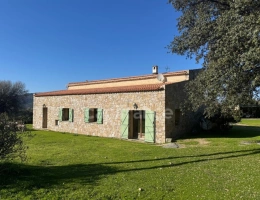
An arable farm for sale in Haute-Corse comes up only a handful of times a year, yet this department holds most of the island's workable cropland: the eastern coastal plain grows durum wheat, barley, oats and forage maize, usually in rotation with grazing, citrus or vines. What reaches the market comes from farmers preparing their exit, from firms specialising in rural property and from notaries in Bastia, Corte and the Balagne; each set of particulars states the mechanised area, the water supply, the buildings and the machinery left behind. Together they feed the national listing of arable farms for sale.
Sale particulars leave out what really decides a purchase: the cropland values recorded in the department, the communes that genuinely bring holdings to market, the true condition of irrigation equipment and storage, and the formalities of an island takeover. The route into farming itself is set out step by step in our white paper « Créer une exploitation agricole » (in French).
Pricing the land comes first in any plan to buy an arable farm. On the basis of 2025 DVF sales (vineyards excluded), the median in Haute-Corse (2B) works out at €5,012/ha and the average at €4,719/ha, across 13 transactions. The central range covering 80% of sales runs from €1,848 to €6,823/ha; nationally the median is €5,307/ha. * Fewer than 30 recorded sales: indicative value.
With no local SAFER average published, the French reference applies: €6,460/ha for vacant land and pasture, €5,350/ha for tenanted land.
Acreage tells only part of the story here. What counts first is secure water and the subscription to the collective network, how level the fields are and how tightly they sit around the yard, the draining of damp hollows, then the working value of the shed, the bins and any drier. Add machinery suited to short working windows, basic payment entitlements that can actually be transferred, and a buyer close at hand, whether a cooperative, a grain merchant or a neighbouring stock farmer. To frame an offer, lean on our land price observatory and our financial calculators.
Equipment weighs heavily in the bargaining here because it is hard to replace. A sound, aerated shed on a good concrete slab with articulated-lorry access beats any promise of building work: consents take time and freight costs push up every project. Look at the frame and roof, both tested by wind and salt air, the electrical board, how grain is shielded from damp and weevils, and the capacity that is genuinely usable once the harvest is in. On water, ask for the delivery point, the meter, the volume contracted with the network operator and, where relevant, the order authorising a borehole or a reservoir on the holding.
Machinery deserves an item-by-item look, since replacing specialist kit means waiting and paying freight. A tractor that copes with gently sloping ground, well-kept cultivation equipment, a sprayer that meets current standards and a harvest arrangement with a local contractor all change the cash position of the first seasons. Where a dwelling is included, have the house, the farmland and the production tool valued separately: near the coast, residential demand has nothing agricultural about it and distorts any reading of the headline price.
The eastern plain is the heart of the matter. From the Casinca down through the Costa Verde, then towards Aléria, Bravone and the Fium'Orbu around Ghisonaccia, alluvial soils run deep, field blocks are more regular than elsewhere and irrigation is organised island-wide; this is where genuinely mechanised holdings sit and where handovers attract the closest attention. The Balagne, between Calvi, Île-Rousse and Belgodère, keeps an old tradition of cereals and pulses on light soils, though residential demand carries land prices well past their farming value.
The Nebbio, around Saint-Florent and Oletta and up the Golo valley towards Ponte-Leccia, offers cultivable parcels between vines, olive groves and sheep runs; areas are modest and ownership is often split among several heirs. Cap Corse and the Castagniccia follow another logic altogether, one of terraces and maquis, with no arable potential. So keep one rule in mind in this department: you choose access to water first, and a commune second.
Title comes before everything else. Part of Corsican rural property is still held in long-standing undivided ownership with incomplete lines of inheritance; putting that right precedes the sale, and the notary should give the cost and the timetable at the first meeting. Have the cadastral record confirmed, along with rights of way and irrigation easements, the legal standing of the access track, and the planning zoning, which governs both any future building and the worth of a house included in the deal. Wildfire risk deserves equal care: clearance obligations bear on upkeep around the buildings and on insuring them.
On the farming side, the deal falls under the structures control, the French authorisation regime for taking over farmland, and the notary notifies SAFER of the sale. A rural lease already in place continues with the buyer, along with its rent and the tenant's right of pre-emption, so read it before you make an offer. Finally, check that basic payment entitlements transfer within CAP deadlines and that water is genuinely available for the coming season, because an arable holding here is judged on its water balance far more than on its hectares.
Three routes feed this page: owners handling their own handover, rural agencies acting under mandate, and notaries settling an estate. Give an area, a budget or a district, switch on an alert so nothing slips past you on so thin a market, and open the arable farms for sale in Corsica selection as well to take in both departments at once.


