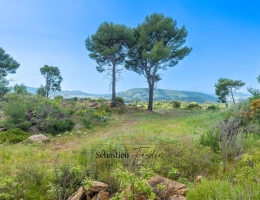
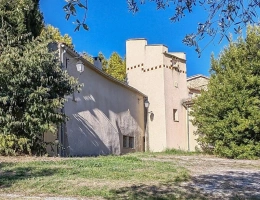
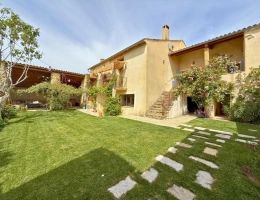
Buying a dog kennel for sale in Provence-Alpes-Côte d'Azur means buying a location first. Between a densely populated coast, an interior that empties in winter and Alpine valleys governed by the ski season, how full a kennel runs depends closely on where it stands. The businesses shown here are entrusted to us by owners reaching the end of their careers, agencies specialising in rural property and notaries; each entry gives the declared capacity, the type of construction, the size of the plot and the legal status of the activity. They join all the other dog kennels and boarding businesses for sale across France.
This page fills in what weighs on a decision: how property values sit across the six departments, where the customers really are, the usual weak points of the facilities, and the permissions to ask the seller for. If your plan is to build a business rather than take one over, our white paper « Créer une exploitation agricole » (in French) sets out the route.
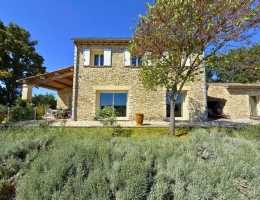
In most sales the dwelling house is the largest single item, ahead of the kennel buildings and the goodwill. According to our country house observatory, the median price of a house in a rural commune in Provence-Alpes-Côte d'Azur stood at €360,000 in 2025 (+1.7% year on year), or €3,465/m² of living space, across 4,521 recorded sales. The national median is €189,200.
The buildings explain only part of the price. So does the capacity written into the prefectural order, rarely extendable in this region; the shade and airflow that decide how the dogs cope in summer; fenced exercise paddocks, a treatment room and quarantine space; and then the business itself, meaning a loyal clientele, holiday bookings, an established name and visibility online. Place the property element through our country house price observatory, then cost the deal with our financial calculators.
In this climate a kennel is judged on its shade as much as on its blockwork. Check which way the boxes face, the height under the roof, whether steel sheeting is insulated, cross ventilation, drinking points, and how the fencing stands up to the mistral. Floors should be washable, laid to a fall and connected to a compliant drainage system, often a private one in rural communes. Boarding kennels that already include a treatment room, a laundry, a vermin-proof feed store and a separate quarantine block will spare you immediate works; access for the fire service and water supply for firefighting matter too, in country exposed to wildfire.
An advertised price nearly always blends the house, the facilities and the goodwill: ask for a written breakdown before you negotiate. In a region where the dwelling carries so much value, that distinction changes the funding plan and the tax treatment alike. Where the sale is a dog breeding business, breeding stock, the registered kennel name and committed litters are valued separately; an attached cattery only counts if it genuinely sits away from the barking, which improvised conversions rarely achieve.
Alpes-Maritimes and Var carry the heaviest demand: Nice, Cannes, Antibes, Toulon and the gulf of Saint-Tropez combine resident population, second homes and tourist flows, with booking peaks at every school holiday. The drawback is familiar: scarce land, high prices, close neighbours and tight planning rules, which push kennels inland towards Draguignan, the Haut-Var and the valleys behind Nice. Bouches-du-Rhône offers a wider market still, from Marseille to Aix, with workable sites towards the Étang de Berre, the Crau and the Arles countryside.
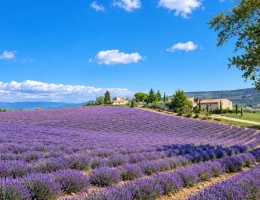
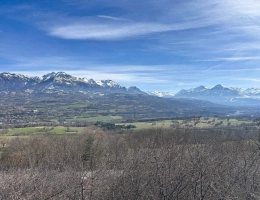
Vaucluse works on a smaller scale, between Avignon, Carpentras and the Luberon, where second homes lift summer demand. Alpes-de-Haute-Provence, around Manosque, Digne and the Durance valley, brings together space, distance from housing and sensible purchase prices, for a narrower year-round clientele. Hautes-Alpes lives to the double rhythm of the ski resorts and the summer season around Gap, the Briançonnais and the Serre-Ponçon lake: trade there falls into two full seasons separated by quiet months, and your forecast has to show it.
Operating professionally requires a declaration to the departmental directorate for the protection of populations, an identification number, and the ACACED, the French certificate of knowledge on companion animals, held by the person in charge. Beyond nine weaned dogs the premises come under the classified installations regime, by declaration and then authorisation depending on numbers; the order in force caps capacity and may impose requirements that are hard to meet. Ask for it, along with the movement register, the veterinary health monitoring contract and proof that the animals boarded are identified.
Then come the constraints specific to this region: the legal obligation to clear vegetation around buildings, wildfire and flood risk prevention plans, and zoning that sometimes rules out any new construction. Noise remains the first source of dispute: measure the distance to third parties, listen to the site at sensitive hours and ask for the record of complaints. Finally, be clear about what you are buying, premises or business, whether a lease exists, and plan a handover period so the clientele transfers without a break.
Retiring owners, rural property firms and notaries feed this page. Target a department, a capacity or a budget, save an alert to follow new arrivals as they are published, and continue through all farms for sale in Provence-Alpes-Côte d'Azur.