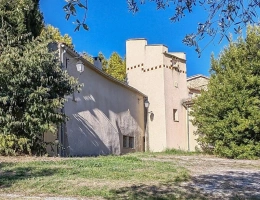
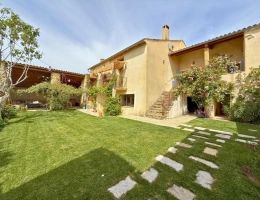
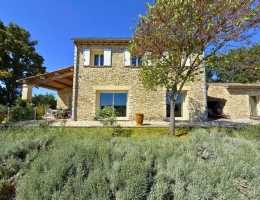
Looking for a dog kennel for sale in Alpes-de-Haute-Provence means entering a narrow but readable market: a few businesses a year, nearly all attached to a house and a generous plot, along the Durance valley or in the hill country on either side of it. Sales come from operators reaching the end of their working life, from rural estate agencies in Manosque, Digne-les-Bains or Sisteron, and from notarial offices; the particulars give the registered capacity, the state of boxes and runs, whether a cattery exists and what the land amounts to. These properties join our national selection of dog kennels and boarding businesses for sale.
Here you will find what the adverts leave out: where rural property values sit in this department, how customers divide between the Durance corridor, the plateaux and the high valleys, what the climate demands of the buildings, and the regulatory checks to carry out. If your plan is to start up rather than buy an existing business, our white paper « Créer une exploitation agricole » (in French) marks out every stage.
In most sales the dwelling house is the largest single item, ahead of the kennel buildings and the goodwill. According to our country house observatory, the median price of a house in a rural commune in Alpes-de-Haute-Provence (04) stood at €260,000 in 2025 (+0.0% year on year), or €2,745/m² of living space, across 553 recorded sales. The national median is €189,200, against €360,000 across Provence-Alpes-Côte d'Azur.
In a department where space is plentiful, the gaps in price come from the facilities and the trade. What counts is the number of compliant boxes, how they are protected against summer heat and mountain frost, the shade over the exercise paddocks, the treatment room, the quarantine kennel, and year-round access to the site. The business then completes the picture: loyalty among local customers, repeat summer bookings, standing with the local vets. Place the property element with our country house price observatory and check that the numbers balance using our financial calculators.
A business here meets dry, burning summers and then hard winter nights as soon as altitude rises. Scrutiny therefore starts with thermal protection: natural or built shade over the runs, cross ventilation, insulated sleeping areas, back-up heating, pipework kept clear of frost. Water comes next, a sensitive resource in this department: where the supply comes from, how much can be stored, how reliable it stays during restrictions, and where washing water ends up. Many sites occupy converted farm buildings whose stone walls stand up very well, while floors, wiring and drainage often have to be redone from scratch.
Look too at what governs daily operation: a road to the plot that stays usable, a laundry, a feed store sheltered from the heat, parking for customers. Where the dwelling house is part of the sale, as it almost always is here, it usually forms the largest single item in the price. Ask for a written split between house, professional premises, equipment and goodwill before you start negotiating.
The population of the department gathers along the Durance: Manosque and its employment basin, Château-Arnoux-Saint-Auban, Oraison, Sisteron, then Digne-les-Bains off to one side. Forcalquier and the Lure country form a second cluster, continuing towards the eastern Luberon. That is where the permanent customers live, and businesses well linked to this corridor also draw demand from the Aix area. The rest of the department — the Valensole plateau, the Verdon gorges, the upper Verdon and the Ubaye valley around Barcelonnette — lives largely on holidays and second homes, with summer peaks and, in the mountains, a ski season.
Low density forces you to think broadly. Taking over is safest when the business already brings customers spread across several valleys, sometimes beyond the department towards Hautes-Alpes or Bouches-du-Rhône. Check how far customers typically drive and whether an animal collection service exists, since that widens the trading area appreciably.
Whoever runs the activity must hold the ACACED certificate of competence, and the premises must be registered with the departmental veterinary protection service, which allocates a number that has to appear on any advert offering puppies. Above nine weaned dogs kept on site, the classified installations regime applies, by registration and then prefectoral authorisation depending on numbers, with minimum distances from dwellings and requirements covering noise, water and waste. The existing order sets a ceiling: any increase in capacity means a fresh procedure, to be anticipated before a business plan is built on it.
Confirm that the planning document allows the activity on the plot, especially in areas governed by French mountain legislation or classified as natural land. Statutory clearance of vegetation around buildings applies across much of the department, and wildfire risk shapes both insurance and evacuation arrangements. Lastly, ask for veterinary inspection reports, the registers and, for a dog breeding business, the traceability of the breeding stock.
The properties visible on this page are sent to us by owners handing over, by agencies specialising in rural property and by notaries practising locally: sometimes a trading boarding business, sometimes a kennel in need of modernising, occasionally a cattery run alongside. Because openings are scarce, an e-mail alert is the surest way to hear of one; then widen the search across dog kennels for sale in Provence-Alpes-Côte d'Azur.