
Buying a dog kennel for sale in Alpes-Maritimes means stepping into one of the most sought-after markets in France, where a large and demanding clientele meets boarding capacity held back by the scarcity of land. The businesses that change hands usually lie in the Var valley, the hills behind Grasse or the middle country, rarely on the coastal strip itself. These files reach us from operators selling up, from specialist agencies and from notaries; they state the registered capacity, the condition of the boxes, whether a cattery exists and what the land contains. They join our overview of dog kennels and boarding businesses for sale.
Beyond the properties on offer, this page brings together what lets you judge a deal on the Riviera: property values away from the built-up coast, where demand actually sits, what climate and relief impose on the facilities, and the regulatory steps to take. For a project built from nothing, our white paper « Créer une exploitation agricole » (in French) covers legal status, funding and licensing.
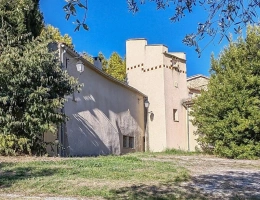
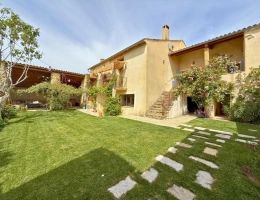
In most sales the dwelling house is the largest single item, ahead of the kennel buildings and the goodwill. According to our country house observatory, the median price of a house in a rural commune in Alpes-Maritimes (06) stood at €352,770 in 2025 (+0.8% year on year), or €3,537/m² of living space, across 360 recorded sales. The national benchmark is €189,200, the regional one (Provence-Alpes-Côte d'Azur) €360,000.
Scarcity rules here. A site with comfortable authorised capacity, enough distance from the nearest houses and easy access from the coast sells well beyond the plain cost of the walls. Add the quality of the boxes, summer cooling or ventilation, shade over the paddocks, a separate cattery, and above all the value of the business: loyal customers who can pay, bookings already committed, online reputation, working relations with town vets. Frame the property element on our country house price observatory and model your funding with our financial calculators.
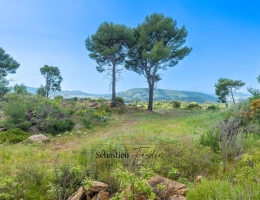
The department rises steeply from the sea, and the available sites often occupy terraces or sloping ground. How the boxes are laid out, how sound the retaining walls are and where water goes during violent rain are therefore the first chapter of any viewing. Summer comes next: shade over the runs, ventilation or cooling of sleeping areas, water storage, floors that are easy to wash down. Purpose-built modern facilities are rare; most premises result from successive adaptations of older buildings, and their real state has to be matched point by point against the permissions granted.
Then examine the supporting functions: treatment room, quarantine kennel, a cattery insulated from the noise of the dogs, laundry, and parking generous enough for customers arriving by car. Where a dwelling house forms part of the whole, its weight in the price is considerable in this market; insist on a written split between house, professional premises, equipment and goodwill, without which the value of the business itself cannot be assessed.
Customers are found first along the coastal belt, from Menton to Cannes by way of Nice, Antibes, Cagnes-sur-Mer and Vallauris, extended by the Sophia Antipolis business park and by Grasse. They travel a great deal, which sustains boarding demand all year and swells it during holidays and long weekends. Capacity, by contrast, sits higher up: the Var valley towards Carros and Saint-Martin-du-Var, the hills around Vence and Le Bar-sur-Loup, the Grasse country, then the upper valleys of the Vésubie, the Tinée and the Roya, where space exists but journeys grow long.
That gap between where customers live and where businesses can stand explains the value of sites well connected to the coast. Check real travel times at busy hours, the quality of the road access and, in the valleys, how vulnerable that access is to bad weather. A collection and return service, common here, markedly changes the commercial balance of a boarding kennels takeover.
The operator must hold the ACACED certificate of competence and the premises must be registered with the departmental veterinary protection service, which allocates the number to be shown on any advert offering puppies. Beyond nine weaned dogs the site falls under the classified installations regime: registration, then prefectoral authorisation above that, with separation distances, noise limits and effluent management. In this heavily built-up department the local planning document is the most sensitive point: many plots are classified as natural or agricultural land, and an extension, or even the regularisation of an existing building, is never a given.
Add the statutory obligation to clear vegetation, the wildfire risk and, in certain valleys, the flood risk, all of which bear on insurance and on evacuation planning. Investigate the neighbours: development has caught up with sites that were once isolated, and noise complaints lead to long disputes. Ask for the prefectoral orders, the veterinary inspection reports and the registers before you sign.
What you see here comes from owners handing over, from rural estate agencies and from notaries practising on the Riviera: a boarding business in operation, a breeding kennel devoted to a recognised pedigree, sometimes a cattery on its own. Use the filters to target capacity and budget, set up an alert because properties move quickly, and extend your search to dog kennels for sale in Provence-Alpes-Côte d'Azur.