

A goat farm for sale in Corsica is a different proposition altogether: hardy Corsican goats run extensively on the maquis, nearly every holding turns its milk into cheese on site, and the year is still shaped by moving stock between summer and winter grazing. The files listed here come from island farmers handing over, from notarial offices and from rural property agencies, and they set out herd size, the pastoral area used, the status of the grazing rights and whether a registered cheese room exists. They sit within the wider set of goat farms for sale in France.
Beyond the listings, you will find here what the island's grassland and farmland are worth, the micro-regions where herds come up for sale, how to judge a livestock building put up in stages and the checks that pastoral farming here demands. Before committing, our white paper « Créer une exploitation agricole » (in French) sets out the route to setting up, from qualification to funding.
Land weighs heavily on the budget for a goat farm. Transfers published by the French tax authorities (DVF, excluding vineyards) put the median for farmland in Corse at €5,012/ha in 2025, with an average of €5,445/ha over 19 sales. Eight transactions in ten settle between €1,980 and €10,317/ha, where the national median is €5,307/ha. * Fewer than 30 recorded sales: indicative value.
No SAFER land value is published for this territory, so the benchmark stays national: €6,460/ha for vacant land and pasture and €5,350/ha where a tenant is in place.
Owned hectares do not sum up what a dairy goat holding is worth in Corsica. What counts is the goat house and its bedded area, the parlour and tank, the making and drying rooms where cheese is produced, the size and management of the herd, the usage rights over collective grazing, and — often decisive — the local custom the farm's cheeses have won. Cross-check all of it with the land price observatory, then test your figures with our financial calculators.
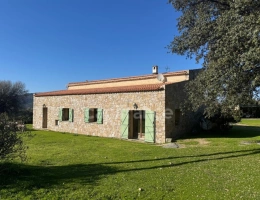
Island holdings have usually grown in stages around an older core. You will see open, freely ventilated goat houses, sometimes little more than shelters out on the grazing, and small in-line parlours where milking has been mechanised at all. Examine shade and shelter from heat and wind, the bedded area and how it is cleared, water autonomy — borehole, declared spring or tank —, the reliability of the power supply, covered storage for hay, part of which is generally shipped in from the mainland, and vehicle access along tracks that are often long and steep.
Processing is the rule rather than the exception: Brocciu, which holds a protected designation of origin, alongside tommes and farmhouse cheeses ripened in a cellar, made for local and seasonal custom. The value of that side rests on the room itself, the drying room, the cold store and above all on a compliant chain. As for the stock, the Corsican breed yields less than an Alpine or a Saanen but turns rough maquis into milk where nothing else would; herd age, the share of replacement kids and the local bucks are all discussed item by item.
Haute-Corse holds most of the island's goat herds. The Niolu, the Castagniccia, Cap Corse and the valleys opening onto the eastern plain remain livestock country, where the seasonal move between summer grazing and lower ground still sets the calendar. The Balagne pairs small herds with a dense tourist trade, which favours direct selling but pushes up anything near the coast. Sales there often involve a modest smallholding in built terms, attached to wide pastoral areas held outright or under agreement.
In Corse-du-Sud, farming sits mainly inland: the Alta Rocca, the Taravo valley, the upper Prunelli and the hinterland behind Ajaccio offer extensive grazing and cheaper land than the coastal fringe, where housing demand is intense. Across the island, the area genuinely controlled matters more than the area advertised, since many holdings use communal, sectional or jointly owned land whose use passes on far less easily than freehold.
Title is the first thing to check in Corsica. Undivided inheritances and parcels never formally registered remain common; the long-running programme to regularise them has not covered everything, and a sale can stall on the consent of co-owners nobody can trace. Have the notary look into it very early. The second issue is land used without a written basis: precarious grazing agreements, sectional ground, verbal arrangements between neighbours. What is not in writing does not transfer, and the herd's forage capacity depends on it directly.
On permits, the unit falls under departmental health rules or, above a certain herd size, under the classified installations regime, with the change of operator to be declared. Check the position under the island's planning framework, which protects farmland strictly and controls building near the shore, and check the herd's health record, CAEV first among them. Visit during the milking season, when the cheese room is actually working.
Farmers reaching the end of their career, rural property agencies and island notaries keep this page supplied. Pick a department, a price bracket or an area, ask for the e-mail alert so no goat cheese farm slips past, and look as well at farms for sale in Corsica, which include pastoral properties that could be converted.