

An historic monument for sale in Martinique remains very rare on the private market: classified or registered buildings mostly belong to municipalities or foundations, or stay within the same family line for several generations. The private market mainly offers creole residences, former agricultural rum distilleries and plantation-era master houses built around sugar-cane and banana estates, from the volcanic north to the drier south. Browse the historic monuments for sale listed by the island's private owners, agencies and notaries.
This page sets out the heritage building types actually found in Martinique, the areas where they occur and the checks specific to an old building in a tropical zone. To approach the purchase of a character property as a whole, read our guide to buying prestige property in France.
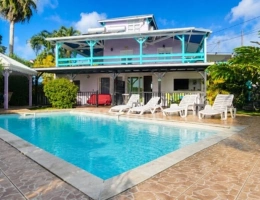
Martinique's protected heritage brings together former sugar estates, agricultural rum distilleries with their brick chimneys, stills and working buildings, and private chapels; part of this heritage is registered or classified and rarely offered for sale. The residences to restore that do come to market are mostly creole houses with timber balustrades, shingle or tile roofs and wide galleries opening onto the garden, sometimes with a former rum store or farm building attached.
These properties often pass down through several generations and only change hands on settlement of an estate. When a distillery or historic estate is no longer active, its industrial buildings, vats, drying sheds and chimneys can survive without upkeep, which calls for major restoration and a close understanding of the original materials: brick, volcanic stone and tropical timber. Landscape protection covering some plantation sites can also overlap with historic-monument protection, which complicates the planning-consent process.
The Caribbean North, around Saint-Pierre and Le Prêcheur, keeps traces of older buildings rebuilt after the eruption of Mount Pelée, while the Atlantic North, towards Le Lorrain and Basse-Pointe, retains remnants of large banana and sugar estates on steeper, more forested ground. The centre, around Fort-de-France, Le Lamentin and Saint-Joseph, holds most of the island's economic activity, along with some older townhouses in the capital's historic districts. In the south, the municipalities of Le François, Le Vauclin, Les Trois-Îlets and Sainte-Anne keep former estates that have been converted, some open to the public, surrounded by cane-covered hills and dry forest.
Access is through Aimé Césaire airport at Le Lamentin, with no rail service on the island; coastal and ridge roads link the different areas. The south, more touristic and drier, holds the most sought-after properties around Les Trois-Îlets and Sainte-Anne, while the north and inland districts, wetter and more remote, offer properties to restore for a more accessible budget. The Caribbean and Atlantic coasts differ sharply, the former more sheltered, the latter more exposed to swell and sea spray, which directly affects the condition of façades and joinery.
A classified or registered building requires prior approval from the Architecte des Bâtiments de France for any work on protected elements, with the file reviewed by Martinique's regional cultural affairs office; the historic-monument tax regime may, under conditions to be checked case by case, reduce certain restoration costs. Selling a classified building obliges the seller to disclose that status to the buyer, with the administration to be notified at the time of sale.
Systematically check the title deeds and the absence of an unresolved co-ownership situation, common on old family properties handed down over several generations, as well as the position of a coastal plot relative to the fifty-geometric-paces strip. On the technical side, have the building's cyclone and earthquake resistance checked, look for termites in roof structures and woodwork, and assess the condition of any old industrial buildings where the property includes a disused distillery or mill. Also have water and drainage connections assessed, sometimes basic on the most secluded inland properties, and confirm that any conversion of former agricultural buildings complies with the applicable local planning rules.
Listings of residences and former estates in Martinique are placed by private owners, agencies specialising in character properties and notaries; filter them by property type, living space and outbuildings, and set an e-mail alert to follow new listings. To widen your search to all of the island's notable properties, browse prestige property for sale in Martinique.


