

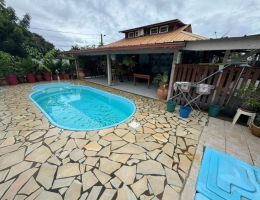
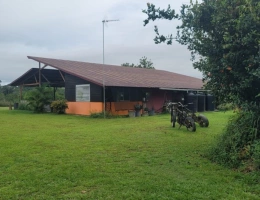
An historic monument for sale in French Guiana is almost impossible to find on the private market: the territory's protected heritage, largely inherited from its colonial and penal past, belongs mostly to the State, local authorities or heritage associations. What the market does offer instead is old creole residences, timber houses raised on piles and farming properties built around Cayenne, Saint-Laurent-du-Maroni and Kourou. Browse the historic monuments for sale listed by the territory's private owners, agencies and notaries.
This page sets out the building types actually found in French Guiana, the areas concerned and the checks specific to an old building in an equatorial climate. To approach the purchase of a character property as a whole, read our guide to buying prestige property in France.
French Guiana's protected heritage brings together administrative and religious buildings in Cayenne, former sites linked to the history of the penal colony at Saint-Laurent-du-Maroni, and timber houses raised on piles to guard against ground moisture; part of this heritage is registered or classified and managed by public institutions. The residences to restore available on the private market are mostly creole houses in tropical hardwood, with steeply pitched sheet-metal roofs and verandahs running the full length of the façade.
The equatorial climate demands constant upkeep: repainting, timber treatment and checking the piles are recurring tasks, and a property left empty for only a few years can need a full overhaul of joinery and roof structure. Traditional outbuildings, an open carbet shelter, a cistern, a former workshop, often complete these properties and deserve as thorough a survey as the main house.
Cayenne and its surroundings, Rémire-Montjoly and Matoury, hold the highest density of old creole houses, often in the town centre or on the surrounding heights, some overlooking the river estuary. Saint-Laurent-du-Maroni, on the banks of the Maroni river, retains buildings inherited from the former transportation camp, with administrative buildings and staff houses now converted to other uses, including guesthouses and cultural venues. Kourou, geared towards space-industry activity, and the sparsely populated interior, covered by equatorial rainforest, complete a territory with very contrasting land situations.
Access is through Félix Éboué airport near Cayenne and the national road linking the main coastal towns, with no rail network. The most sought-after areas lie around Cayenne and its immediate surroundings, while Saint-Laurent-du-Maroni and the interior offer more affordable but often more isolated properties, with access sometimes limited during the rainy season.
A classified or registered building requires the approval of the Architecte des Bâtiments de France for work touching protected parts, with the file reviewed by French Guiana's regional cultural affairs office; the historic-monument tax regime may, under conditions to be checked case by case, apply to certain restoration expenses. Where a building is only registered rather than classified, constraints mostly concern its immediate surroundings and any change visible from public space, which leaves more room for interior work. Before signing, ask the seller to confirm whether the protected status covers the whole building or only certain façades, since that distinction significantly changes the scope of future permitted works and the review timeline to expect.
The territory's land status has particularities that a local notary should verify with care, especially where the plot borders State-owned land, a nature reserve or a forested zone subject to a specific regime. Systematically check for termites and wood-boring insects in tropical timber, the condition of piles and foundations in a humid climate, and the actual road access depending on the season, often a decisive factor outside the main towns. Also ask about drinking-water and electricity supply, sometimes limited in the more remote areas, and about upkeep entrusted to a qualified contractor able to work local timber species without altering their original appearance.
Listings of creole residences and old properties in French Guiana are placed by private owners, local agencies and notaries; filter them by property type, living space and outbuildings, and set an e-mail alert to follow new listings. To widen your search to all of the territory's notable properties, browse prestige property for sale in French Guiana.