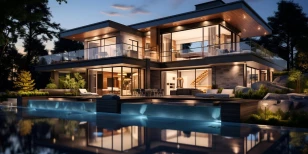

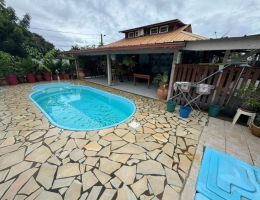
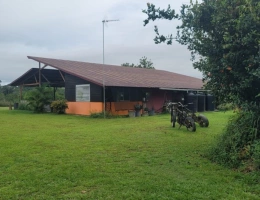
A luxury property for sale in French Guiana stands out above all for its scarcity across a territory largely covered by Amazon rainforest, where large residences cluster almost entirely along the coast. Buyers find colonial-era houses built of exotic timber, contemporary villas at Rémire-Montjoly facing the Atlantic, and a handful of former agricultural residences or notable houses in and around Cayenne. This narrow market reflects the territory's particular history, between colonial heritage and the space industry that grew up around Kourou. Browse every luxury property for sale listed by private owners, agencies and notaries in French Guiana.
This page sets out the types of residence found in French Guiana, the areas where they are located, the character of local buildings, and the land and climate checks specific to this equatorial territory bordering the Amazon rainforest. To prepare your purchase, read our guide to buying luxury property in France.
French Guiana's character buildings remain shaped by the colonial architecture of Cayenne, with houses in prized timber raised on stilts, pierced verandas and steep roofs designed for equatorial rainfall. These older residences, often found in the historic districts, sit alongside newer concrete properties built to withstand constant humidity and tropical heat. At Rémire-Montjoly, contemporary villas with wide openings enjoy direct access to the ocean, while around Kourou the building stock remains more functional, tied to the growth of the space centre and its infrastructure. Away from these three hubs, residences with genuine architectural character are scarce, and most rural buildings serve agricultural or forestry purposes rather than residential prestige.
Outbuildings on older residences sometimes include an outdoor kitchen, a water house and a garden planted with tropical species, mango and breadfruit trees. Maintaining exotic timber against constant humidity and wood-boring insects requires ongoing care, as does checking roof timbers and roofing after the rainy season. Newer construction uses materials better suited to the equatorial climate, a factor worth weighing when estimating the work needed on an older property, alongside the cost of reaching some sites by boat rather than road.
The market for large residences in French Guiana stays concentrated along a narrow coastal strip. Cayenne and its historic centre hold the oldest colonial residences, surrounded by residential districts still developing. Rémire-Montjoly, east of Cayenne, concentrates the most sought-after contemporary villas, with direct access to Atlantic beaches. Kourou, further west, offers newer building stock tied to the activity of the Guiana Space Centre and its community of engineers and technicians. Beyond this coastal triangle, most of the territory remains covered by rainforest and land largely under state ownership, where large private estates stay very rare. Saint-Laurent-du-Maroni, in the west of the territory, keeps a more modest building stock, facing the Maroni river rather than the ocean.
Félix-Éboué airport, near Cayenne, handles connections to mainland France and the West Indies; French Guiana has no railway service, and travel relies on the coastal national road or river routes into the interior. Rémire-Montjoly remains the most sought-after area; Cayenne and Kourou offer more varied properties, generally at more accessible levels.
In French Guiana, a substantial share of the territory falls under state-owned land, which strongly limits acquisition possibilities outside the developed coastal strip; the exact nature of a title should always be checked with the land registry before any project. Undivided ownership also affects some older family properties in central Cayenne and calls for careful notarial review. Access to certain plots can also depend on rights of way or proximity to protected areas, notably near coastal nature reserves.
French Guiana's hot, humid equatorial climate year-round encourages termite infestation and rapid decay of untreated timber, while the rainy season calls for close attention to drainage and roof condition. The remoteness of some areas and the lack of a collective drainage network across part of the territory are also worth checking before any project. Working with a local notary and a tropical-building specialist helps assess the condition of an older residence accurately before buying.
Luxury property listings in French Guiana, placed by private owners, specialist agencies and notaries, cover a narrow market with little reliable statistical coverage and few comparable transactions. We recommend a contact request to our local correspondents, who know the Cayenne coast and the territory's particular land issues, to refine your search to your criteria.