

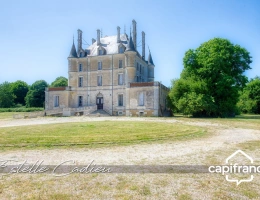

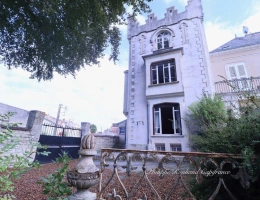
A historic monument for sale in Vendée mirrors the department's turbulent history, from fortified residences in the bocage marked by the Vendée wars to Renaissance townhouses in Fontenay-le-Comte and coastal fortifications around Les Sables-d'Olonne and Noirmoutier. Protected heritage here is varied: medieval keeps, rural chapels, windmills along the coast and merchant houses in the Marais poitevin to the south-east. Browse the historic monuments for sale listed by Vendée's private owners, agencies and notaires.
Here you will find the protected building types found in Vendée, how they are spread across coast, bocage and marshland, the obligations tied to classified or registered status, the grants available for restoration, and the checks worth making before you buy. Particular attention is paid throughout to the distinction between coastal and inland properties, since climate and access conditions differ sharply within the department. To approach this project as a whole, read our guide to buying prestige property in France.
The Vendée bocage holds fortified residences from the sixteenth and seventeenth centuries, often scarred by the Vendée wars: partly filled-in moats, corner towers, adjoining chapels. Fontenay-le-Comte, the former capital of Bas-Poitou, still has Renaissance townhouses with carved façades, some protected as a listed chateau or registered building for their façade and staircase. Along the coast, around Noirmoutier and the Bay of Bourgneuf, windmills and shipowners' houses tell a maritime story quite different from that of the inland bocage.
Outbuildings vary by area: farm buildings and dovecotes in the bocage, wine stores and cellars in the vineyard district near Mareuil, boat sheds and salt driers near the coast. Condition remains uneven; some residences keep original panelling and fireplaces, while others need a new roof or frame. Recent works favour local materials, tuffeau or local limestone, to respect the original appearance of protected façades. Roof structures in oak or chestnut sometimes need reinforcing after decades of limited upkeep, and window frames on a coastal residence call for timber species that withstand salt-laden air better than untreated softwood.
The coast, from Les Sables-d'Olonne to Saint-Jean-de-Monts and Noirmoutier, holds shipowners' houses and older seaside villas a few kilometres from the Atlantic shore. The central bocage, around Chantonnay, Les Herbiers and Pouzauges, keeps fortified residences scattered across hedgerow country and low hills. To the south-east, the Marais poitevin and the Fontenay-le-Comte and Maillezais area offer bourgeois houses and a former abbey, on the border with Charente-Maritime and Deux-Sèvres. Inland, around Fontenay-le-Comte, several former religious buildings and rural priories round out this varied protected stock, offering a quieter alternative to the busier coastal market. The coastal areas and the Fontenay-le-Comte district remain the most sought after; the inland bocage, around Pouzauges and Mortagne-sur-Sèvre, stays more affordable for a comparable building.
The station at La Roche-sur-Yon is served by TGV in a little over two hours from Paris, with Les Sables-d'Olonne adding to the rail offer; the A83 motorway links the department to Nantes and Niort, and Nantes-Atlantique airport stays within an hour's drive. The Vendée coast has no airport of its own, which makes a car essential for reaching the more remote parts of the bocage.
Start by establishing the property's status: a classified building, the more demanding category, needs the approval of the Architecte des Bâtiments de France for any work on protected features, while a registered building allows more flexibility outside the listed elements. The historic-monument tax regime can ease the cost of restoration, subject to upkeep and occupancy conditions worth checking case by case before committing, especially for a residence opened to the public on occasion.
Selling a classified building requires the buyer to be informed of its status and the administration to be notified, a step worth preparing with the notaire from the preliminary contract onward. On the coast, have joinery and renders checked for exposure to sea spray and coastal erosion; in the bocage, check dampness in the local stone walls and the availability of contractors qualified in traditional restoration, scarcer far from La Roche-sur-Yon. Buyers should also confirm whether any outbuilding was altered without permission in the past, since unauthorised works on a protected building can complicate a later renovation project.
Historic monument listings in Vendée come from private owners, agencies specialising in heritage property and local notaires; narrow the search by building type, protection status and area, whether coast, bocage or marshland, and set an e-mail alert to follow new listings. Notaires familiar with historic-monument sales can also guide buyers through the administrative notification that follows a classified property's transfer. To compare with Loire-Atlantique, Maine-et-Loire or Sarthe, browse the historic monuments for sale in Pays de la Loire.


