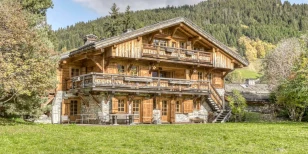

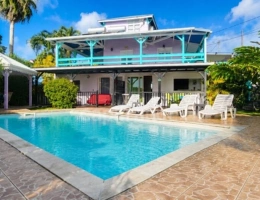
A chateau for sale in Martinique is still an exception: the island has no manorial tradition comparable to mainland France, and the term here covers grand colonial estate houses, Creole maison de maître residences and former rum distilleries surviving between the forested hills of the north and the drier plains of the south. Some of these properties keep their original timber-and-masonry architecture, with open galleries and steeply pitched roofs suited to a tropical climate, while others have lost part of their farm buildings over time. Tropical gardens, palm-lined driveways and views over the Caribbean Sea often add to the appeal of these houses, without being a systematic selling point. Browse every chateau for sale listed by private owners, agencies and notaries active on the island.
This page sets out the types of residence the term covers locally, the volcanic north and the drier south where they stand, and the land-title and climate checks specific to Martinique. It suits buyers ready to work with a sometimes fragile heritage rather than a standardised property. To plan a heritage purchase from start to finish, read our guide to buying prestige property in France.
Martinique's older built heritage centres on the habitation, a colonial farm pairing a timber-and-masonry estate house with working buildings — a mill, a boiler house, bagasse sheds — where the property once ran a sugar or rum operation. Front galleries, steeply pitched metal or shingle roofs and heavy timber framing mark these houses, usually raised off the ground to keep out damp and let air circulate. The choice of original materials, local timber or volcanic stone depending on the area, remains an important value marker for buyers familiar with the local market.
Several former distilleries rank among the few groups carrying historic-monument protection, notably around Le Lamentin and in the island's north; elsewhere heritage protection is applied case by case and should be checked before planning any works. Outbuildings tied to these estates — staff quarters, drying sheds, cisterns — often add to a property's character while calling for steady upkeep. A spring or an older irrigation system inherited from past farming activity is a feature valued on this type of property.
In the island's north, dominated by Mount Pelée, older houses cluster around Saint-Pierre, a town rebuilt after the eruption that marked its history, as well as around Basse-Pointe and Morne-Rouge, amid wooded hills and steep river valleys. The south, drier and lower-lying, around Sainte-Anne, Le Marin and Trois-Îlets, holds more converted farming estates, now sought after for their closeness to the coast and its marinas. The island's centre, around Le Lamentin and Ducos, offers properties that are more convenient day to day, between farmland and proximity to Fort-de-France.
Fort-de-France concentrates most services and international flight links through Martinique Aimé Césaire airport, easing access to the surrounding towns. Areas near the southern coast and its tourist zones draw steadier demand than the north, which is steeper and less developed but valued for its quiet and its tropical forest scenery. Ferry links between Fort-de-France and the southern towns round out the road network for everyday travel.
As elsewhere in the French Antilles, co-ownership from old family successions frequently complicates the sale of large family estates: title should be clarified with the notary before any firm offer. Land near the shoreline may fall within the zone des cinquante pas géométriques, a coastal public-land regime specific to the overseas territories, and should always be checked. The island's exposure to earthquakes and cyclones justifies a structural survey of older masonry buildings. Planning rules covering farmland and coastal zones should be checked with each town hall before planning any works.
The humid climate encourages termites and rapid decay of untreated timber, making a specialist inspection of roof framing worthwhile before buying. It is also worth checking drainage, the stability of sloping ground in the northern hills, and the condition of access roads, which can be narrow on the way to the most remote properties. Reviewing the record of cyclone-related claims made on a property usefully informs the buying decision.
Listings for older estate houses and large properties in Martinique are published by private owners, local agencies and notaries; you can filter them by area, living space and outbuildings, then set up an e-mail alert to follow new listings. Estates pairing an older house with farmland are drawing a growing number of buyers relocating from mainland France. You can also browse the full range of prestige property for sale in Martinique.