

Taking over a pig farm for sale in Corsica has little in common with buying one on the mainland. The island raises the Nustrale breed outdoors, on wooded ranges of chestnut and oak, and its meat feeds a protected-origin charcuterie trade. What changes hands is therefore the range, the grazing rights and the curing workshop as much as the buildings. The offers gathered here come from farmers approaching retirement, from rural agencies based on the island and from notaries; they set out the range area, the sow herd and the finishing system. You will also find them among our nationwide selection of pig farms for sale.
Beyond the listings, this page supplies the benchmarks a buyer looks for: what island land is worth, the micro-regions where offers surface, the condition of shelters and fencing, and the controls specific to a quality-label supply chain. If you are shaping a setting-up project, our white paper « Créer une exploitation agricole » (in French) sets out the administrative and financial steps one by one.
Land value drives much of the asking price for a pig farm. French tax transfer statistics (DVF, vineyards excluded) show, for 2025, a median of €5,012/ha in Corse, an average of €5,445/ha and 19 sales; 80% of transactions settle between €1,980 and €10,317/ha, against a national median of €5,307/ha. * Fewer than 30 recorded sales: indicative value.
The SAFER benchmark is not compiled at this scale; use the national figures instead, €6,460/ha for vacant land and pasture and €5,350/ha for let land.
On the island, acreage counts for less than genuine access to the range: the value of a pig unit lies in the quality of the mast crop, secure tenure over the grazing areas, the compliance of the killing room or processing workshop, the reputation of the brand and the customer book built up season after season. The breeding herd, mobile shelters, fencing and curing equipment are each valued in turn. To place those elements, use our land price observatory and our financial calculators.
The island model rests on roaming pigs that feed on chestnuts and acorns for part of the year, then return to sheltered ground for farrowing and finishing. A buyer therefore looks first at the woodland itself, the density of productive trees, the water supply, the state of fences and handling pens, and the farrowing shelters and finishing huts. Solid buildings are often limited: a few covered pens, a feeding area, sometimes a chilled room. The quality of the sow herd, its registration in the Nustrale breed and the way reproduction is managed matter at least as much as the covered floor area.
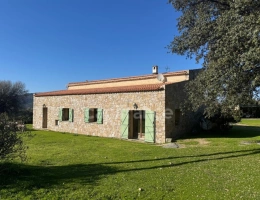
Many holdings on the market include a dwelling house, a converted old sheepfold and range land. It pays to separate from the first visit what forms the production tool from what is simply residential, because a well-placed old building can lift the asking price without adding anything to the herd. Where the farm is sold with its killing room and drying room, those facilities are valued separately, with their approval and their customers. A closely monitored herd, identified breeding stock and a steady farrowing calendar reassure a buyer more than a long equipment inventory.
Corse-du-Sud (2A) holds a notable share of the units inland: the Alta Rocca around Zonza and Levie, the Taravo valley and the Sartenais offer oak and chestnut ranges that have carried this production for generations. Holdings there are often fragmented, with jointly inherited plots, so establishing who owns what takes longer than the visit itself. Being close to Ajaccio and Porto-Vecchio supports direct selling and supply to restaurants, but it pushes land values sharply higher as soon as you approach the coast or the tourist routes.
Haute-Corse (2B) is the historic heartland of the production: the Castagniccia, with its upland chestnut groves, remains the reference, extended by the Corte area, the Niolu and the inland slopes of the Balagne. Family units passed down through generations are common there, sometimes combined with a few ewes or goats and with on-farm processing. The network of tracks and the distance from main roads make it essential to assess access, how the ground behaves in wet weather, and water and electricity supply, all of which shape the real cost of a takeover.
From one department to the other the buying logic varies little, but market conditions do. The mainland idea of livestock buildings, enclosed and mechanically ventilated, is rare here: what you buy is above all the use of a landscape, light equipment and a body of know-how. In Corse-du-Sud as in Haute-Corse, holdings well away from second-home areas stay the most affordable, while those near the shore trade at levels unrelated to their farming value alone. Widening the search to both departments markedly improves the odds of finding a coherent range with usable buildings.
Three checks come before any offer. The first concerns the appellation: approval under the Corsican charcuterie specification does not pass automatically with the holding, and the buyer must apply again to the producers' body and then to the certifying organisation. The second is animal health: African swine fever circulates in continental Europe and outdoor herds are the most exposed, which makes biosecurity, double fencing, carcass disposal and the on-farm register decisive. The third covers animal identification and movement records, which extensive systems often keep less rigorously than indoor units.
Then comes the land question, the trickiest on the island. Part of the range is often used without a written title, on jointly held or communal ground: ask for the grazing agreements, the municipal decisions and the land registry extract before estimating the area genuinely under control. The rural lease continues with the buyer, subject to the landlord's agreement, and the deal remains subject to the structures control, the French authorisation regime for taking over farmland, and to SAFER's pre-emption right. A preliminary contract made conditional on that authorisation and on regularising the range avoids many deadlocks after signature.
Island value creation runs through dry-cured charcuterie: prisuttu, coppa and lonzu lift income well above the sale of live animals. A fattening farm sold with a compliant drying room, an approved workshop and a loyal customer base is not comparable with a unit that hands its animals to a third party. Examine the health approval of the premises, the drying capacity, how steady processed volumes have been, and the share of sales made at markets, in a shop or to restaurants. Access to an abattoir and the waiting times for slaughter also deserve checking, since they govern the whole production calendar.
On structure, many holdings are held through a farming partnership or a civil company: the takeover may then take the form of buying shares rather than assets, with different tax consequences and liabilities to audit. Have the herd, the equipment, the buildings and the land priced separately, and plan for the seller to stay involved through at least one full mast season: on this kind of farm, transferring the know-how is worth as much as handing over the keys.
Private farmers, rural estate agencies and island notaries all post their offers here. Narrow the results by range area, by budget or by type of unit, switch on an alert so you hear as soon as something matches your brief, and carry on with the farms for sale in Corsica across every production.